The Bengaluru wearable startup will use Qualcomm’s backing to scale smart rings beyond health tracking into computing
Qualcomm backs Ultrahuman in a $70 million round as the Bengaluru startup pushes smart rings beyond tracking and toward on-device computing.
The raise gives Ultrahuman more room to scale globally, deepen its India play, and test whether wearable hardware from this region can define a new product category.
Wearables are supposed to get smaller, simpler, and more invisible. Computing, on the other hand, usually gets heavier with expectation. Qualcomm backs Ultrahuman in $70M round at exactly that intersection, backing an Indian startup that is trying to turn a device as small as a ring into something much more than a sleep and health tracker. The company has raised $70 million in a new round that values it at $365 million, with Qualcomm Ventures joining Labcorp, Alpha Wave, Blume Ventures, Nexus Venture Partners, and Alteria Capital.
The structure of the financing matters because it shows both ambition and discipline. Of the total, $65 million is primary equity and $5 million is debt, according to founder and CEO Mohit Kumar. Ultrahuman says the capital will go into product development, clinical research, and market expansion, including in India and the UAE, where it has seen physical stores and offline touchpoints help drive sales. That is a notable choice in a startup cycle where many consumer hardware companies have been pushed to stay asset-light for as long as possible.
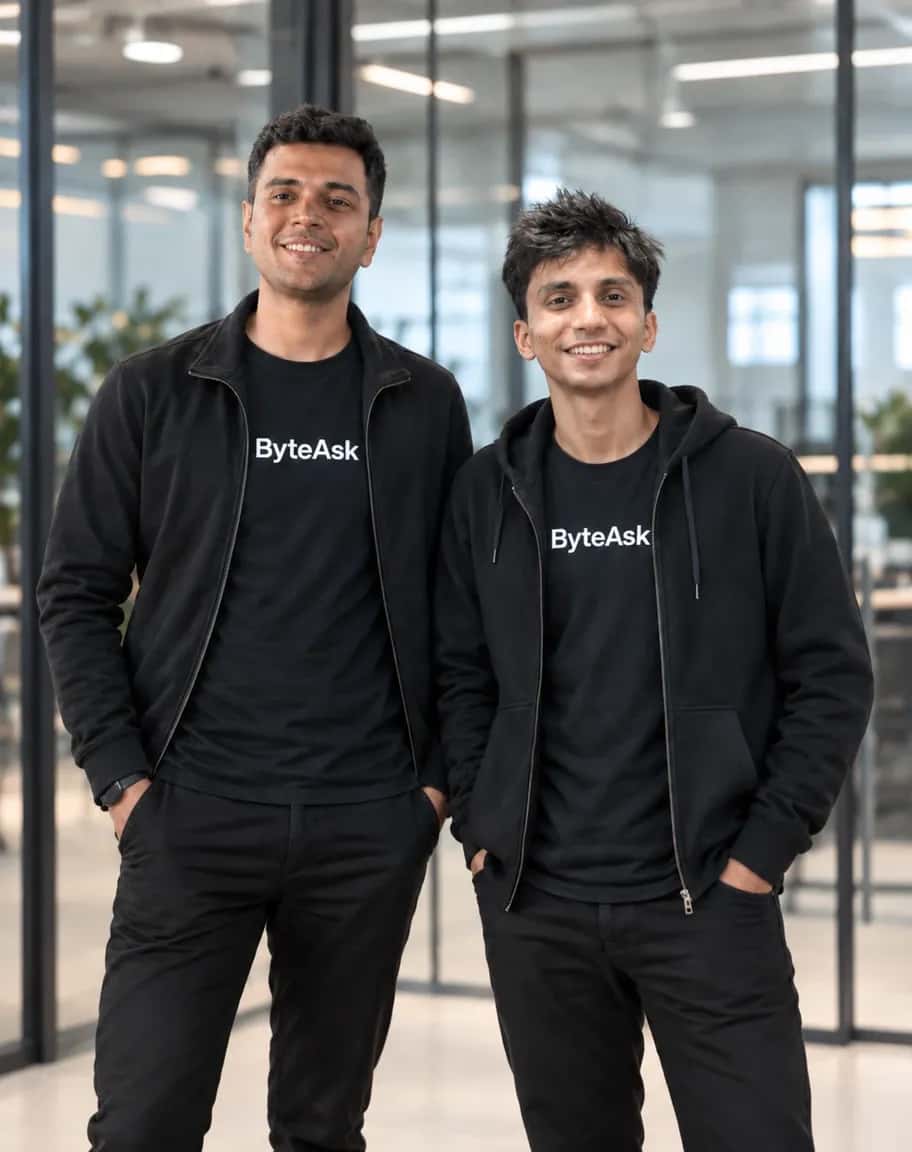
Founded in 2019 and headquartered in Bengaluru, Ultrahuman was started by Mohit Kumar and Vatsal Singhal. The company first built around continuous glucose monitors and a broader metabolic health thesis, before smart rings became the center of the business. So far, it has sold around 800,000 rings, up from about 700,000 in February, and Kumar has said the business is now at an annual revenue run rate of $140 million, roughly 45% higher than a year earlier. The target now is to reach a $200 million annual revenue run rate by January 2027.
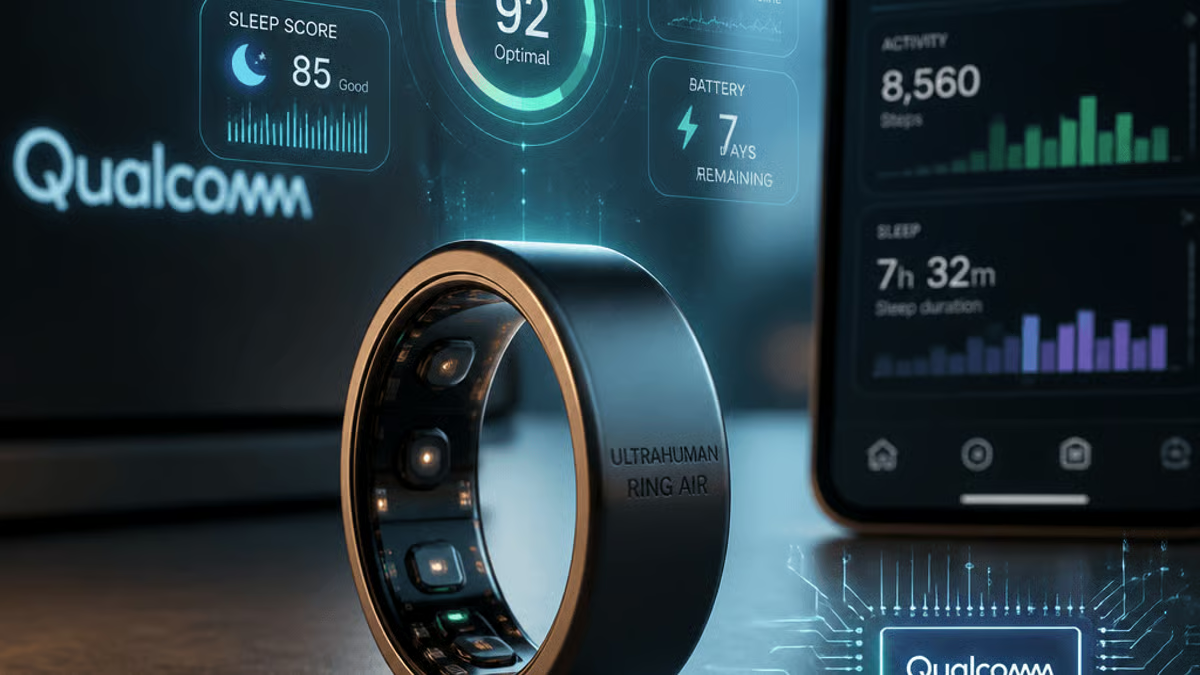
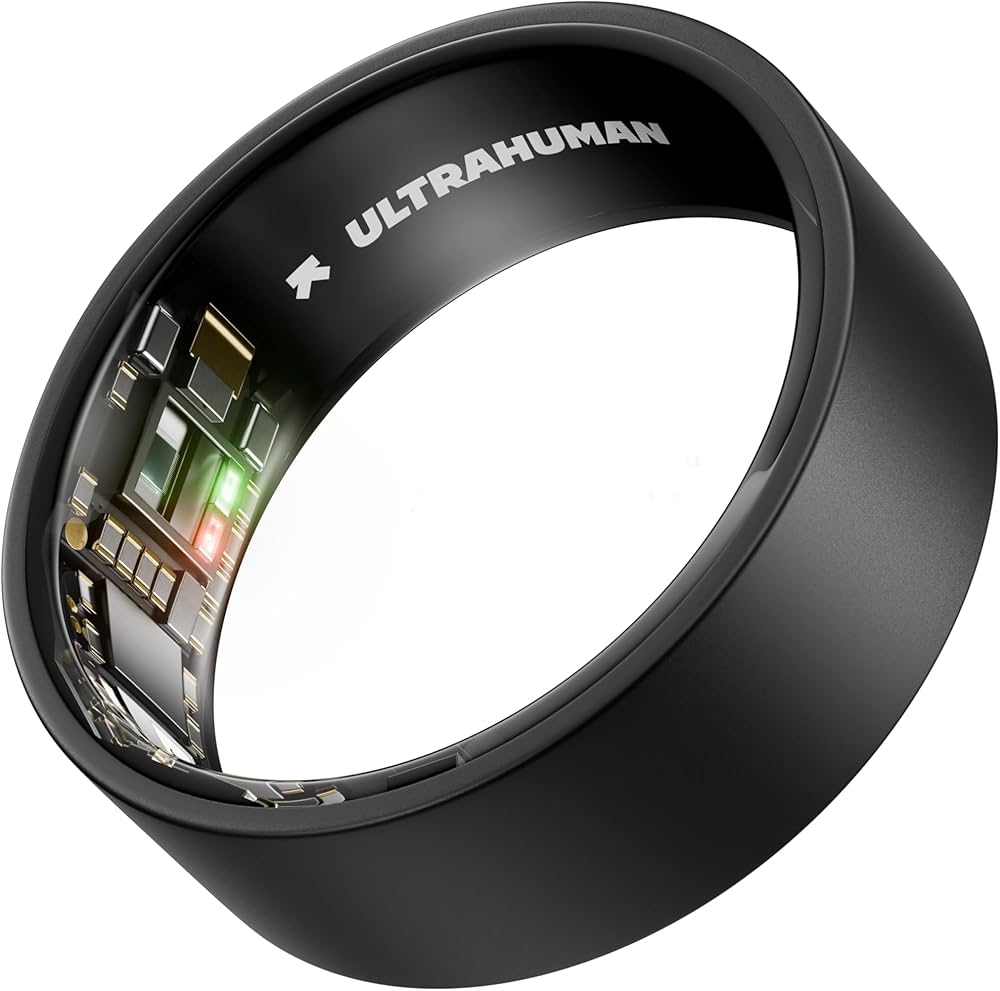
For Kumar, the goal was always bigger than making another accessory that passively logs health data. The central idea now is that today’s rings mostly behave like trackers, while Ultrahuman wants future rings to behave more like computers, with software and algorithms running directly on the device instead of depending heavily on a phone or the cloud. That is where Qualcomm’s involvement becomes more strategic than symbolic. Ultrahuman is working with the chip company on a new ring that will use Qualcomm silicon, while continuing to use chips from Nordic Semiconductor in its portfolio.
The Edge Computing Ring: Ultrahuman’s $70M Ambition
Ultrahuman’s $70 million financing round—valuing the Bengaluru-based startup at $365 million—is a clear signal that the smart ring category is moving past passive health logging. With heavy backing from Qualcomm Ventures, the company is attempting to redefine the form factor from a pure biometric tracker into an active, always-on edge computing interface.
For a consumer hardware company operating out of India, navigating supply chain friction, expensive patent litigation, and global retail distribution, this capital injection provides the necessary runway to test whether a regional startup can dictate the architectural future of a global product category.
From Passive Tracker to Ambient Interface
The strategic involvement of Qualcomm is the core narrative of this raise. While existing smart rings are essentially sensor arrays that beam data to a smartphone cloud for processing, Ultrahuman is preparing to integrate Qualcomm silicon to push inference and algorithms directly to the device.
By moving computing to the edge, Ultrahuman is re-architecting the ring to act as an active input device:
The Input Vector: A software update expected by the end of September will begin unlocking capabilities that turn the Ring Air and Ring Pro into functional tools—acting as a presentation pointer, a gesture-based mouse, a game controller, or even a digital car key.
The Developer Ecosystem: Opening the platform to third-party developers via APIs is the crucial step toward building a true platform. Just as the Apple Watch evolved from a heart-rate monitor into an extension of the iOS ecosystem, Ultrahuman is betting that the ring can become the primary friction-free interface for ambient AI.
The Margin Mechanics: Software and Subscriptions
Hardware alone rarely justifies sustained venture valuations because hardware margins eventually compress. Ultrahuman is countering this by aggressively building out its "PowerPlugs" platform—a marketplace of micro-apps and wellness plugins.
While currently boasting a modest 12% attachment rate, this subscription layer transforms a one-time hardware sale into a recurring revenue stream. It is this software leverage that supports Ultrahuman’s current $140 million annual revenue run rate (a 45% year-over-year jump) and underpins their aggressive goal of hitting a $200 million run rate by January 2027.
The Diagnostic Convergence
The participation of Labcorp in this funding round highlights Ultrahuman's secondary moat: deep clinical diagnostics.
The startup originally built its foundation on continuous glucose monitors (CGMs) and metabolic health. By partnering with one of the world's largest clinical laboratory networks, Ultrahuman is attempting to merge continuous, longitudinal optical data (collected by the ring) with point-in-time biological data (blood tests). This creates a highly personalized, predictive health stack that tracks cardiovascular health, fertility, and aging metrics—a holy grail for healthtech that few have successfully consumerized.
The India Hardware Reality
India has produced a massive software and SaaS ecosystem, but globally dominant consumer hardware remains elusive due to supply chain complexities and aggressive litigation from incumbents.
Ultrahuman has already absorbed these blows. A patent dispute with Oura effectively bottlenecked its U.S. sales over the past year. Despite this, the U.S. still accounts for 45% of its revenue (compared to 11% in India), and the introduction of the redesigned Ring Pro has seen stateside demand outstrip supply by a factor of 18x to 20x.
The structural discipline of this round—$65 million in primary equity and $5 million in debt, prioritizing physical retail expansion in India and the UAE—shows a company preparing for the long haul. With an IPO window targeted for 2028, Ultrahuman is focused on stacking the eight quarters of profitability that public markets now dema
This is not just a component swap. The thesis is that more on-device computing can make the ring useful for a wider set of interactions, including AI-based use cases, gaming, and input functions such as acting as a pointer or mouse, a game controller, or even a car key. Some of these capabilities are expected to start arriving on existing Ring Air and Ring Pro devices through a software update by the end of September, including support for interacting with AI applications and opening up the platform to third-party developers.
That developer angle is easy to miss, but I think it is one of the most important parts of this story. Consumer hardware categories rarely become durable if they remain closed, single-purpose devices forever. The smartphone became dominant because it turned into a software platform. Smartwatches found staying power when they became extension layers for notifications, payments, fitness, and health applications. Ultrahuman is effectively arguing that the ring can become the next interaction surface, not just the next wellness gadget. If that happens, the value shifts from the metal on the finger to the stack around it, from chips and sensors to APIs, models, and software behaviors.
The timing also lines up with a broader change in wearables. Over the past two years, the market has been trying to answer a difficult question: what comes after the smartphone as the primary personal computing device? Smart glasses are one answer, but they carry privacy, social acceptance, and design constraints. Watches are already useful, but they still feel, as Kumar said, like a phone on the wrist. A ring is less intrusive and can sit on the body all day, collecting physiological context such as heart rate, temperature, and movement. That contextual layer is what makes the AI pitch more plausible here than it might sound at first glance.
Qualcomm Ventures is clearly buying into that thesis. Quinn Li, global head of Qualcomm Ventures, said the future of AI is personal, ambient, and always on, and added that Ultrahuman is building a new generation of personal AI devices. Strip away the venture language, and the signal is still meaningful: a global semiconductor player sees enough potential in an Indian wearable startup to back a future where inference, sensing, and interaction increasingly move to the edge.
There is also a useful India angle here that goes beyond patriotic celebration. India has produced many software startups and a growing number of deeptech companies, but consumer hardware with global ambition remains a harder category. Supply chains are messy, patents are expensive, industrial design cycles are unforgiving, and customer support can break margins. Ultrahuman has already run into some of those realities. The U.S., its largest market, was effectively blocked for much of the past year for Ring Air because of a patent dispute with Oura. The company returned with its redesigned Ring Pro this year, and Kumar said demand in the U.S. is currently running at 18x to 20x available supply.
That matters because it shows both the opportunity and the strain. Ultrahuman expects to return to previous U.S. sales volumes as soon as next quarter and aims to triple those volumes over the following four quarters as supply ramps up. This quarter, the U.S. accounts for about 45% of revenue, while India contributes about 11%. Those numbers say a lot about where premium wearable demand sits today, but they also hint at where Indian startups can win: build in India, validate globally, and then come back to deepen domestic distribution once the product category has enough pull.
Another missed angle is how Ultrahuman is trying to avoid becoming only a hardware seller. Around 12% of its users pay for PowerPlugs, the company’s subscription software features. That is still a modest attachment rate, but it introduces a software revenue layer into a business that otherwise risks being judged purely on device shipments. In wearables, recurring software can help smooth hardware cycles, support gross margins, and create reasons for users to stay inside one ecosystem. It also raises the bar on product execution, because subscription revenue only holds if the ring continues to become more useful after purchase.
The health piece remains central too. Ultrahuman started in metabolic health, and it has since expanded into blood testing and environmental sensing to build a broader platform. Now, with Labcorp participating in the round, the company is exploring whether blood-flow signals from the ring, combined with blood-test data, can help identify risks across cardiovascular health, fertility, and aging. Megann Vaughn Watters, vice president and head of Labcorp Venture Fund and Strategic Alliances, said that combining longitudinal wearable data with deeper biological signals is creating new opportunities in personalized health. That combination of continuous wearable data and diagnostics is where many healthtech companies want to go, though few have managed to package it in consumer-friendly form.
There is, of course, a cost to trying to do several hard things at once. Kumar has said Ultrahuman may not be profitable this year after spending more on physical locations, brand building, and clinical studies. The company wants to show about eight quarters of profitability before going public, a record that Kumar expects could take eight to 10 quarters to establish, making 2028 the earliest IPO window. In the current market, that is probably the sensible answer. Consumer hardware stories are no longer rewarded for growth alone. Public investors want proof that demand is durable, supply can scale, and software or services can expand margin over time.
What started as a small idea around metabolic health now sits in a much larger contest over ambient computing. In South and Southeast Asia, that is worth watching closely because regional founders are increasingly moving from apps and marketplaces into products that combine hardware, software, and AI. The harder the category, the more meaningful the signal when one of them starts to break out.
My read is that this round is less about a single company’s valuation jump and more about whether an Indian startup can define the next wearable interface before larger incumbents close in. If Ultrahuman gets this right, it will not just sell more rings. It could help show that founders from this region can build global consumer hardware platforms, not just components of someone else’s ecosystem.
Frequently asked questions
Why did Qualcomm back Ultrahuman in this $70 million round?
Qualcomm backed Ultrahuman because the startup is trying to push smart rings beyond fitness tracking and into on-device computing. The investment signals confidence that smaller wearables could become a meaningful new computing platform.
What will Ultrahuman do with the new funding?
Ultrahuman is expected to use the capital to scale globally, strengthen its position in India, and invest in product development. That likely includes expanding manufacturing, distribution, and the computing capabilities of its smart rings.
What makes Ultrahuman’s smart ring strategy different from other wearables?
Most smart rings focus mainly on health and sleep tracking, but Ultrahuman is aiming for broader computing functions on the device itself. That strategy could help the ring evolve from a passive sensor into a more capable personal computing interface.
How important is this deal for India’s wearable startup ecosystem?
This round is notable because it shows a global chip leader betting on a hardware startup from India. It suggests startups from the region can build consumer devices with worldwide relevance, not just local-market products.
What does on-device computing mean for smart rings?
On-device computing means more processing happens directly on the ring instead of relying entirely on a phone or cloud server. In practice, that can improve speed, privacy, and battery efficiency for certain features.
Could smart rings become the next major consumer computing category?
Smart rings are still an emerging product category, but investors see potential because they are smaller and less intrusive than watches. If companies like Ultrahuman can add useful computing features without sacrificing comfort, the category could grow far beyond wellness tracking.