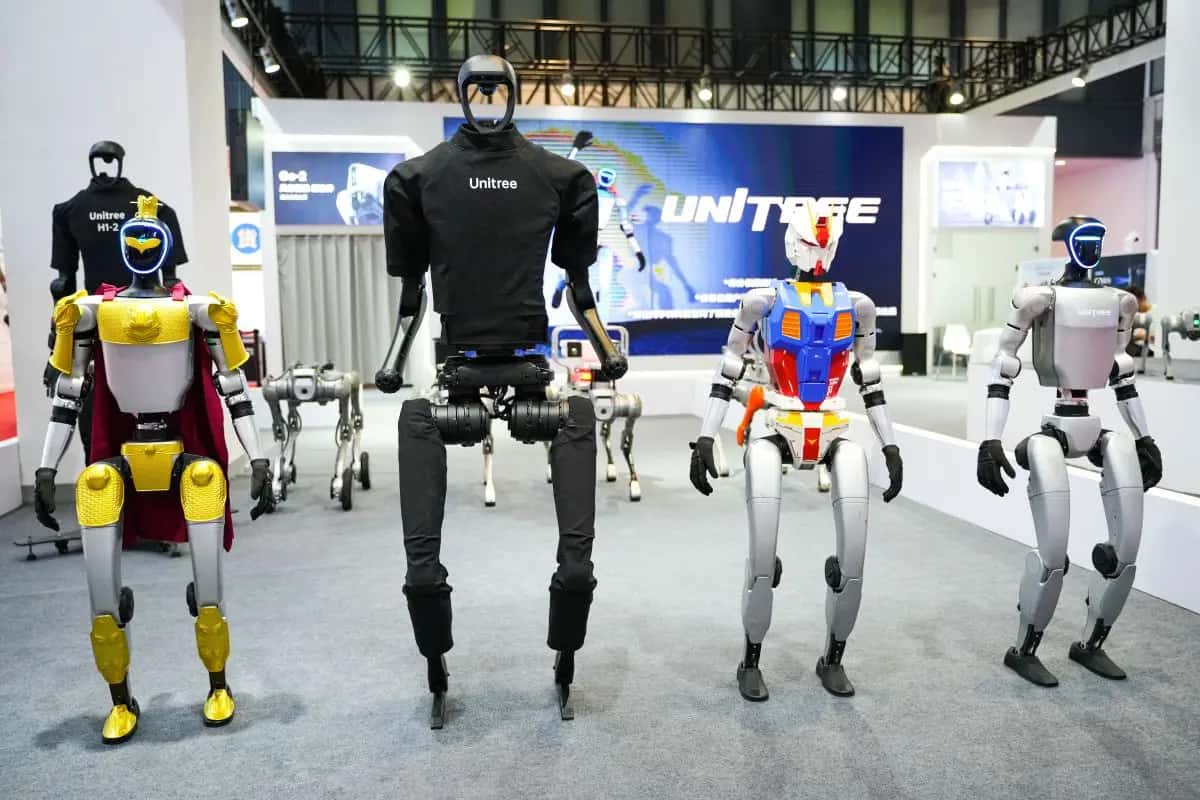
Quadrupedal robot maker warns of U.S. sales challenges before Shanghai IPO, raising geopolitical concerns and investor questions on future revenue stability.
Unitree, a prominent developer of quadrupedal robots, has flagged significant risks to its U.S. sales outlook ahead of its planned initial public offering on the Shanghai Stock Exchange, a disclosure that immediately injects a layer of geopolitical uncertainty into its valuation prospects and raises questions for investors regarding future revenue stability. The company's acknowledgement underscores the growing challenges for Chinese high-tech firms navigating escalating trade tensions and tariff regimes, potentially impacting the appeal of its shares as it seeks to raise capital for expansion.
The Zhejiang-based robotics firm, known for its agile four-legged robots used in industrial inspection, logistics, and research, is preparing for an IPO that aims to fund further research and development, expand production capacity, and enhance its global market reach. However, the explicit mention of U.S. sales vulnerability within its prospectus highlights the increasing difficulty of operating in critical Western markets while headquartered in China, especially for companies engaged in advanced technologies that often carry dual-use implications.
The potential imposition of new tariffs or stricter import controls by the United States could directly curtail Unitree's ability to penetrate or maintain market share in a crucial, high-value segment for robotics. This risk comes at a time when global supply chains are already undergoing significant re-evaluation and diversification, prompting investors to scrutinize the geopolitical exposure of high-growth technology companies more closely than ever before.
What are the Implications for Unitree's IPO and Investors?
The disclosure by Unitree regarding U.S. sales risks directly impacts its valuation narrative for potential investors in Shanghai. A substantial portion of the company's projected international revenue growth would likely originate from North America, given the region's strong demand for automation and advanced robotics. Any impediment to this growth trajectory could depress the offering price or temper post-IPO share performance, as analysts will factor in a higher discount rate for geopolitical risk.
Investors will now be weighing the long-term growth potential of Unitree's innovative robotics technology against the tangible threat of market access restrictions. This dynamic creates a challenging environment for the underwriting banks responsible for positioning the IPO, as they must articulate a compelling growth story while transparently addressing the political headwinds. The balancing act involves showcasing Unitree's technological prowess and domestic market strength, alongside its ability to pivot or diversify international sales strategies away from potentially volatile markets.
Furthermore, the flagging of U.S. sales risks sets a precedent for other Chinese technology companies eyeing public listings, particularly those in sectors deemed strategically sensitive by Western governments. It signals that regulators and investors alike are increasingly demanding explicit transparency on geopolitical vulnerabilities, pushing companies to articulate their resilience strategies earlier in the IPO process. This trend reflects a broader shift in investment criteria, where geopolitical risk assessment is becoming as critical as traditional financial metrics.
**U.S. tariffs on certain Chinese high-tech goods are substantial, significantly impacting the cost-competitiveness and market access for companies like Unitree.**
What is Unitree's Background and the Context of the IPO?
Unitree Robotics, founded in 2016, has rapidly emerged as a key player in the global quadrupedal robot market, often drawing comparisons to U.S.-based Boston Dynamics for its advanced locomotion capabilities and diverse product line. The company's robots, such as the Go1 and B1 series, have gained recognition for their agility, open-source development frameworks, and relatively accessible price points, making them popular among researchers, developers, and early enterprise adopters.
The decision to list on the Shanghai Stock Exchange aligns with a broader trend of Chinese technology companies opting for domestic listings amid tightened scrutiny and delisting threats from U.S. exchanges. Shanghai's STAR Market, in particular, has become a favored destination for high-tech and innovative enterprises, offering a robust capital pool and facilitating national strategic objectives for technological self-reliance. This IPO aims to capitalize on strong domestic investor appetite for cutting-edge technology and to secure capital that might otherwise be harder to raise internationally under current geopolitical conditions.
However, the pursuit of domestic capital does not insulate Unitree from the realities of global trade and market access. The company's advanced robotics incorporate components and intellectual property that are often global in origin, and its ambition is inherently global. The U.S. market, with its significant industrial and research sectors, represents a critical avenue for technology validation, large-scale deployment, and revenue generation. The ongoing trade tensions, including the potential for expanded tariffs or even export controls on certain technologies, directly threaten this international growth strategy.
What are the Potential Downsides and Bear Case Scenarios?
A bear case for Unitree's IPO centers heavily on the potential for an accelerated technological decoupling between the U.S. and China, particularly in dual-use technologies like robotics. If the U.S. were to impose more stringent tariffs or outright bans on Chinese-made advanced robots, Unitree's access to one of the world's largest and most lucrative markets could be severely curtailed. This scenario would not only impact direct sales but also potentially hinder Unitree's ability to attract international talent, collaborate on research, and access certain global supply chain components, thereby increasing its operational costs and slowing innovation.
Furthermore, heightened geopolitical tensions could lead to a 'tech Cold War' environment where companies are forced to choose sides, complicating global expansion strategies and potentially fragmenting the global robotics market along national lines. In such a scenario, Unitree might face challenges in securing contracts from international corporations wary of supply chain risks or political backlash, even outside the U.S. This could cap its international growth potential, leading to a reliance on a domestic market that, while large, may not offer the same competitive intensity or innovation drivers as a truly globalized market.
The investor sentiment towards Chinese tech IPOs has also become increasingly volatile, influenced by Beijing's domestic regulatory crackdowns and the broader U.S.-China relationship. While the Shanghai listing provides a domestic buffer, international investors, who often influence overall market perception, might remain cautious, demanding a higher risk premium for Unitree's shares. This could lead to a more conservative valuation and slower post-IPO capital appreciation than would otherwise be expected for a leading innovator in a high-growth sector.
Investors should closely monitor several key developments: any further announcements from U.S. trade representatives regarding new tariffs or export controls on advanced robotics, particularly those originating from China. The evolution of U.S.-China relations, especially following upcoming political cycles, will also be crucial in determining the long-term market access for companies like Unitree. Finally, Unitree's post-IPO disclosures regarding its market diversification strategies and supply chain resilience will offer insights into how it plans to mitigate these acknowledged geopolitical risks and sustain its growth trajectory in a fragmented global economy.
Frequently asked questions
What risks does Unitree face with US sales?
Unitree has flagged significant risks to its U.S. sales outlook ahead of its Shanghai IPO, primarily due to potential tariffs, which introduces geopolitical uncertainty and impacts its valuation.
Why is Unitree's US sales risk important for its IPO?
The disclosure injects geopolitical uncertainty into Unitree's valuation prospects and raises questions for investors regarding the future stability of its revenue streams.
What kind of robots does Unitree develop?
Unitree is a prominent developer of quadrupedal robots, known for their agile and dynamic movements.
Where is Unitree planning its IPO?
Unitree is planning its initial public offering on the Shanghai Stock Exchange.
What is the primary cause of Unitree's US sales concern?
The primary cause is the risk of tariffs, which could negatively impact the cost and competitiveness of its products in the US market.
How does this news affect Unitree's investors?
Investors are now facing increased uncertainty regarding Unitree's future revenue stability and overall valuation due to the geopolitical and tariff-related risks.