
There are only two seasons, but they’re both fantastic
Related


Prime Video's near-perfect, criminally underrated sci-fi show is finally streaming on Netflix

Ever since I watched the original cartoon series on Saturday mornings back in the 1990s, I’ve been a fan of The Tick. That show — which starred voice actor Townsend Coleman as the Big Blue Bug of Justice — was the perfect example of really smart writing for a really dumb character, making it not only hilariously silly for children, but the perfect show to rewatch as an adult.
Then came the original live-action series in 2001, which gave things a very Seinfeld-like energy, depicting the Tick and his pals chilling in a coffee shop and capturing the moments in between their adventures more than the adventures themselves. The show was developed by Seinfeld writer Larry Charles and even starred Seinfeld alumnus Patrick Warburton as the Tick in what was literally one of the most perfect casting decisions in the history of superhero media.
But I loved Warburton so much that when I heard he wouldn’t be playing the Tick in Amazon's 2016 reboot series, I slept on it. It wasn’t until years after it had been canceled that I realized just how great a show I was missing out on. And now that the series is on Netflix for the very first time, you can catch up too.
Just like the cartoon and the live-action series that preceded it — and the original comic book series created by Ben Edlund — Prime Video’s 2016 series The Tick is about a big, muscle-bound superhero dressed in a blue outfit with antennae. The Tick’s powers include super strength and nigh-invulnerability, which makes him adept at fighting crime, but really bad at knowing his own strength; he often breaks things and causes collateral damage.
Throughout every version of the franchise, the Tick (played here by Peter Serafinowicz) has a sidekick named Arthur (Griffin Newman), and “Arthur” is both his real name and his superhero identity. Arthur is a cowardly, non-superpowered accountant who wears a flying suit that is modeled after a moth, but most people mistake it for a bunny. And despite the fact that the 2016 series is named The Tick, franchise creator Ben Edlund, who also served as showrunner for the Prime Video revival, shifted the show’s focus to Arthur. This creative choice was the smartest possible direction for the series as it gave the show a fresh perspective that could have (and should have) lasted more than the mere two seasons it ended up with.

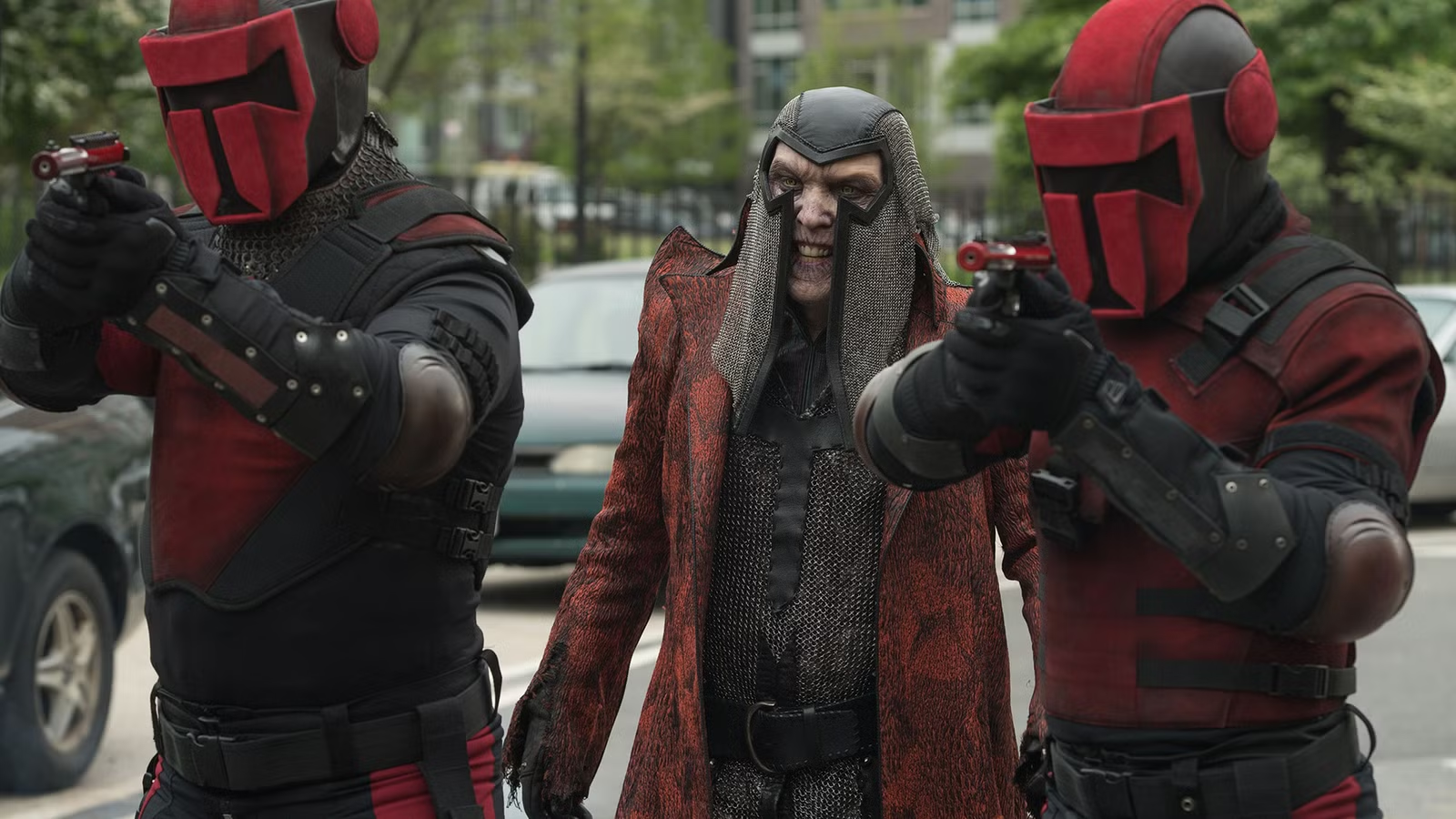
Whereas the first two Tick shows were episodic, The Tick (2016) took a serialized approach to the character much like most other modern streaming shows that are designed to be binged. Edlund also gave Arthur a much more developed origin story than earlier incarnations. He's an accountant obsessed with proving that the supervillain known as the Terror, who killed Arthur’s father, is still alive. While investigating the Terror, Arthur finds a flying suit that eventually becomes his superhero outfit. He also meets the Tick. Despite being scared, Arthur rises to the occasion and becomes a credible superhero, acting as the brains to the Tick’s near-brainless brawn.
By giving the story heft to Arthur, Edlund allows the Tick to just be the Tick. While the comics dabbled with the Tick’s origin story a little bit by having him begin as an unnamed man in a mental institution, since then, no version of the Tick has had an origin story, nor does he have a secret identity. The Tick is a mystery. He could be an alien, or an escaped military experiment, or a guy who got blasted with radiation.
We don’t know. And, more importantly, we don’t want to know. Revealing that would give the character too much dimension and undermine the brilliant simplicity of the entire story. The Tick, however, is nigh-invulnerable and more of an absolute. To give him too much pathos might just ruin what we love about the character. (By comparison, Arthur is all about vulnerability, so a show that’s about exploring those vulnerabilities works really well.)
That’s why The Tick (2016) is so good. It allowed Edlund to go deeper than before while keeping the Tick as the same simple, hilarious character.

In the first season, Edlund goes deep on Arthur’s search for the Terror, as well as his origin story and family dynamics. It also covers his reluctance to become a hero (something the Tick is convinced he’s destined for). In season 2, with the duo joining a superhero agency called A.E.G.I.S., Arthur deals with his insecurities in comparison to other heroes.
What season 3 would have been is a mystery, but I’ll admit that there’s a part of me that wonders if, perhaps, the show’s short run was a blessing in disguise. Throughout the first two seasons, the titular hero's lack of an origin story is a recurring theme that the Tick wrestles with, as he doesn’t know who he is. But in interviews for the series, Edlund mentioned that the Tick might, eventually, get an origin story.
I can’t help but think revealing an origin might have been a mistake. I’m glad we didn’t get to see it, even though I’m more upset that this thoughtful, weird, hilarious series only got 22 episodes.
By the way, I’d be remiss if I didn't point out just how great Serafinowicz is as the Tick. Warburton plays the character as a big, dumb baby, with some of the same squinty-eyed stupidity he used for David Puddy on Seinfeld. Serafinowicz, however, plays the Tick a bit like a brain-damaged Adam West in Batman. He's big and loud and stupid, with a clipped, snappy way of talking.
Warburton is to the Tick what Christopher Reeve was to Superman, whereas, depending on your tastes, Serafinowicz is the Henry Cavill or David Corenswet. He has an excellent take on the character and manages to make it entirely his own while not abandoning the character that Warburton and Coleman played before him. It’s a shame we didn’t get more of him (though I’m relieved we didn’t get too much
Source link