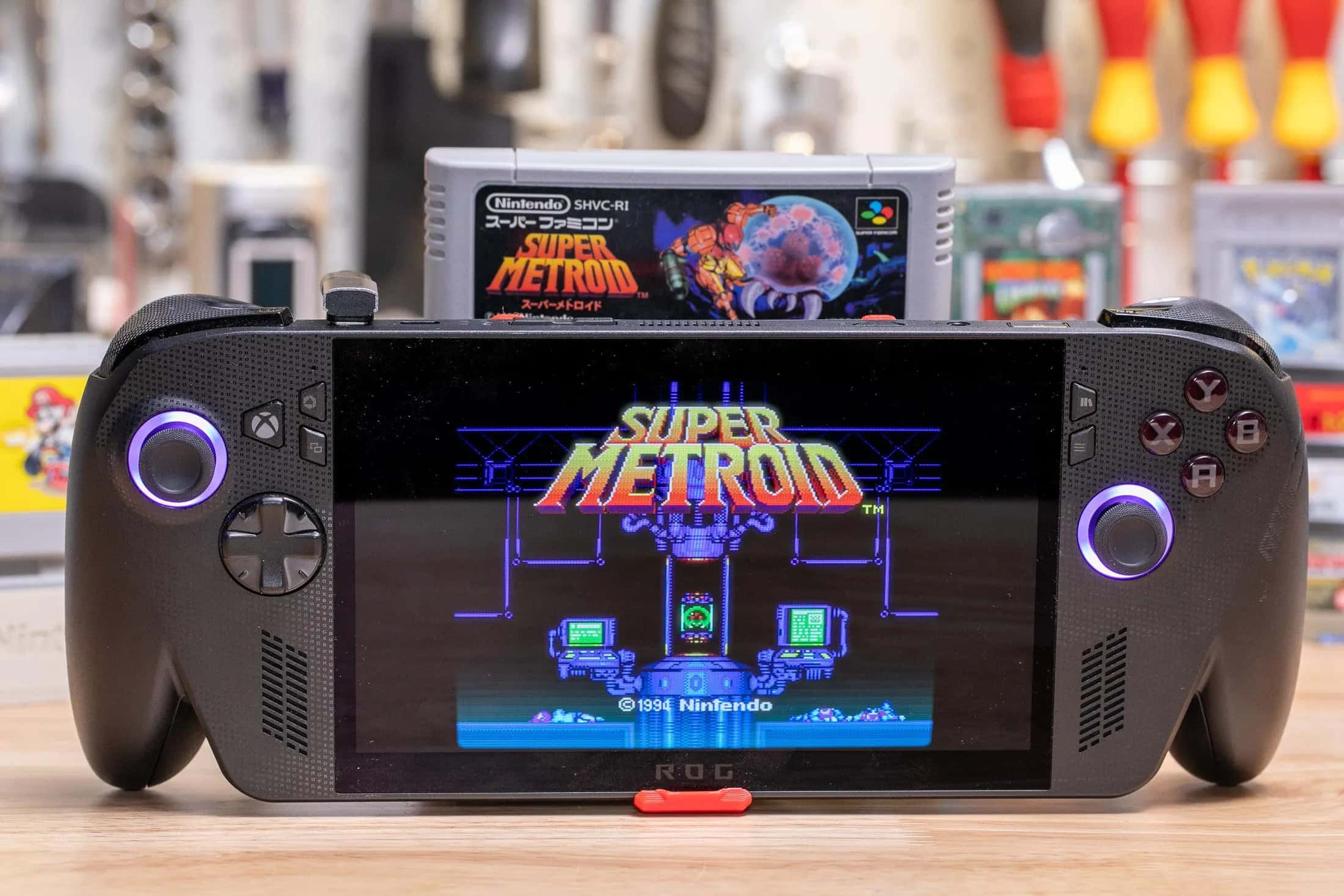
How Epilogue's GB Operator and SN Operator turn retro cartridges into playable, preservable game libraries
USB-C gadgets that play old Nintendo cartridges are giving a niche hardware category a clearer commercial shape, as Epilogue pushes a $50 GB Operator and a $60 SN Operator into a retro-gaming market that increasingly values preservation as much as play. For collectors and small hardware makers, that matters because it shifts cartridge ownership from static memorabilia into usable software libraries, a move that could widen demand for accessory devices tied to legacy game media.
The two products are simple in concept but consequential in product design terms. The GB Operator reads and writes Game Boy, Game Boy Color and Game Boy Advance cartridges over USB-C, while the newer SN Operator does the same for Super Nintendo and Japanese Super Famicom titles. A Nintendo 64 version is coming, according to the source material, which suggests Epilogue is building a business around cartridge access rather than a one-off nostalgia gadget.
That distinction matters because these are not clone consoles packed with original Nintendo silicon or FPGA recreations. The hardware functions as a cartridge reader, while the connected computer saves the ROM to its drive and runs it in an emulator through Epilogue's Playback software. In practical terms, that lowers hardware complexity, broadens device compatibility across Windows PCs, MacBooks and handheld PCs, and positions the product closer to a software-enabled platform than a standalone console substitute.
A more interesting part of the value proposition is not just game playback but save preservation. Older Nintendo cartridges often relied on small internal batteries to retain saved progress, and those batteries were never designed to survive for decades. The source account centers on a 26-year-old copy of Pokemon Pinball whose save file had disappeared, with the loss softened by the fact that the file had already been backed up using an Operator device. That use case pushes the product out of enthusiast novelty territory and into digital archiving.
What It Means
My read is that Epilogue is selling into three overlapping trends at once: retro game collecting, USB-C standardization, and the rise of handheld PCs as flexible gaming endpoints. When a Steam Deck, an Xbox Ally, or even a phone can become the screen and processor for a physical cartridge, the accessory no longer competes only with aging consoles. It competes with the convenience of modern multi-device computing.
There is also a broader implication for gaming hardware. Over the past few years, the retro segment has split into at least two camps: premium hardware recreation, often with FPGA-based systems, and software-led access built on emulation. Epilogue is firmly in the second category, and that usually means lower hardware complexity and a faster path to supporting additional formats. If the company can extend the model from Game Boy and SNES to Nintendo 64 without adding excessive friction, it could reinforce a pattern in which accessory makers capture value by sitting between legacy media and modern screens.
$60, the price of Epilogue's SN Operator, signals that the company is aiming for enthusiast spending rather than premium collector hardware pricing.
That pricing is not trivial. A $50 product for Game Boy cartridges and a $60 product for SNES and Super Famicom cartridges place both devices in a range where collectors may buy them to protect save files alone, before considering playback. In consumer hardware, products that solve an archival problem can outlast products that simply reproduce an old experience. The reason is straightforward: if the battery inside a cartridge fails, the lost data is gone unless it was copied earlier.
The category also benefits from adjacent developments the source hints at. Transparent industrial design has returned as a consumer electronics motif, and the GB Operator is described as transparent. At the same time, handheld PCs have normalized the idea that a gaming device can be adapted with hubs, mounts and external accessories. Pair those shifts with the endurance of Nintendo's cartridge-era intellectual property, and a small accessory company has a better chance of finding recurring demand than it would have had even five years ago.
Instead of attempting to recreate legacy silicon via expensive Field-Programmable Gate Arrays (FPGA) like Analogue’s consoles, Epilogue's $50 GB Operator and $60 SN Operator act as straightforward USB-C read/write bridges between physical cartridges and modern computing stacks. By offloading the actual processing to the user's existing hardware—whether a MacBook, Windows PC, or handhelds like the Steam Deck—and relying on software emulation via the integrated Playback app, Epilogue drastically reduces its manufacturing complexity and bill of materials.
Save State Preservation as a Commercial Anchor
The true utility of these devices extends beyond playback into active digital archiving. Cartridges from the Game Boy and Super Nintendo eras rely on internal SRAM batteries to retain save data. After two to three decades, these batteries are failing en masse, threatening to permanently erase decades-old save files.
Epilogue's Playback software addresses this by automatically backing up save files to a local "Vault" on the host computer and continuously syncing them during gameplay. Crucially, users can flash these backed-up save files back onto the original cartridge after desoldering and replacing the dead battery, transforming the Operator from a novelty emulator into an essential preservation tool for collectors.
Platform Agnosticism and USB-C Standardization
The strategic shift to USB-C modernizes the cartridge peripheral. Instead of producing a standalone console bound to a TV via HDMI, Epilogue leans into the proliferation of flexible computing environments. A transparent hub on a desk can seamlessly interface with multiple devices, treating physical 16-bit game media no differently than a modern USB flash drive.
By prioritizing cartridge compatibility, save extraction, and a frictionless software interface over hardware-level recreation, Epilogue has carved out a scalable niche. The impending release of an N64 Operator suggests that this asset-light, preservation-first model can be replicated across generations, securing recurring demand in a retro market increasingly defined by the fear of data loss.
Background
The source describes the GB Operator as a transparent trapezoidal cartridge reader and presents the SN Operator as its newer companion for Super Nintendo and Japanese Super Famicom software. Both connect over USB-C, which is a deceptively important choice. USB-C reduces setup friction across laptops, handhelds and some phones, and it lets the same accessory fit naturally into the current device ecosystem instead of feeling trapped in the PC-peripheral era.
The products also arrive in a market that has become more sophisticated about what authenticity means. A decade ago, many retro accessories were judged mainly on whether they looked like the original console or accepted original cartridges. Now buyers increasingly care about save management, firmware support, software polish and cross-device compatibility. By relying on cartridge reading plus emulation, Epilogue is not trying to reproduce original hardware behavior at the silicon level. It is trying to make original media usable in a contemporary computing stack.
That places the company alongside, but not directly against, other retro hardware approaches. FPGA systems from specialist vendors appeal to enthusiasts who want hardware accuracy and are willing to pay a premium. Clone handhelds and plug-and-play systems target convenience at lower fidelity. Epilogue sits somewhere different: it assumes the customer already owns cartridges and may already own a capable screen, laptop or handheld PC. That asset-light model is one reason the category could prove durable even if broader gaming hardware demand softens.
What Analysts Say
There are no outside analyst comments in the source material, but the product logic itself is fairly clear. The strongest case for these devices is not that they let people play old Nintendo cartridges, though they do. It is that they convert fragile, aging physical media into files and save states that can survive battery failure and hardware decay. For collectors, that shifts value from shelf display to data continuity.
The bear case is also straightforward. Because the products depend on a connected device and emulator software, they do not satisfy buyers who want a fully self-contained console replacement. They also operate in a legally and culturally sensitive part of gaming, where preservation, emulation and ownership often collide. Even so, products that read media a user already owns usually occupy firmer ground with consumers than products built around downloaded libraries of ambiguous provenance.
What comes next is less about a single device launch and more about whether Epilogue can extend the same formula to Nintendo 64 without compromising usability. If that version arrives, it could broaden the company's retro audience and reinforce cartridge-reading accessories as a real product segment. Those watching the gaming hardware edge should pay attention to support cadence, software updates and format expansion, because in this category, compatibility is the closest thing to recurring revenue.
Frequently asked questions
What are the USB-C gadgets that play old Nintendo cartridges?
They are hardware devices that connect over USB-C and let users read, play, or back up games stored on older Nintendo cartridges. In this case, Epilogue's GB Operator and SN Operator are designed to make physical cartridges usable on modern computers while also supporting preservation.
Can you play Game Boy and Super Nintendo cartridges on a modern computer?
Yes, with compatible hardware, you can use original Game Boy and Super Nintendo cartridges on a modern PC or Mac. These devices act as cartridge readers and software bridges, turning old game media into something current systems can access.
Why do retro gamers care about cartridge preservation devices?
Retro gamers value them because aging cartridges can fail, and preservation tools help keep games accessible beyond the lifespan of the original console. They also let collectors treat cartridges as working software libraries, not just display pieces.
What is the Epilogue GB Operator used for?
The Epilogue GB Operator is a USB-C device built to work with Game Boy family cartridges on modern computers. It gives users a practical way to play compatible titles and manage cartridge data through contemporary hardware.
What makes the SN Operator important for the retro-gaming market?
The SN Operator helps define a clearer commercial market for cartridge-based retro hardware by offering a relatively affordable option for Super Nintendo users. That matters because it brings preservation and everyday usability closer together for collectors and hobbyists.
Are USB-C cartridge gadgets only for collectors, or are they useful for regular players too?
They are useful for both groups. Collectors get preservation and library management benefits, while regular players get a simpler way to use original cartridges without relying solely on aging console hardware.