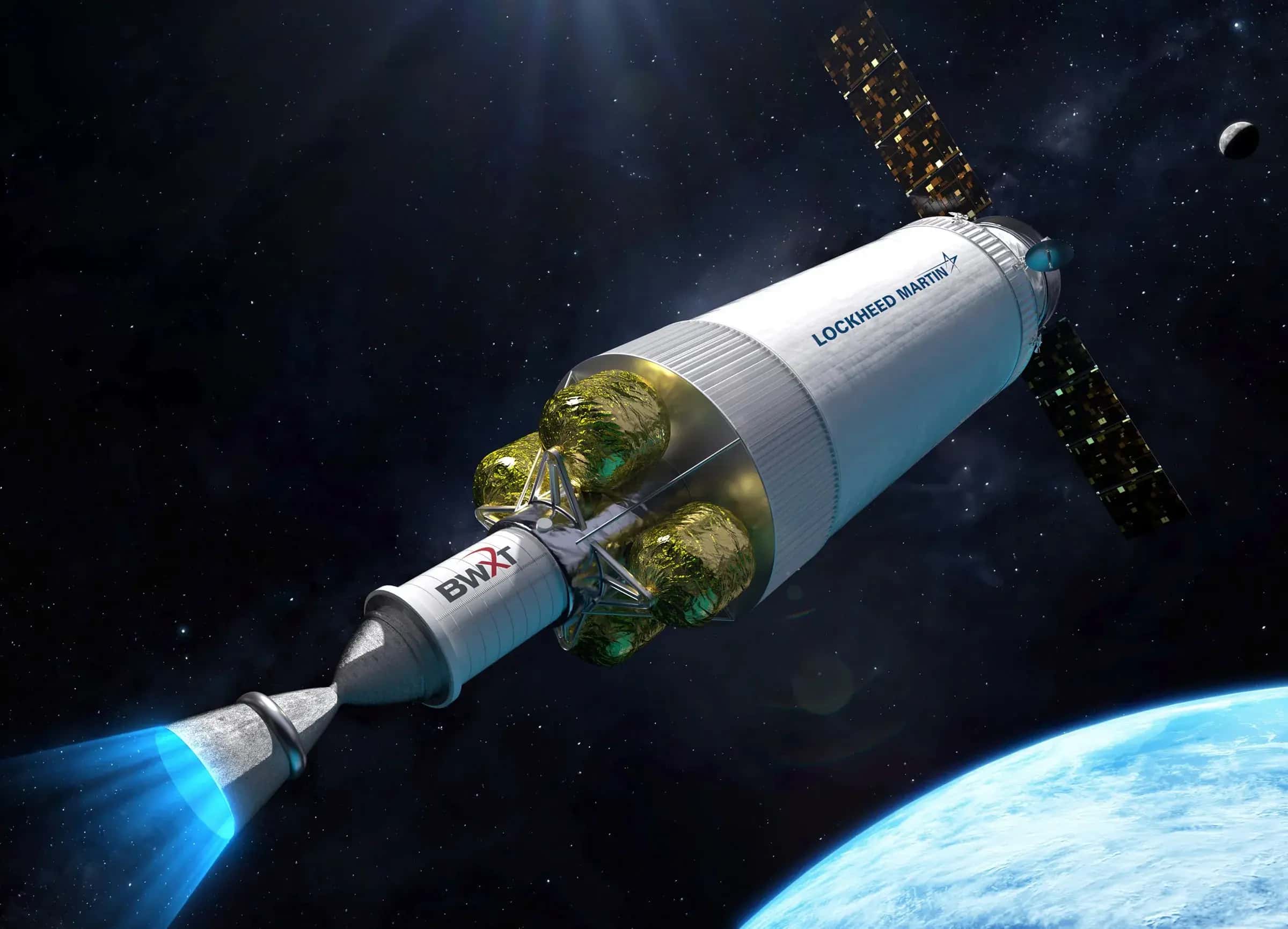
NASA’s S-BNR concept pairs nuclear thermal and electric propulsion in one reactor to speed up Mars missions
Can a new nuclear rocket design really cut the time needed to reach Mars? NASA and industry engineers think it can, at least on paper, with a spacecraft concept that combines nuclear thermal propulsion and nuclear electric propulsion in a single reactor system called the synchronal bimodal nuclear rocket, or S-BNR.
That matters because transit time is one of the hardest constraints in any serious crewed Mars architecture. NASA’s shortest existing blueprint still leaves astronauts spending 620 days in space and 30 days on Mars, which is a long exposure window for radiation, microgravity, and the operational fragility that comes with keeping humans alive that far from Earth. The headline number here is the one mission planners will focus on: the concept could bring total transit time down to about 335 days or less. That is a striking number. If it holds up beyond modeling, it changes the conversation from incremental optimization to a different class of interplanetary logistics.
Still, this is a concept, not a flight program. Space propulsion history is crowded with elegant architectures that looked compelling in analysis and then ran into materials limits, reactor control problems, or simple budget reality. The timing is not random. Interest in nuclear propulsion has been building again as the Mars discussion shifts from distant aspiration to a harder engineering problem, and as the space sector becomes more comfortable funding systems once treated as politically difficult. What used to sit mostly in government studies is now increasingly tied to commercial launch economics and a broader push to build infrastructure for cislunar and deep-space missions.
The S-BNR idea is straightforward in principle and tricky in execution. One part of the system uses nuclear thermal propulsion, where liquid hydrogen moves through a hot reactor core and exits at high velocity, producing the kind of high thrust needed for major maneuvers. The claimed performance there is a specific impulse of 900 seconds or more, roughly twice that of efficient chemical rockets. The second part uses nuclear electric propulsion. In that mode, reactor-generated electricity powers electric thrusters that produce much lower thrust, but do so with far better efficiency over long periods. For deep-space mission design, that combination is attractive because the high-thrust engine handles moments when brute force matters, while electric propulsion does the patient work in between.
That hybrid logic is not new. The problem has been making it practical. Earlier bimodal nuclear concepts tried to stitch together these propulsion modes with complicated valves and fuel elements that had to survive very different operating conditions, which is exactly where theoretical elegance often collides with real hardware. The new architecture tries to simplify that. Instead of forcing one set of internals to do everything, the S-BNR uses two independent fluid loops within one reactor. One reactor zone carries high-temperature fuel elements tuned for thermal propulsion, while another uses lower-temperature elements optimized for steady electricity generation.
My read is that this design choice is the real story, not just the Mars headline. In aerospace, simplification is often more valuable than raw ambition. If engineers can reduce the number of failure-prone transitions between modes, they may have a better shot at turning a nuclear propulsion paper study into a hardware program that survives review boards and budget cycles.
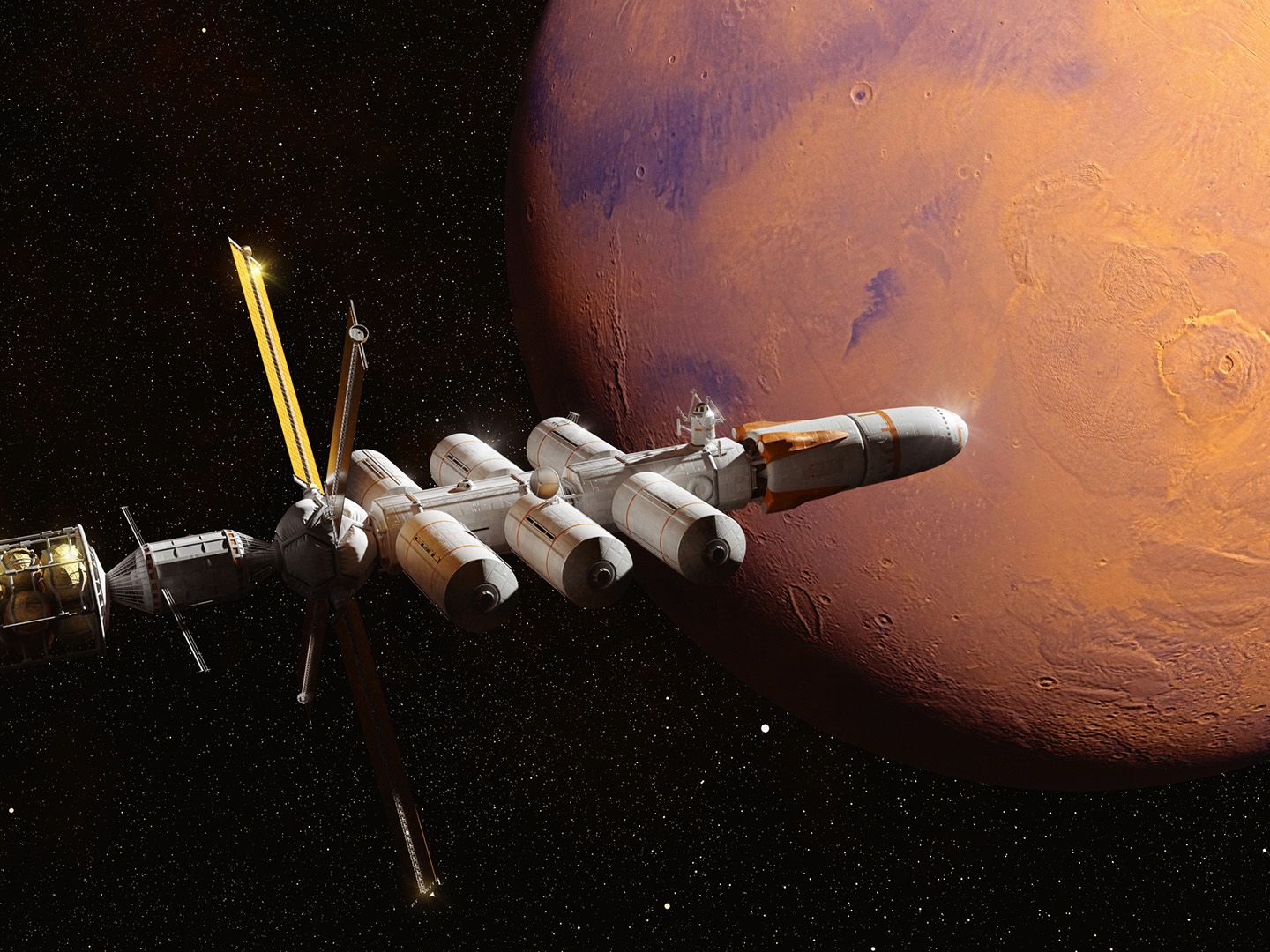
The S-BNR Architecture: Splitting the Core to Shrink the Solar System
The Synchronal Bimodal Nuclear Rocket (S-BNR) represents a fundamental shift in how aerospace engineers are approaching deep-space logistics. By combining Nuclear Thermal Propulsion (NTP) for brute-force acceleration and Nuclear Electric Propulsion (NEP) for highly efficient cruising, the architecture targets a Mars transit time of under 335 days, nearly halving the 620-day round-trip baseline currently dictating crewed mission planning.
The Engineering Elegance: Two Loops, Zero Valves
The historical roadblock for bimodal nuclear engines has been the catastrophic complexity of switching a single, highly radioactive reactor core between two completely different operating regimes. Early designs relied on complex mechanical valves to redirect superheated propellants—a major single-point-of-failure risk.
The S-BNR bypasses this mechanical nightmare through geometric material design:
The High-Temperature Zone (HTFE): An open fluid loop optimized for thermal propulsion. It rapidly heats liquid hydrogen to produce the massive, temporary thrust needed to escape Earth's gravity well.
The Low-Temperature Zone (LTFE): A closed loop running continuously to generate electrical power. This powers the ship's life support and drives the highly efficient ion thrusters (NEP) that accelerate the craft during the long, quiet months of transit.
Because the regime split lives in the material of the core rather than in moving parts, the electrical generator never stops. For a crewed mission, where continuous energy is the ultimate safety reserve, this is a massive operational advantage.
The Commercial and Geopolitical Reality
While the headline focuses on Mars, the S-BNR is quietly dual-use infrastructure. A spacecraft capable of executing high-thrust orbital maneuvers and sustained, efficient deep-space transit is the exact profile required for cislunar logistics, heavy cargo transport, and strategic defense mobility.
However, investors and program managers must price in the reality that the S-BNR is currently a paper architecture. It sits several steps behind near-term hardware programs like NASA's SR-1 Freedom (targeted for late 2028), which is a pure nuclear-electric demonstrator. The critical gating item for the S-BNR will not be the propulsion physics, but the terrestrial test infrastructure. Qualifying a dual-loop reactor that produces radioactive exhaust requires a specialized, politically sensitive ground-testing regime before it ever reaches a launch pad.
There is also a business angle here that gets less attention than the Mars travel-time hook. A single-reactor platform that can support both fast maneuvers and long-duration efficient thrust could become useful well beyond one flagship crewed mission. Cargo transport, outer-planet missions, and deep-space infrastructure all become more plausible when propulsion is not forced into a binary choice between high thrust and high efficiency. That is where founders and investors should pay attention, even if this remains years from operational reality. Propulsion improvements do not just shorten journeys, they reshape mission economics, payload assumptions, redundancy planning, and the kinds of in-space services that can become viable businesses. If transit profiles change, adjacent markets change with them.
None of that erases the engineering wall in front of this concept. Researchers still need to show stable reactor control across a wide power range, which is difficult enough before adding the duty cycle demands of two different propulsion modes. They also need fuels and materials that can survive extreme thermal stress over long durations without turning maintenance assumptions into fantasy.
Heat management is another brutal constraint. So is neutron management. In nuclear systems for space, the glamorous part is always the propulsion concept, but the real gating items are often shielding, materials degradation, thermal rejection, and whether the system can keep generating power continuously for years without some small subsystem becoming a mission-ending weakness. Ground testing is an especially awkward piece of the roadmap. Any engine that may produce potentially radioactive exhaust creates a test infrastructure challenge before it creates a flight opportunity. That is not merely an engineering issue, it is a permitting, public acceptance, and program management issue, especially where nuclear projects tend to attract intense scrutiny even when the strategic logic is clear.
This is also why progress, if it comes, will likely be staged and slow. The development path described for this concept moves from modeling and nonnuclear testing to component-level trials, then to fueled reactor testing, and only after that to in-space demonstrations. That sequence sounds obvious, but in practice it means the most interesting headline is also the furthest from proof. There is a familiar pattern here in frontier aerospace. First comes the architecture that promises to collapse mission time or costs. Then comes the period where materials science, test facilities, safety review, and government procurement determine whether the concept is a future platform or just another impressive rendering.
For NASA, the case is strongest if Mars remains the long-term destination that drives human deep-space planning. Shorter travel times are not just about convenience. They reduce exposure to the space environment and potentially ease some of the life-support burden, while giving planners more flexibility in how they structure crewed missions.
For industry, the opportunity is broader and arguably more practical. A propulsion system that can switch between high-thrust maneuvers and highly efficient sustained propulsion would be useful for many mission classes that stop short of putting people on Mars. That makes this more interesting than a one-mission science project. It starts to look like infrastructure. I also think the renewed focus on nuclear propulsion reflects a deeper truth about the current space market. Reusable launch has changed access to orbit, but it has not solved movement once you are in space. The next strategic bottleneck is not getting off Earth alone, it is moving payloads faster, farther, and with more flexibility after launch.
That trend line has been visible for a while. DARPA and NASA’s DRACO effort put nuclear thermal propulsion back into mainstream policy discussion. Long-running work on compact fission systems for lunar and deep-space use has kept reactor questions alive. And the sustained use of electric propulsion across commercial satellites has normalized the logic that efficiency can be worth waiting for, until a mission profile demands that you cannot wait.
The S-BNR concept sits at the intersection of those threads. It borrows the case for nuclear thermal propulsion when speed matters, and the case for electric propulsion when efficiency matters, then tries to solve the systems engineering problem in the middle. That is exactly the kind of approach that can look obvious in hindsight if it works, and painfully difficult while it is being built.
There is also a geopolitical subtext. The U.S. has incentives to maintain leadership in nuclear-enabled space systems as civil and defense space priorities continue to blur around cislunar operations, deep-space logistics, and strategic mobility. Any propulsion breakthrough with credible dual-use implications will draw attention for reasons that go well beyond Mars timelines.
That can help and hurt. It can attract money, institutional urgency, and political protection. It can also burden programs with extra oversight, mission creep, and expectations that outrun technical maturity.
For now, the fairest view is that S-BNR is a serious concept aimed at a real bottleneck. It is not magic, and it does not remove the hard physics or the long qualification path ahead. But if the architecture proves out, it could shift deep-space mission design in ways that chemical systems and pure electric systems each struggle to do alone. The next phase will matter more than the rendering. If the concept advances through nonnuclear testing and into credible component validation, the conversation around Mars transport will start to sound less speculative and more like program planning.
Frequently asked questions
What is the new nuclear rocket design NASA is studying for Mars?
NASA and industry engineers are studying the synchronal bimodal nuclear rocket, or S-BNR. It is a concept that uses one reactor to support both nuclear thermal propulsion for high thrust and nuclear electric propulsion for efficient long-duration flight.
How much could the S-BNR rocket reduce travel time to Mars?
On paper, the S-BNR could cut total transit time for a Mars mission to about 335 days or less. That is much shorter than NASA’s shorter reference plan, which would keep astronauts in space for about 620 days plus 30 days on Mars.
Why does cutting Mars travel time matter for astronauts?
Shorter trips can reduce how long crews are exposed to microgravity, space radiation, and other health risks. Cutting transit time also lowers the operational burden of carrying supplies and supporting astronauts during a long deep-space mission.
How is this nuclear rocket different from a normal chemical rocket?
A chemical rocket delivers strong thrust but is less fuel-efficient over long distances. The S-BNR concept aims to combine nuclear thermal propulsion, which can offer about twice the specific impulse of efficient chemical rockets, with electric thrusters that can run efficiently for extended periods.
What makes the S-BNR design different from earlier bimodal nuclear rocket ideas?
Earlier bimodal concepts often relied on complex valves and fuel systems that had to handle very different operating conditions. The S-BNR instead uses two separate fluid loops in one reactor, with one zone optimized for high-temperature thrust and another for lower-temperature power generation.
What are the biggest hurdles before a nuclear rocket like this could fly?
Engineers still need to prove stable reactor control, durable fuels and materials, long-term power generation, and safe heat and neutron management. Ground testing is also difficult because any reactor-driven exhaust may need to be captured and handled safely if it becomes radioactive.