The High Definition Era Ruined Everything For TV and Games


This is a theory. It’s only a theory. But I think I know the exact point when everything in games and television started to collapse. Or, at least when the foundation cracked a little and the tower began to lean in one direction until it sank into the ground. Let’s stop making metaphors and move on.
I’m going to say something that ages myself because who cares anymore? It’s not like if you think I’m ten years younger you’d be attracted to me, and we’d be married and finally, finally, I can have some peace. I don’t even know you. But, in 2005, I was a new young intern on Saturday Night Live. That was the first full season they were using high definition cameras for HD televisions, which were still new and expensive and not something you bought for $400 during an Amazon sale to replace the other one you got for $400 during an Amazon sale.
The World Was A Very Different Place Before HD

I remember there being a lot of excitement around having HD cameras for the first time. But there was also a lot of added angst over the increased needs and costs for makeup and costumes, the changes to set design to fit different ratios, the changes in lighting, the changes in studio temperatures due to the changes in lighting, and so on. None of this affected me since my job was to basically get coffee and Italian food for famous people at two in the morning, but I remember there being a feeling of vague excitement and slight worry.
And now, 20 years later, I feel like going HD knocked over the first tiny domino in that meme where all the big dominoes later fall. God, I feel like an idiot describing memes.
Let me back up: I love my 4K TV. I love watching classics on Blu-ray and seeing the tiniest details. I love that I no longer have to watch a pan and scan, 4:3 version of a film if I missed it in the theaters. I love that video games now look better than CGI does in half the movies from the ‘90s. I love that the HD era has brought more detail, more screen space, and technology that has itself brought more options to entertain my empty, miserable life. Just because I’m complaining here does not mean I’m buying expensive digital-to-analog converters to prove I’m some sort of purer soul. That boat has sailed.

But look at the current problems in the entertainment industry, especially TV and video games. Netflix has been concerned that many of its biggest hit series have a massive drop off between seasons, while Xbox is struggling with a declining fanbase while shutting down companies and killing projects in mid-production to cut costs.
And, let’s be real, the choice to go fully digital for game releases is a financial one. You get a bigger slice of the pie when you don’t have to share it with a GameStop. In my opinion, some — not all, but some! — of the problems in both industries started in the HD era. Plus, with some triple-A game install sizes bordering on 200 gigs at times, it’s easy for companies to just say the cost of putting them on three Blu-rays isn’t worth it. And you don’t get all those gigs without having to make a game look crisp and perfect on a massive OLED screen.
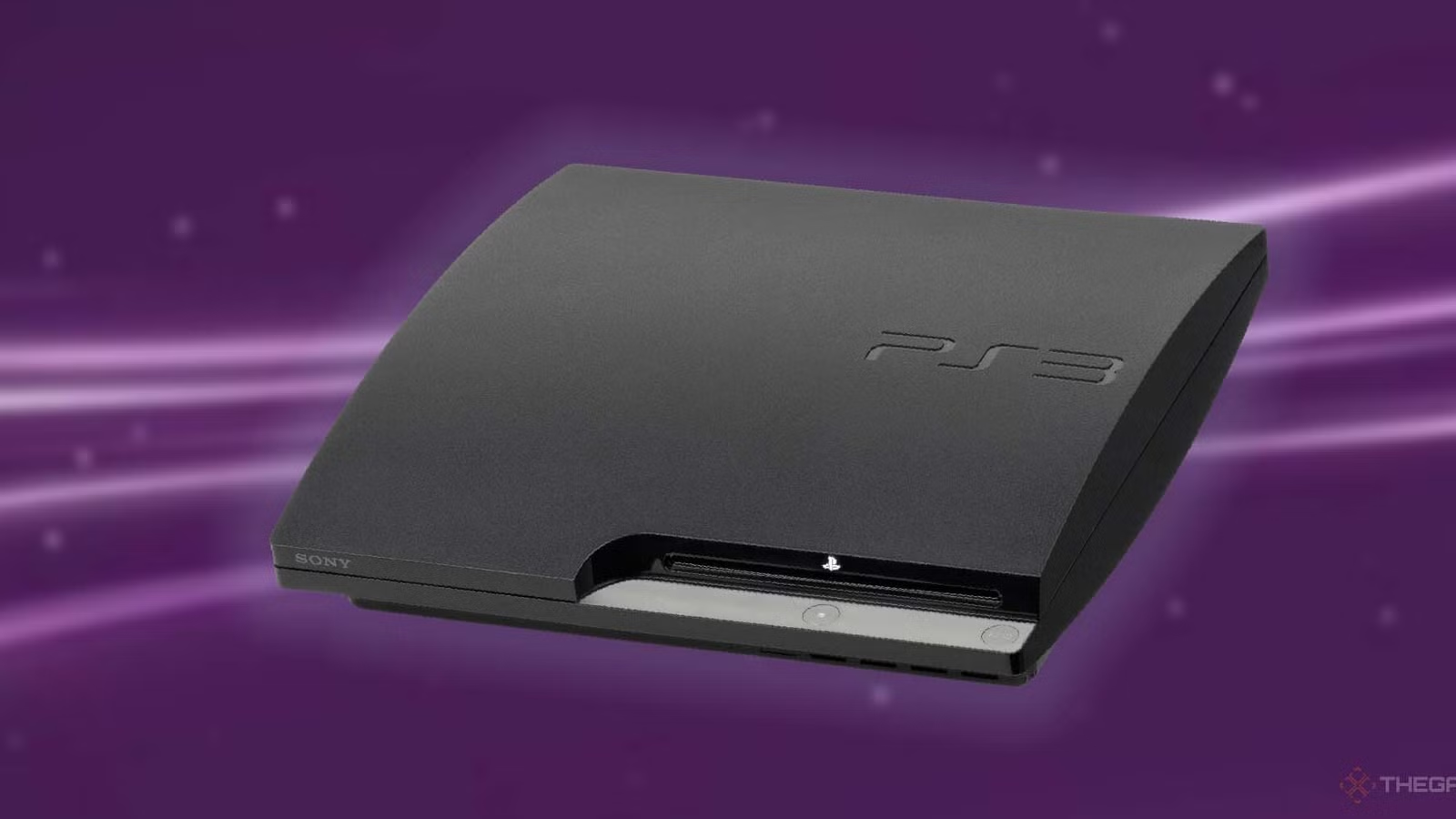
Remember the PS3 and Xbox 360 days when it seemed like Eastern developers were falling behind? A lot of that was attributed to the difficulties of upgrading to high definition. It took time and money to adjust to, and a lot of franchises suffered because of it. We had at least a couple Resident Evil games that made us ask, “Are we kinda done with this franchise?” And while companies like Capcom clearly figured that out over the next two decades to incredible success, those costs are still there. Even more important to the narrative I’ve built in my head from scraps of information: The HD era made it far more expensive to make a video game on average and took far longer to release.

Video game budgets skyrocketed during that PS3 era I mentioned. This was around the time when we heard breathless whispers about productions that cost an incredible, mindbogglingly, unbelievable $20-$30 million. And while a lot of games are still made for budgets like that, we’re also regularly seeing a lot of games that cost many hundreds of millions of dollars and take a decade, if not decades plural to release.
The more intricate they are, the more work needs to be put into them. The more work that needs to be put into them, the more they cost. The more they cost, the more you’ll have executives constantly second guessing everything, demanding changes, doing focus groups, laying off one team and bringing in another, delaying the game, etc. This isn’t high definition’s fault on its own, but it did grease the wheels a bit.
Everything Takes Longer To Make Now

Television faced a similar problem. High definition meant fans expected better looking programming. HD television could let you see the holes in players’ jerseys during a football game, and audiences expected their cop shows and their dramas to look just as good. The budgets for triple-A shows didn’t rise as much as for triple-A games, but the floor for cheaper mainstream shows was raised. While actors in sitcoms were always expensive, you could shoot a whole chunk of them in a matter of days at a relatively low cost.
But as people enjoyed more movie-like experiences on high definition TV, they also became used to more movie-like comedies. Multicam sitcoms now feel like a nostalgic relic or a better era, causing fans to say, “We should have more of those!” and networks to say, “You should watch the new ones we try every three years!” I’ve been in pitch meetings where executives both said they desperately wanted multicams because they’re significantly less expensive and easier to shoot while scoffing at the idea that viewers would want to watch them.
And with all this comes the greater length of productions. Shooting an episode of a high-end television show now might not be significantly more expensive than it was when shooting The Sopranos, but there are some caveats to that. For example, writers’ rooms are now far smaller, so there’s fewer people to pay. Crowd scenes with paid extras are often replaced with CGI. You know they’re just champing at the bit to use AI to ADR actors’ lines. The general cost may be the same, but a lot of people are taking home less money.

In fact, a big reason many streamers tend to cancel shows — even successful ones — around season three is because that’s often when cast contract re-negotiations kick in. Whether a show is big or not, sometimes it’s easier to end it rather than pay people more like they would’ve done with Friends or The Sopranos. Again, that’s not the fault of the HD era, but it is a result of things getting slower and more expensive and more over-analyzed, causing executives to become more anxious, causing things to get even slower and more expensive.
Of course, expenses and network interference have always been an issue. Norm Macdonald got fired by a network executive for making OJ Simpson jokes. Ain’t nothing new. But the slowing down of everything, the keeping successful projects on ice, the endlessly changing the scripts at the last second is all — again, in my limited, stupid opinion — connected to every release being a blockbuster event that must succeed immediately or become a complete financial failure.
If you’re spending movie-like budgets on games and shows that you’re dropping all at once, you better get movie-like returns. Cult classics still pop up after they’re canceled, but making MONEY off later successes has become slightly harder in the streaming era, even with ads. A show like the American version of The Office would never have been given two years to find its footing. A movie like The Shawshank Redemption that had a second life on cable and VHS would never make its money back that way now.

The other day, I realized that I first beat Skyrim when I was 27. I’m 42 now. The first season of Stranger Things launched when I was 32. The fifth and final season came out when I was 41. I do agree with that apocryphal Miyamoto quote about a delay being only temporary while a bad piece of art is forever.
But there’s a limit! I know that every blade of grass has to be perfect, and every character needs to look beautiful in 4K. I also feel like waiting for years for a new season or a new sequel slowly drains some of the excitement out of it. And don’t tell me it’s about complications in the gameplay, because I’d venture that Morrowind was deeper than Oblivion which was deeper than Skyrim. And, no,
I’m not counting Grand Theft Auto 6 in this argument, since they’ve been pretty consistent in releasing content for GTA V, even if the main single-player games themselves are another example of a decades-long gap. Or because GTA doesn’t fit my cute little theory. Take your pick.
Twenty plus years ago, the HD era promised that you could have movie-quality viewing experiences in your own home. And we can! And we do! Releasing any form of art at any point in history has been a risk. But we’re in an era in which even medium-sized productions take forever to make but rely on an immediate, almost instantaneous financial response to be considered successful or worth continuing.

The cost is high, the aesthetic expectations of the audience are higher, and the threshold for whether something is a success is at a height I’d describe as Mount Olympus. Eventually, it has an impact when audiences are trained to think Christmas romances or office comedies should look as good as Game of Thrones. Which, as often as not, doesn’t happen anyway but sure adds a long tail to production!
So, no, the HD era didn’t ruin everything. That headline is an exaggeration. But, to me, and to only me, it feels like that’s when things began to change. Yeah, the streaming model sped it along and brought binge-watching to make shows feel even more like movies. Yeah, services like Game Pass also have complicated budgets by handing out AAA games to people who would’ve spent $70 otherwise.
But a lot of these issues popped up when streaming was still a boondoggle extra in your Netflix physical disc subscription. Rather, I think it’s all downwind of HD TVs raising expectations while making things just a lot more expensive. I’m probably wrong.

- Brand
- Microsoft
- Original Release Date
- November 22, 2005
- Original MSRP (USD)
- $299, £209, €299
- Operating System
- Proprietary, Windows-based
Source link