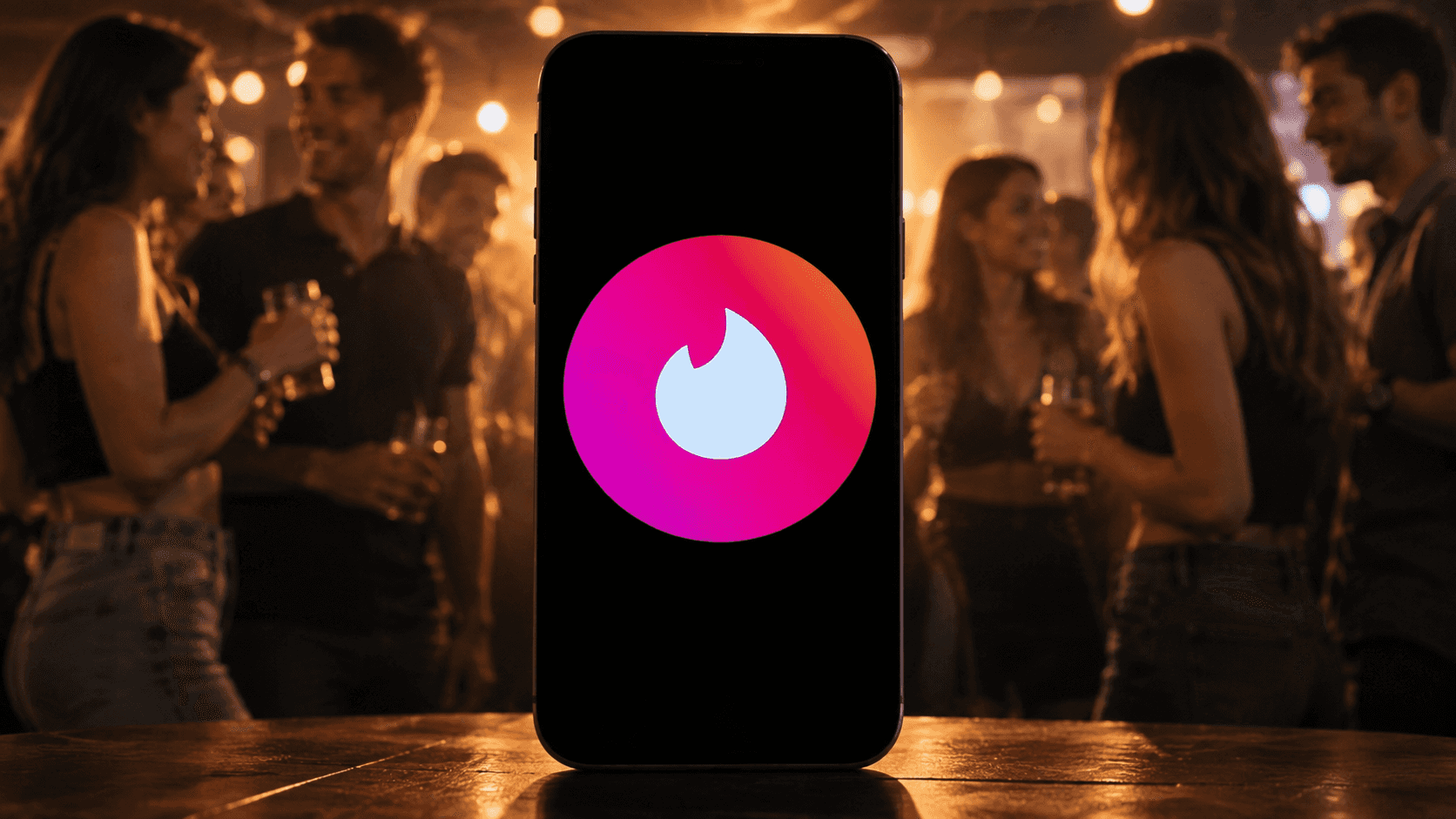
Facing user decline and stock drop, Tinder aggressively expands in-person events to 26 cities, signaling a critical shift in online dating strategy.
Tinder is aggressively expanding its in-person events feature to 26 cities worldwide by September, a critical strategic pivot as its parent company, Match Group, grapples with declining user engagement and a more than 10% drop in its stock price following a disappointing second-quarter earnings report. This move reflects a broader industry recognition that the traditional online dating model is facing headwinds, particularly from Gen Z users seeking more authentic, offline connections. Match Group's financial disclosures revealed Tinder's revenue slipped, contributing to overall softness. While the flagship app saw monthly active users (MAU) decline by 7% in Q2, an improvement from the previous quarter's 8% drop, CEO Spencer Rascoff articulated confidence that daily active user (DAU) growth could turn positive "any day now," a milestone not achieved in over three years. The company's push into real-world events, initially piloted in Los Angeles, encompasses curated gatherings at venues ranging from speakeasies to pottery classes, aiming to lower the pressure associated with initial digital interactions. This strategic shift is directly informed by Match's internal research, which indicates that nearly half of singles aged 18 to 29 express a desire for shared in-person experiences to forge deeper connections. This demographic, having grown up immersed in digital environments, often finds the transition to real-life social interactions challenging. Tinder's Events tab, embedded within its mobile application, serves as a centralized hub for discovering and participating in these curated local activities.
Tinder’s Offline Pivot Is a Necessary Reset, Not a Guaranteed Turnaround Tinder’s plan to expand its Events feature to 26 markets by September is a sensible response to younger users seeking more natural, lower-pressure ways to meet. The Los Angeles pilot has already hosted more than 60 gatherings, suggesting that online-to-offline dating can generate meaningful engagement beyond swiping. However, events alone cannot solve Tinder’s structural challenges. Its monthly active users declined 7% year-on-year, while the daily active-user decline narrowed to 4%. Tinder revenue also fell 1% to $457.5 million during the quarter. In our view, the strategy could rebuild relevance among Gen Z, but execution will be difficult and expensive. Tinder must prove that event participation improves retention, trust and subscriptions—not merely attendance. The real opportunity is to evolve from a swiping app into a broader platform for authentic social discovery.
What It Means
Tinder's expansion into physical events is more than a feature add-on; it represents a fundamental re-evaluation of its product-market fit in a rapidly evolving social landscape. For years, the dating app industry thrived on the efficiency of digital matchmaking, but the pendulum is now swinging towards authenticity and experiential engagement, particularly among younger demographics. This pivot acknowledges a growing fatigue with endless swiping and superficial digital interactions, aiming to re-establish the platform's relevance by bridging the digital divide with tangible, low-pressure social settings. The shift from pure digital utility to experiential platforms is a significant evolutionary leap for dating apps. Tinder, once the epitome of streamlined, gamified digital interaction, is now confronting the inherent limitations of that model. The Gen Z demographic, having grown up online, shows a paradoxical inclination towards offline authenticity, often driven by a perceived burnout from curated digital personas and the mental overhead of constant self-presentation. This segment values shared activities and spontaneous interactions over profile-based assessments, indicating a preference for discovering compatibility through real-time engagement rather than pre-screening based on static data points.
My read is that this pivot is a necessary, albeit delayed, recognition of market forces that have been reshaping social interaction for years. The "swipe economy" has proven incredibly effective for initial introductions, but less so for fostering deep, lasting connections, which is increasingly what younger users report seeking. By offering curated events, Tinder aims to reduce the anxiety of a first date, replacing it with a lower-stakes group activity where connections can form organically. This strategy could differentiate Tinder in a crowded market, moving it beyond mere utility to a platform that facilitates genuine social experiences. However, the operational complexities are substantial. Scaling a network of diverse, engaging, and safe events across dozens of global cities requires significant investment in local partnerships, event management, and robust moderation. The success will hinge not just on the availability of events but on their perceived quality and the ability to attract the right mix of participants. Failure to deliver high-quality experiences could backfire, further eroding user trust and exacerbating the decline in engagement.
Tinder’s monthly active users (MAU) declined by 7% in the second quarter, signaling persistent challenges in user engagement despite parent company Match Group's strategic adjustments.
The Context
This strategic repositioning by Tinder is not an isolated phenomenon but rather emblematic of a broader trend across the digital landscape, where technology companies are increasingly recognizing the value of hybrid online-to-offline models. Beyond dating, we see social platforms like Meetup.com thriving on facilitating real-world groups, and even major tech players experimenting with experiential retail or community hubs. For Gen Z, who navigate a digital world saturated with content and connections, the scarcity of authentic, unstructured in-person interaction has become a premium. This generation often reports feeling overwhelmed by digital noise, leading to a desire for "digital detox" and more tangible experiences. The concept of "swipe fatigue" is a well-documented challenge for dating apps, characterized by users feeling overwhelmed, unfulfilled, or even emotionally drained by the endless cycle of swiping, matching, and superficial conversations. This phenomenon underscores a fundamental disconnect between the promise of endless choice and the reality of meaningful connection. Tinder's move can be seen as an attempt to address this directly, offering an antidote to the often-shallow nature of profile-based interactions. By shifting the initial interaction context from a one-on-one digital chat to a shared group activity, the pressure is diffused, and the potential for genuine rapport increases.
Within Match Group's vast portfolio, Tinder has historically been the high-volume, quick-match engine, while apps like Hinge have leaned into more deliberate, connection-focused experiences. This diversification allows Match Group to cater to a spectrum of dating preferences. Tinder's new strategy indicates a convergence, as the platform seeks to retain users who might otherwise migrate to more "serious" or experiential dating platforms, or abandon apps altogether for organic social discovery. It's an acknowledgment that even the most dominant players must adapt their core product offering to evolving generational behaviors, lest they become obsolete. The company is effectively trying to broaden Tinder’s appeal from a pure dating utility to a broader social discovery tool where dating is a potential outcome, rather than the sole purpose. This blurring of lines between dating, friendship, and general social networking could be a critical long-term play.
What Analysts Say
The market's cautious response to Match Group's Q2 earnings, despite CEO Spencer Rascoff's optimistic outlook on Tinder's DAU growth, reflects deep-seated concerns about the efficacy of a purely digital recovery for the flagship app. While narrowing MAU declines are a positive signal, analysts are likely scrutinizing the cost structure and scalability of the IRL events. The capital expenditure and operational overhead associated with curating and executing events in "dozens of cities" globally could significantly impact profitability margins, at least in the short term, before the strategy proves its ability to drive substantial, monetizable user engagement. The challenge for Tinder is to demonstrate that these events are not merely a marketing expense but a sustainable driver of user acquisition, retention, and ultimately, revenue. Unlike traditional app features, the success of IRL events is highly dependent on local market nuances, cultural preferences, and the ability to build strong community partnerships.
Analysts will be keen to understand the monetization strategy for these events. Are they free to attend, subsidized by Tinder? Will premium access be offered? How will they contribute to the average revenue per user (ARPU) when the core app's subscription model is facing pressure? A clearer path to revenue generation from these new offerings is crucial for investor confidence. My opinion is that the success of this initiative hinges on a nuanced understanding of "social discovery" versus "dating." If Tinder can position these events as genuine opportunities for social connection first, with dating as a natural, unforced byproduct, it stands a better chance of resonating with Gen Z. Simply labeling an event as "for singles" might deter the very users seeking lower-pressure interactions. The key metrics for analysts will extend beyond traditional digital engagement to include the quality of connections formed, the frequency of repeat event attendance, and critically, how many of these interactions translate back into sustained engagement on the Tinder app itself, driving conversions to premium subscriptions or in-app purchases. This signifies a shift in how investors and the company itself must measure success beyond the simplistic swipe count. Investors and industry observers will closely monitor Tinder's progress in expanding these events through September and into the next fiscal quarter. Key triggers to watch include any public statements on event attendance, user feedback metrics, and how these initiatives impact Tinder's average revenue per user (ARPU) and subscription conversion rates. The ultimate success will depend on whether this hybrid strategy can meaningfully reverse the multi-year decline in user growth and cement Tinder's position as a relevant platform for a generation increasingly seeking real-world engagement.
Frequently asked questions
Why is Tinder expanding its in-person events?
Tinder is expanding IRL events to combat declining user engagement and a drop in Match Group's stock price. This strategic pivot aims to adapt to Gen Z's evolving preferences, who are increasingly reconsidering traditional dating apps.
How many cities will Tinder's IRL events expand to?
Tinder plans to aggressively expand its in-person events feature to 26 cities worldwide by September.
What is Gen Z's view on dating apps?
Gen Z is reportedly reconsidering traditional dating apps, leading companies like Tinder to explore alternative engagement models such as in-person events.
How is Match Group performing financially?
Match Group recently reported a disappointing second-quarter earnings report, resulting in a more than 10% drop in its stock price.
What is a 'strategic pivot' for Tinder?
A strategic pivot for Tinder involves shifting from primarily online interaction to significantly investing in in-person, 'IRL' events to re-engage users and adapt to new market demands.
Who owns Tinder?
Tinder is owned by Match Group, a major player in the online dating industry.