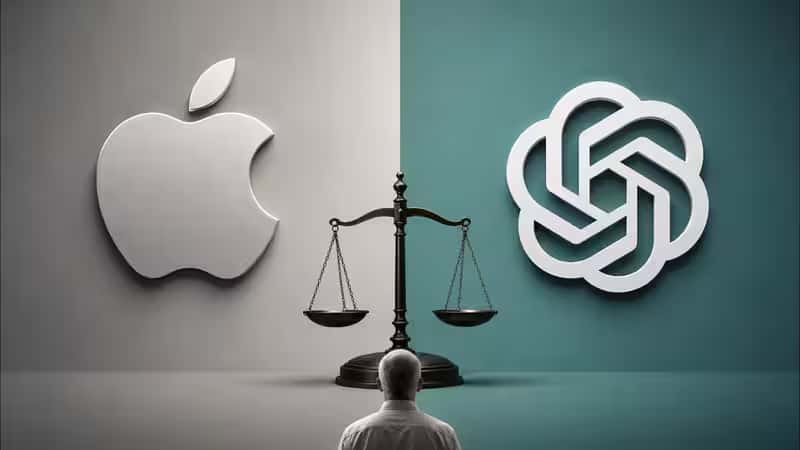
Apple details "pervasive misappropriation" of trade secrets by OpenAI and ex-employees in a 32-page court filing.
Apple filed a 32-page response opposing OpenAI's motion to dismiss a trade secret lawsuit.
The tech giant alleged pervasive misappropriation of its trade secrets by OpenAI and two former employees.
Apple stated it sufficiently identified specific trade secrets and maintained secrecy measures.
A court hearing for the motion to dismiss is scheduled for October 1, 2026.
Apple Inc. filed a 32-page document opposing a motion to dismiss its trade secret lawsuit against OpenAI and former employees, a court filing showed.
Apple alleged pervasive misappropriation of its trade secrets, according to the legal response. The company stated former employees Chang Liu and Tang Yew Tan repeatedly misappropriated its proprietary information, the filing indicated. OpenAI also misappropriated trade secrets through the actions of Liu and Tan, Apple claimed in the document. OpenAI engaged in its own independent conduct of trade secret misappropriation, Apple's filing further stated.
Apple alleged that it suffered injury and ongoing harm due to the alleged actions, the court document showed. These claims form the core of Apple's opposition to the defendants' efforts to dismiss the lawsuit.
What are Apple's Allegations?
Apple's legal response asserted its ownership of specific protectable trade secrets, according to the court filing. The company stated it sufficiently identified these specific trade secrets that defendants Chang Liu, Tang Yew Tan, and OpenAI allegedly misappropriated, the document indicated. The filing stated Apple possesses legitimate ownership of its trade secrets. This ownership is a foundational element in trade secret litigation, legal filings often highlight. Proof of ownership establishes the plaintiff's right to seek protection.
Apple also claimed it implemented reasonable measures to maintain the secrecy of its trade secrets, the filing showed. These measures are critical for a court to recognize information as a trade secret, legal precedents establish. Such steps can include non-disclosure agreements and restricted access protocols. The complaint detailed allegations that Defendant Liu repeatedly misappropriated Apple’s trade secrets. These alleged actions occurred over a period of time, Apple stated in its filing. The nature of these alleged misappropriations forms a key part of the plaintiff's case. Defendant Tan also repeatedly misappropriated Apple’s trade secrets, the company alleged. These separate claims against Tan indicate a pattern of alleged unauthorized use or disclosure. Legal documents often distinguish between different defendants' roles.
Apple's filing further claimed OpenAI repeatedly misappropriated trade secrets. This alleged misappropriation occurred both through the actions of Defendants Liu and Tan, and through OpenAI's own independent conduct. Corporate defendants can be held liable for actions of their employees or their own operations. The company alleged sufficient injury and ongoing harm resulting from these misappropriations. Demonstrating harm is a crucial component of a trade secret claim, legal standards require. It helps quantify the impact of the alleged infringements.
Why are Trade Secrets Important in AI?
Trade secret litigation has become increasingly prevalent across the technology industry. This trend is particularly pronounced in fast-evolving sectors like artificial intelligence. Companies often protect their research, development, and proprietary processes through trade secret laws to maintain competitive advantages, industry practices demonstrate.
The rapid pace of innovation in AI means that algorithms, datasets, and development methodologies hold immense commercial value. Protecting these assets is critical for companies investing heavily in artificial intelligence research and development. Intellectual property security is a cornerstone of competitive strategy. These legal battles frequently involve former employees moving between competing firms. Such transitions raise questions about the transfer of intellectual property and proprietary knowledge. Companies often implement strict contractual agreements to prevent such disclosures. The outcome of these cases can influence employee mobility and corporate strategy in highly competitive markets. They also underscore the increasing importance of robust internal controls for safeguarding sensitive information. Maintaining secrecy measures is a continuous corporate effort.
Global technology firms are increasingly vigilant in protecting their intangible assets. Trade secrets often represent years of investment and innovation. Their loss can significantly impact market position and future product development.
The Apple vs. OpenAI Trade Secret Dispute
Apple’s 32-page opposition to OpenAI’s motion to dismiss marks a significant escalation in the increasingly competitive artificial intelligence hardware market. The lawsuit highlights a complex legal conflict between two tech giants currently collaborating on software integration while fiercely competing in hardware development.
Apple's Core Allegations
The foundation of Apple’s lawsuit centers on the alleged misappropriation of proprietary hardware development data by OpenAI and former Apple employees, Tang Yew Tan and Chang Liu.
Targeted Recruitment: Apple claims OpenAI actively poached veteran engineers, specifically targeting Tan (former VP of Product Design) and Liu, following OpenAI's acquisition of hardware startup io Products.
Data Exfiltration: Liu allegedly exploited a network authentication bug to access and download thousands of pages of confidential technical files, retaining a corporate laptop upon his departure.
Supply Chain Compromise: Tan is accused of utilizing confidential internal project names and encouraging candidates to disclose trade secrets during interviews. Furthermore, Apple alleges OpenAI leveraged this stolen information to approach Apple's trusted suppliers for unauthorized metal-finishing techniques.
Institutional Misconduct: Apple contends that the trade secret theft was not isolated to rogue employees but represented a coordinated, institutional strategy by OpenAI to accelerate its entry into the AI consumer devices market.
The Stakes in AI Hardware
Trade secret litigation is becoming the primary battleground for AI supremacy, particularly in the hardware sector.
High Barriers to Entry: Unlike software, consumer electronics require decades of industrial research, metallurgical R&D, and supply-chain optimization.
Protecting Core Assets: For legacy giants like Apple, hardware R&D and supply-chain logistics are among their most valuable intellectual assets, making strict non-disclosure agreements and digital access controls critical.
Employee Mobility: This case will heavily test the legal boundaries of talent acquisition and technical knowledge transfer between Silicon Valley rivals.
What Happens Next in the Case?
Judge Edward J. Davila is scheduled to hear the motion to dismiss on October 1, 2026, court records showed. The hearing is set for 9:00 a.m. in the United States District Court, Northern District of California, San Jose Division, the document indicated.
A decision on the motion to dismiss could either allow the case to proceed to discovery or require Apple to amend its complaint, legal processes typically entail. Courts often grant leave to amend complaints, especially in complex intellectual property disputes.
The court's ruling will determine the immediate trajectory of Apple's lawsuit against OpenAI and the individual defendants, the filing implied. If the motion is denied, the case would likely move into a discovery phase, involving exchange of evidence between parties.
Frequently asked questions
What is Apple's lawsuit against OpenAI about?
Apple has filed a 32-page response opposing OpenAI's motion to dismiss a trade secret lawsuit, alleging pervasive misappropriation of its intellectual property.
Who is Apple suing in this case?
Apple is suing OpenAI and two former employees, accusing them of misusing its trade secrets.
What does "motion to dismiss" mean in this context?
A motion to dismiss is a formal request by the defendant (OpenAI) to a court to stop the lawsuit from proceeding, arguing that the plaintiff (Apple) has not presented a legally sound case.
Has Apple identified specific trade secrets?
Yes, Apple states in its filing that it has sufficiently identified specific trade secrets and maintained secrecy measures around them.
What is the next step in the Apple vs. OpenAI lawsuit?
A court hearing for OpenAI's motion to dismiss is scheduled, where the judge will hear arguments from both sides before making a decision.
Where can I find more details about Apple's allegations?
The allegations are detailed in Apple's 32-page response filed with the court, which outlines the alleged pervasive misappropriation of trade secrets.