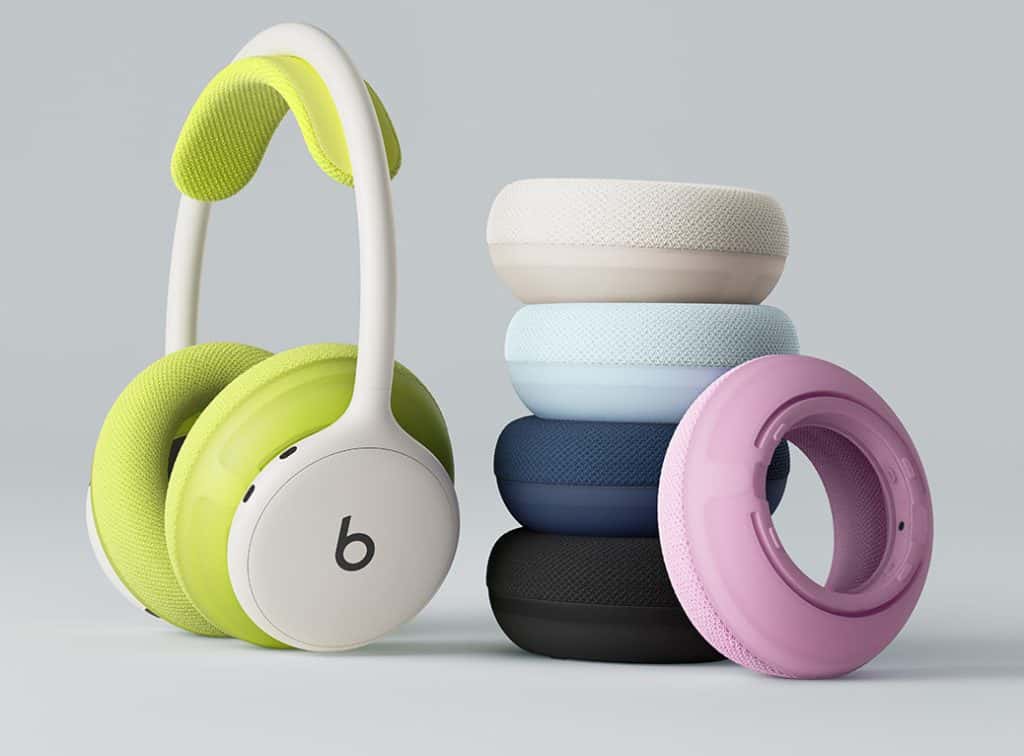
The new $350 Beats 360 delivers top performance, sweat resistance, and replaceable cushions.
Beats has launched the Beats 360, a new $350 over ear headphone positioned as a sport-friendly premium model, with IPX4 splash and sweat resistance and swappable earcup and headband cushions, according to product details in the review updated September 22, 2026.
The Beats 360 use a custom Beats chip with Bluetooth 5.3 instead of Apple's H2 chip, which preserves features such as always on Siri, personalized spatial audio with head tracking and Apple device auto switching, while also supporting Android features through the Beats app.
The headphones are rated for up to 32 hours of playback with noise canceling on, which is eight hours longer than the Beats Studio Pro, and Beats says active noise canceling is 1.75x better than the Studio Pro's performance.
The launch matters because Beats is pushing beyond fashion branding into a more credible premium hardware play, aiming at buyers who want premium performance in a more gym friendly and more Android compatible package.
Beats has introduced the Beats 360, its first major over ear redesign in years, with a $350 price tag and a modular build aimed squarely at workouts and daily use. The product mixes premium audio features with a category twist that Apple itself never quite shipped: sport-minded full-size headphones.
The Beats 360 headphones review, in short, is that Beats has moved its over ear line closer to the top tier on sound, active noise canceling and calls, while making a deliberate tradeoff away from some Apple-only conveniences to reach a broader market.
That matters because over ear headphones have become an odd kind of status object, especially in gyms, airports and city commutes. Apple helped normalize that with AirPods Max, but Beats appears to be targeting the practical gap those headphones left behind. The 360 are IPX4 rated for splash and sweat resistance, something still rare for full-size headphones, and come with swappable earcup and headband cushions that let buyers change both fit and color without replacing the whole product.
Beats President Oliver Schusser said athletes including LeBron James were more involved than usual in product feedback and that the company got unusually strong responses on the 360. Still, the product choices line up with a real trend: more people are wearing over ear headphones to the gym, and a premium pair that officially tolerates sweat is an easier sell than a luxury model buyers are quietly risking on the treadmill.
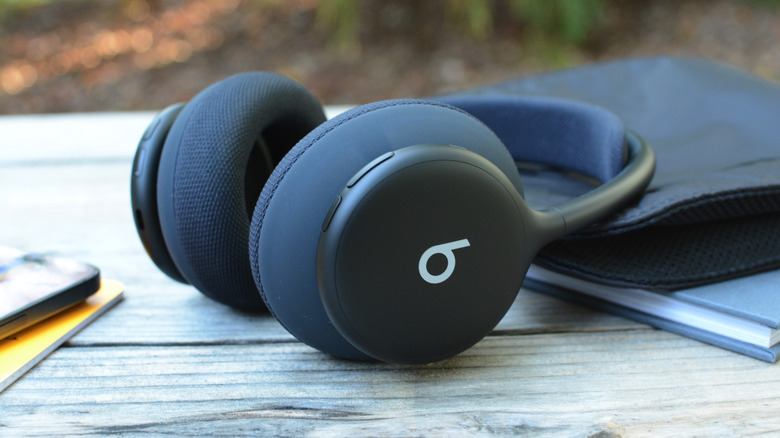
The modular angle is also more than cosmetics, at least on paper. Each pair ships with a matching Knit Performance Kit, and extra Cushion Kits normally cost $50, though Beats is selling them for $10 at launch in select markets including the US. There are four core headphone colors, black, cloud, pink and sky blue, plus optional faux leather UltraPlush cushions in black and cloud. Beats says the headphones can detect which cushions are attached and automatically recalibrate sound, noise canceling and transparency mode.
$350
That puts the Beats 360 directly in premium territory, below some flagship rivals but well above the midrange headphones market Beats has often played in.
Under the hood, Beats did not use Apple's H2 chip. Instead, the 360 run on a custom Beats chip with Bluetooth 5.3. That decision says a lot about where the company sees demand. The headphones still support always on Siri, personalized spatial audio with head tracking and auto switching between Apple devices signed into iCloud. But they also keep stronger Android support through the Beats app, including fast pairing, firmware updates, Find Hub and auto switching between compatible devices.
What buyers give up is just as notable. The 360 don't include wear detection sensors, so music doesn't pause automatically when the headphones come off. They also miss several H2-era AirPods features, including Conversation Awareness, Live Translation and Apple's newer sound controls. There is no wired listening option either, whether via USB-C audio or a USB-C to 3.5mm cable. For frequent flyers, that's not a small omission.
Beats says the hardware design drove part of that compromise. The headphones use a battery in each earcup for balanced weight distribution, with only a thin wire between cups. The result is a 294.5 gram headset, heavier than the 260 gram Beats Studio Pro, but still positioned as easier to wear actively than many premium alternatives. Battery life is rated at up to 32 hours of playback at moderate volume with noise canceling on, according to Beats. The company also says the headphones automatically power down after seven hours of inactivity when noise canceling remains enabled.
Performance is where Beats appears to have done the most catching up. The 360 use new dual magnet dynamic drivers and an upgraded amplifier that deliver 12 decibels higher output than the Beats Studio Pro, according to the review. In practical terms, the claim is less about raw loudness than confidence: Beats wants to be taken seriously by listeners who long associated the brand with bass-heavy tuning and celebrity cachet first, audio nuance second.
The review's broad conclusion was that these are the best sounding Beats headphones to date. The comparison set matters. The 360 were compared with products including AirPods Max 2, AirPods Pro 3 and Sonos Ace Ultra, a $449 rival. They apparently do not surpass the very best premium headphones on naturalness or depth, but they land where a $350 product needs to land, with tighter bass, cleaner presentation and fewer obvious compromises than earlier Beats over ears.
Noise canceling also seems materially improved. Beats says ANC is 1.75x better than on the Studio Pro, thanks to a new microphone array and more processing power. The review placed that performance close to AirPods Max 2 and AirPods Pro 3, though still slightly behind Apple's latest hardware in some settings. Transparency mode was also described as more natural than on the Studio Pro and approaching Apple's current standard.
One area where the 360 appear to stand out is voice quality. Beats says the headphones use a three microphone beam-forming system, a new voice processing architecture, a new system on a chip platform with nearly twice the processing power of the prior Beats platform, and AI-trained algorithms. That reflects how the category has shifted. For buyers taking calls from sidewalks, airports and open offices, call quality is no longer secondary.
The background
This launch fits a broader pattern inside Apple's audio portfolio. AirPods have become the default for the company's highest-end wireless features, while Beats has increasingly been used as the more platform-flexible, more design-forward brand. The Studio Pro already pushed in that direction. The Beats 360 go further by trying to do something Apple has only been rumored to consider, a more athletic alternative to AirPods Max without fully abandoning premium pricing.
There is also a competitive angle here that shouldn't be missed. The premium headphone market has gotten more crowded, not less. Sony and Bose still define much of the mainstream standard. Sonos is trying to carve out a premium audio niche with Ace Ultra. Nothing's CMF Pro Headphones, priced at $80, have already shown there is interest in swappable parts even at the low end. Beats is effectively arguing that customization, sweat resistance and cross-platform support can justify a high price if the core audio performance finally holds up.
The pricing strategy may be the biggest tell. Beats products often debut at one number and settle at another. The review points out that Beats Studio Pro launched at $350 and later sold for $250 or less in flash sales, while remaining on the market at a $300 list price. If that pattern repeats, the 360 could become much more competitive by the holiday shopping season. For now, though, Beats is asking buyers to pay flagship money for a product that still lacks wired audio and some H2 software perks.
What's next
The near-term question is pricing, not positioning. If Beats keeps the 360 at $350 through the holidays, it will be testing how much value buyers place on the mix of modular design, better-than-usual Android support and improved call quality. If the product follows the Studio Pro path and starts seeing meaningful discounts before year-end, it could quickly move from interesting premium experiment to one of the more practical high-end headphone buys in Apple's orbit.
Frequently asked questions
What are the standout features in the Beats 360 headphones review?
The Beats 360 stand out for combining premium over-ear sound with IPX4 splash and sweat resistance, which is uncommon in this category. The review also highlights swappable earcup and headband cushions, giving the headphones a more modular and repair-friendly design.
How much do the Beats 360 headphones cost in the US?
According to the review details, the Beats 360 launch at $350 in the US. That places them in the premium wireless headphone tier alongside other flagship over-ear models.
Are the Beats 360 good for workouts and outdoor use?
Yes, the Beats 360 are positioned as a sport-friendly premium model thanks to their IPX4 splash and sweat resistance. That means they should handle light rain, sweat, and everyday active use better than many standard over-ear headphones.
Do the Beats 360 use Apple’s H2 chip?
No, the Beats 360 use a custom Beats chip instead of Apple’s H2 chip. Even so, the review says they retain key features such as always-on Siri and modern Bluetooth 5.3 connectivity.
What makes the Beats 360 modular?
The modular design comes from replaceable earcup cushions and a swappable headband cushion. This setup can improve long-term comfort and may help users refresh worn parts instead of replacing the entire headphones.
Are the Beats 360 the best-performing Beats headphones so far?
Based on the review framing, yes—the Beats 360 are described as the best-performing Beats yet. That suggests stronger overall audio, feature balance, and usability than earlier Beats over-ear models.