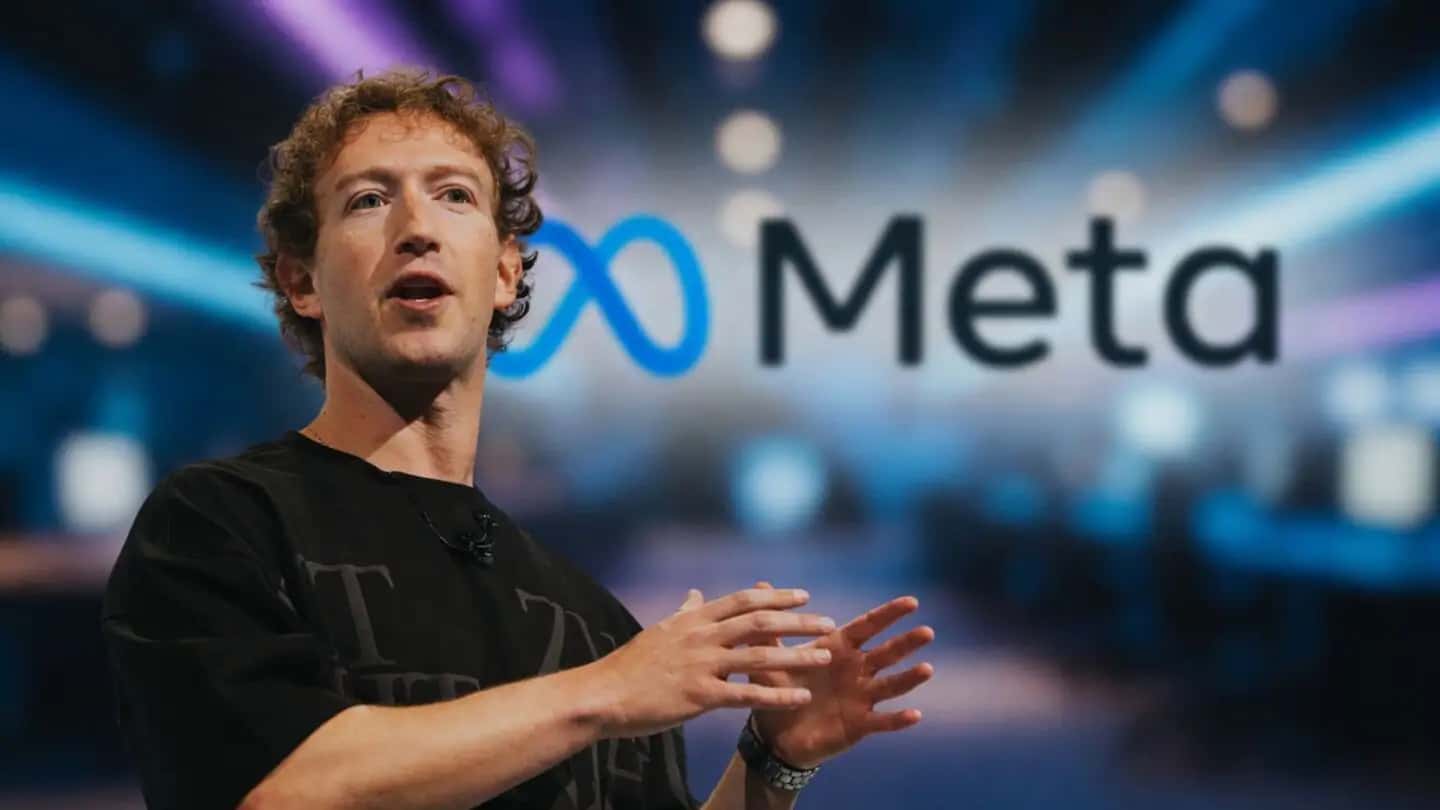
Meta CEO Mark Zuckerberg's new 6,500-word manifesto outlines his bold vision for AI, positioning Meta's innovation as key to America's future.
Mark Zuckerberg, CEO of Meta, has published a comprehensive 6,500-word open letter, outlining his vision for artificial intelligence and positioning Meta’s unrestricted innovation as crucial for the future of America and the global spread of its values. The manifesto directly asserts that Meta's AI will craft a future beneficial for everyone, driven by groundbreaking technological advancements.
This isn't Zuckerberg's first foray into such broad, philosophical statements, but its timing is particularly pointed. Meta is heavily investing in AI infrastructure and talent, striving to reassert its leadership in the next computing paradigm after its costly pivot to the metaverse. The current landscape sees Meta navigating intense competition while facing increasing scrutiny over AI's societal impact.
Central to Zuckerberg’s argument is the promise that AI will deliver "personal superintelligence" to individuals, drastically enhancing their capabilities across various domains. This ambitious claim suggests an AI that acts as a profound augmenter of human intellect and productivity, moving beyond mere tools to become an intrinsic part of daily life.
However, this optimistic outlook stands in stark contrast to a growing global sentiment. The American public is exhibiting increasing hostility towards AI, and politicians across the spectrum are pushing for regulatory frameworks. Even some leading AI companies have advocated for a more cautious pace of development, highlighting concerns about safety and control.
The broader industry context reveals a fierce battle not just for technological supremacy, but for narrative control. Giants like OpenAI and Anthropic are all aggressively pursuing AI, each attempting to shape public perception and regulatory outcomes in their favor. This manifesto from Meta is undeniably a strategic move, intended to influence both investors, who are pouring unprecedented capital into AI startups and infrastructure, and policymakers grappling with the technology's rapid evolution.
This push by Zuckerberg underscores a critical divergence within Big Tech regarding the future of AI development. On one side are the proponents of rapid, uninhibited innovation, believing that the benefits far outweigh the risks of moving fast. On the other, a growing chorus advocates for a more measured, safety-first approach, concerned about potential misuse, algorithmic bias, and the long-term societal implications of unchecked AI. This philosophical split echoes earlier debates around the internet’s early days and social media’s explosive growth, but with exponentially higher stakes.
My read is that this manifesto is a direct challenge to the burgeoning "AI safety" movement. Zuckerberg is essentially arguing that restraint is not just unnecessary, but actively detrimental to progress and global competitiveness. This posture could embolden other less cautious players in the ecosystem, potentially accelerating a technological arms race where ethical considerations might be sidelined in favor of speed and market dominance. For founders and VCs, it delineates a clear, high-stakes choice: align with rapid deployment or prioritize the development of responsible, ethically-governed AI systems.
The practical implications for the global startup ecosystem are significant. Should Meta's vision prevail, the pressure on startups to innovate at an accelerated pace, often with fewer resources for extensive safety testing or ethical reviews, will intensify. This could either foster groundbreaking, rapid advancements or lead to a landscape ripe with unforeseen consequences. The regulatory environment, still nascent, will be crucial in determining which path the industry ultimately takes.
Global policymakers are already grappling with how to regulate AI, with various efforts setting precedents for comprehensive oversight. Zuckerberg's letter can be seen as a pre-emptive strike, attempting to steer the conversation in the U.S. and beyond away from restrictive frameworks and towards a trust-based, innovation-first model. The outcome of this lobbying effort will significantly shape market access and compliance burdens for all players.
Beyond Western regulation, the global race for AI talent, infrastructure, and influence is intensifying. This isn't solely about spreading "American values," it's about establishing Meta as a dominant global platform provider for AI, akin to its historical role in social networking. The geopolitical ramifications of who controls the underlying infrastructure for "personal superintelligence" are immense, touching on data sovereignty, national security, and economic power projection.
The economic impact of widespread "personal superintelligence" could be transformative, promising unprecedented productivity gains but also raising concerns about job displacement and wealth concentration. Meta, through this manifesto, is positioning itself to be a primary beneficiary of this economic shift, attempting to define the terms under which this transformation occurs and how value is captured across the new AI-driven economy.
Mark Zuckerberg has drawn a definitive line in the sand regarding the future of artificial intelligence. In a sweeping 6,500 word manifesto, the Meta CEO has aggressively rejected the industry's growing safety first movement. Instead, he is championing a vision of unrestricted innovation aimed at delivering personal superintelligence to the masses. This is far more than a philosophical musing. It is a calculated strike aimed directly at both cautious competitors and eager regulators. While rivals quietly lobby for restrictive frameworks that could solidify their early market dominance, Meta is weaponizing rapid deployment. Zuckerberg is essentially arguing that slowing down is not just unnecessary, but actively dangerous for American competitiveness and global technological progress. For the startup ecosystem, this philosophical split presents a high stakes crossroads. If Meta's vision prevails, founders will face immense pressure to prioritize speed and scale over extensive ethical reviews. The global race to build the infrastructure of tomorrow is no longer just about raw computing power. It is a fierce battle for narrative control, and Zuckerberg just made it clear that Meta intends to build fast, regulate less, and define the economic terms of the new AI economy.
The next few quarters will be critical in determining whether Zuckerberg’s vision of optimistic, unrestricted AI development gains widespread traction or if the prevailing mood of caution leads to a more regulated, fragmented future. Founders and VCs betting on AI must watch this space intently; the evolving regulatory and competitive landscape will dictate much of the innovation runway and the ultimate trajectory of the AI revolution.
Frequently asked questions
What is Mark Zuckerberg's latest manifesto about?
Mark Zuckerberg's recent manifesto outlines his extensive vision for artificial intelligence, emphasizing Meta's role in driving unrestricted innovation to benefit America and propagate its values globally. He asserts that Meta's AI will create a universally beneficial future through groundbreaking technological advancements.
How long is Zuckerberg's AI manifesto?
The manifesto published by Mark Zuckerberg is a comprehensive 6,500-word open letter.
What role does Meta play in Zuckerberg's AI vision?
Meta is positioned as crucial for unrestricted innovation in AI, essential for shaping America's future and spreading its values globally.
What does Zuckerberg believe AI will do for America?
Zuckerberg believes Meta's AI will craft a future beneficial for everyone in America, driven by groundbreaking technological advancements.
How was Mark Zuckerberg's AI manifesto released?
Mark Zuckerberg published his vision as a comprehensive open letter.
What are the main goals of Meta's AI innovation?
The main goals are to drive groundbreaking technological advancements, ensure a future beneficial for everyone, and spread American values globally.