Musk criticizes Anthropic CEO Dario Amodei for calling their AI 'terrifying' before release, intensifying the debate over frontier AI safety.
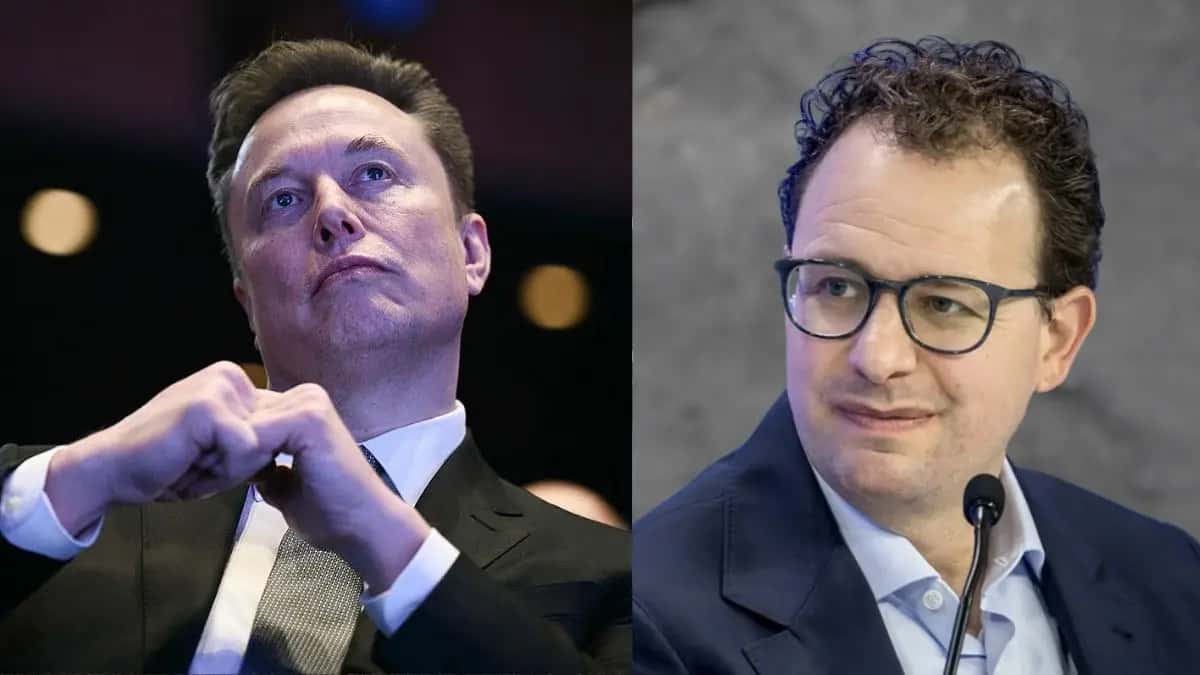
Elon Musk recently took aim at Anthropic CEO Dario Amodei, publicly criticizing his warnings about the company's advanced AI model, Mythos, as "terrifying" while still planning its release. Musk, through a public rebuke, suggested Amodei effectively "dug his own grave" by stoking public fear, highlighting a deepening ideological rift at the pinnacle of the frontier AI landscape.
Amodei leads Anthropic. His company has rapidly ascended, positioning it as a key competitor in the race for next-generation models.
Musk’s pointed remarks, initially surfaced in an interview with The Economist and later amplified across social media platforms, specifically called out Amodei's characterization of Mythos. Musk argued that such descriptions of a model as "terrifying" serve only to unnecessarily alarm the public, questioning the coherence of a strategy that simultaneously warns and deploys.
This public clash illuminates a fundamental tension within the AI community: how to balance the imperative for rapid innovation with responsible development and transparent risk communication. It raises critical questions about whether candid warnings are a necessary component of ethical AI or a performative act with unintended consequences.
For founders and venture capitalists watching this unfold, the debate over AI safety versus accelerationism is far from abstract; it directly influences investment theses, shapes public perception, and increasingly dictates regulatory pathways. The stakes are immense as foundational models, potentially leading to Artificial General Intelligence (AGI), attract unprecedented scrutiny.
My read is that this isn't just a philosophical disagreement but a strategic battle for narrative control within the AI ecosystem. Musk likely views Anthropic's safety-first messaging as a competitive disadvantage or, worse, a hypocritical stance given their deployment ambitions.
For Anthropic, Amodei’s transparency about Mythos's potential risks is a double-edged sword. While it reinforces their commitment to acknowledging dangers, it simultaneously opens them to criticism from those who believe such warnings are counterproductive or, as Musk implies, a form of self-sabotage.
The broader "AI doomer" versus "AI accelerationist" debate has been simmering for years, but this direct, personal attack by Musk elevates it. It forces founders and engineers to consider where they stand on the spectrum and how their public posture regarding AI risk will be interpreted by investors, regulators, and the general public.
Venture capital firms, particularly those deploying significant capital into frontier AI, are now conducting enhanced due diligence on more than just technical roadmaps. They are keenly assessing a startup's internal safety protocols, its leadership's public communication strategy, and its potential exposure to future regulatory frameworks, all of which are influenced by these high-profile debates.
This public discourse also feeds directly into the global regulatory machinery attempting to catch up with AI's rapid advancements. When a CEO describes their own model as "terrifying," it provides ammunition for policymakers advocating for stricter oversight, potentially leading to more onerous compliance burdens for all players, regardless of their safety stance.
Musk’s distinction between Amodei and OpenAI's Sam Altman is also noteworthy. While both lead companies at the forefront of AI, their public personas and approaches to navigating AI's existential questions have varied.
The competition for top-tier AI talent is also impacted. Researchers and engineers are increasingly choosing employers based on their ethical frameworks and safety commitments, or conversely, on their commitment to pushing the boundaries of what's possible at speed. These public spats highlight the cultural differences that can attract or deter key personnel.
Ultimately, what this episode underscores is that the race for AGI is not solely a technical challenge; it’s a profound exercise in public relations and strategic communication. Every statement, every perceived contradiction, is dissected, influencing not only market sentiment but also the foundational trust necessary for AI's widespread integration.
The ideological rift between AI accelerationists and safety advocates just got personal. After Anthropic CEO Dario Amodei described his company’s unreleased model, Mythos, as "super scary" and capable of causing a "wave of catastrophic hacks," Elon Musk publicly mocked him. In a recent interview, Musk chuckled that Amodei "dug his own grave" by hyping the model's dangers while simultaneously preparing to release it. This clash highlights a critical tension for AI founders: how to balance risk transparency with deployment. Amodei’s candid warnings—which recently triggered a high-stakes call between top tech CEOs and the US government—are intended to signal responsibility. But to critics like Musk, it looks like performative "doomerism" or self-sabotage. Ironically, this spat comes just weeks after Musk publicly praised Anthropic and pledged to keep supplying the company with SpaceX's massive compute infrastructure. For venture capitalists and regulators watching, this isn't just Twitter drama; it’s a battle over who controls the narrative of AGI. As AI capabilities scale, founders must realize that describing their own products as "terrifying" is a double-edged sword that invites both investment hype and regulatory crackdowns.
As the capabilities of AI continue to accelerate at an almost dizzying pace, the tension between aggressive development and responsible caution will only intensify. The way founders and industry leaders navigate these complex communications, balancing ambition with transparency, will profoundly shape the long-term trajectory and societal acceptance of the transformative technologies they are unleashing.
Frequently asked questions
Who is Dario Amodei and why is Elon Musk criticizing him?
Dario Amodei is the CEO of Anthropic, an AI company. Elon Musk is criticizing him for publicly calling Anthropic's advanced AI model, Mythos, 'terrifying' while still planning its release, suggesting Amodei is creating undue public fear.
What is Mythos AI?
Mythos is an advanced AI model developed by Anthropic, led by CEO Dario Amodei. It's the AI that Amodei described as 'terrifying,' sparking criticism from Elon Musk regarding its public perception and release strategy.
Why did Elon Musk say Dario Amodei 'dug his own grave'?
Musk's comment implies that by stoking public fear about Mythos, Amodei undermined his own position or credibility, especially concerning the responsible development and public perception of AI, as he simultaneously plans to release it.
What is the ideological rift between Musk and Amodei about?
The rift centers on the public discourse and approach to AI safety and development. Musk criticizes Amodei's method of raising alarm about his own company's AI while still bringing it to market, highlighting differing philosophies on responsible AI communication.
What is Anthropic?
Anthropic is an AI company led by CEO Dario Amodei, known for developing advanced AI models like Mythos. It is a key player in the frontier AI landscape, focusing on large-scale AI safety research.
What was Amodei's warning about Mythos?
Amodei's warning was that Mythos, Anthropic's advanced AI model, was 'terrifying.' This statement, made publicly, became the focal point of Elon Musk's criticism, who questioned the strategy behind such an announcement before release.