Chinese EV giant BYD's August humanoid robot unveiling signals a major shift in industrial automation and the global tech race.
The global race to build practical humanoid robots just got a significant new contender. Chinese electric vehicle and battery giant BYD is set to unveil its own humanoid robot in August, a move that signals a serious acceleration in the push for advanced industrial automation.
Here's why this matters deeply: When a manufacturing powerhouse like BYD, known for its massive production scale and vertical integration, throws its weight into humanoid robotics, it’s not just another tech demo. It’s a clear indicator that the technology is maturing rapidly and poised to move from research labs into real-world factory floors.
BYD's reputation as a major EV manufacturer, known for its massive production scale and vertical integration, positions them uniquely. Their extensive experience in complex manufacturing, supply chain management, and battery technology gives them an inherent advantage in developing robots that are not only intelligent but also robust, efficient, and cost-effective for industrial deployment.
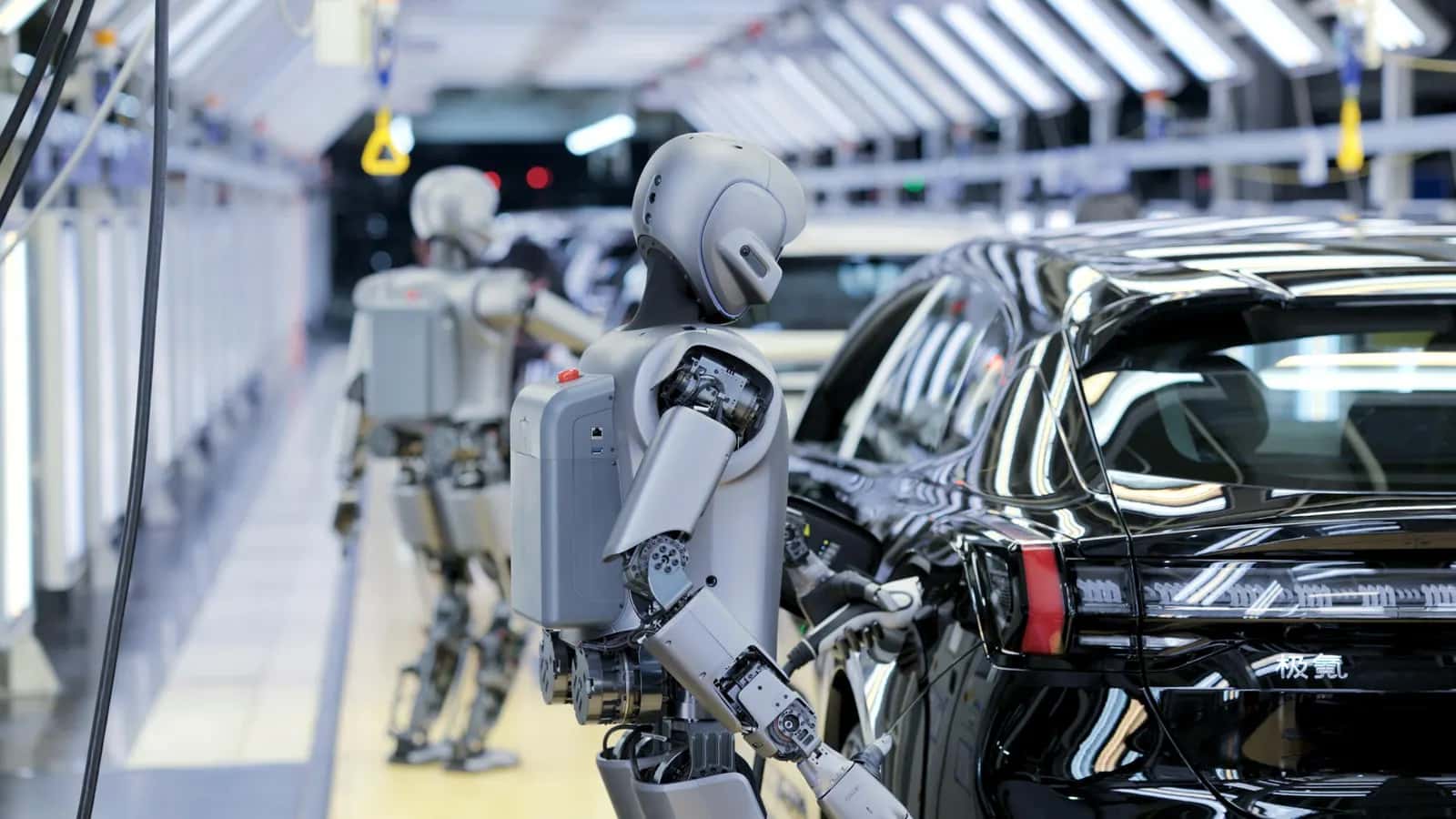
This isn't just about building a robot; it's about integrating it into an existing, vast ecosystem. BYD operates numerous gigafactories and production lines across the globe, already employing a high degree of automation. Introducing humanoid robots into these environments could provide an immediate, large-scale proving ground, allowing for rapid iteration and refinement that many pure-play robotics startups can only dream of.
My read is that BYD's entry underscores a broader industry trend: the convergence of advanced AI, sophisticated mechanics, and the pressing need for flexible labor solutions. This isn't merely a speculative venture for them; it's a strategic investment in future proofing their manufacturing capabilities and potentially creating a new revenue stream.
What does BYD's entry mean for the humanoid robot market?
BYD's announcement immediately intensifies an already competitive landscape. Companies like Tesla, with its Optimus robot, Agility Robotics with Digit, and Figure AI, backed by significant funding from tech giants, are all vying for leadership in this nascent but rapidly expanding sector. Each player brings a distinct focus, from Tesla’s vision of general-purpose utility to Agility’s logistics-specific applications.
What sets BYD apart is its profound industrial heritage. Unlike many robotics firms that start with technology and then seek applications, BYD begins with a deep understanding of manufacturing challenges. They know firsthand the repetitive tasks, the hazardous environments, and the need for adaptable labor that traditional fixed automation cannot address. This perspective could lead to a highly practical and immediately deployable robot design.
The implications for global manufacturing are substantial. As nations grapple with aging workforces and labor shortages, especially in developed economies, humanoid robots offer a compelling solution. They can perform tasks typically done by humans on assembly lines, in warehouses, or even in retail, filling gaps and boosting productivity without requiring extensive retooling of existing infrastructure.
Furthermore, BYD's prowess in battery technology and electric powertrain development could give its robots a significant edge in terms of endurance, power efficiency, and overall operational cost. Robotics is energy-intensive, and a company that controls its own battery supply chain can optimize performance and cost in ways competitors might struggle to match.
When Chinese EV giant BYD confirmed it will unveil its first humanoid robot this August, the industry braced for a masterclass in industrial automation. Instead, BYD pulled a brilliant, unexpected maneuver: the robot isn’t heading to a gigafactory; it’s heading to a car dealership. Nicknamed "Xiao Di," the 1.61-meter robot is slated to debut at BYD’s "Di Space" venue in Zhengzhou. Equipped with multimodal interaction, 360-degree vision, and real-time translation for 12 languages (six Chinese dialects and six foreign), Xiao Di is built to greet customers, explain models, and demonstrate in-car tech. BYD’s Executive VP, Stella Li, has stated a goal of placing two to three robots in every dealership to enhance the showroom experience, aiming for commercial deployment in one to two years. This is a masterstroke in consumer adoption. While competitors like Tesla and Agility Robotics sell investors on a trillion-dollar dream of replacing warehouse labor, BYD understands that for humanoids to scale, ordinary people must first accept them. By introducing Xiao Di as a highly capable, multilingual sales assistant, BYD is normalizing the technology on the retail floor before unleashing it on the factory floor.
How does BYD's approach compare to other robot makers?
While companies like Boston Dynamics have long showcased incredible feats of robot agility and balance with Atlas, their focus has largely been on advanced research and demonstration rather than mass industrial deployment. Tesla's Optimus, on the other hand, aims for a general-purpose, scalable robot that could eventually serve both industrial and consumer needs, though its timeline for widespread commercial viability remains a subject of intense speculation.
Agility Robotics' Digit has made significant strides in warehouse logistics, partnering with companies like Amazon to test its bipedal robots in fulfillment centers. Their design emphasizes mobility and handling packages, directly addressing specific logistical pain points. Figure AI is also targeting similar industrial applications, securing major investments to accelerate its development and deployment.
BYD's strategy, I believe, will be more pragmatic and vertically integrated, at least initially. Their primary goal will likely be to use these robots to enhance efficiency and reduce labor costs within their own vast manufacturing operations. This internal deployment strategy allows them to perfect the technology in a controlled, real-world environment before potentially offering it to external customers.
This internal-first approach carries a distinct advantage: a built-in customer for extensive robot-hours of testing and improvement. Imagine humanoid robots performing complex assembly tasks on an EV production line, handling materials, or assisting human workers with precision tasks. This practical application data will be invaluable for rapid product evolution, potentially allowing BYD to quickly scale production and deployment if successful.
The broader trend here is not just about making robots that look like humans, but making robots that can seamlessly integrate into human-centric workspaces. Humanoid form factors are increasingly seen as the most adaptable for environments designed for people, from opening doors to operating existing machinery. The ongoing advancements in AI, particularly in perception, manipulation, and natural language understanding, are finally making these ambitious goals feasible.
This global push towards versatile automation also has significant geopolitical dimensions. China has aggressively promoted robotics as a cornerstone of its national industrial strategy, aiming for leadership in advanced manufacturing and technological self-sufficiency. BYD's move is a powerful manifestation of this ambition, potentially positioning China at the forefront of the next wave of industrial automation.
For workers, this shift signals a future where repetitive, physically demanding, or hazardous tasks are increasingly handled by machines. While concerns about job displacement are valid, it also opens avenues for new roles in robot supervision, maintenance, and programming. The emphasis will shift towards reskilling and upskilling the workforce to manage and collaborate with these advanced robotic colleagues.
Looking ahead, the next few years will be critical for the humanoid robotics sector. BYD’s August debut will undoubtedly be closely watched, not just for the robot's capabilities, but for the company's deployment strategy. The challenge remains in perfecting dexterity, ensuring robust software, and driving down costs to make these robots truly ubiquitous. However, the entry of a manufacturing giant like BYD is a powerful endorsement of the technology's readiness to reshape industries, promising a future where human-robot collaboration is increasingly common across the global economy.
Frequently asked questions
What is BYD doing in the humanoid robot space?
BYD, a leading Chinese electric vehicle and battery manufacturer, is set to unveil its own humanoid robot in August. This strategic move marks its entry into the rapidly evolving humanoid robot market, aiming to leverage its manufacturing prowess for advanced industrial automation.
Why is BYD's entry into humanoid robots significant?
BYD's entry is significant because it's a manufacturing powerhouse with massive production scale, suggesting a serious intent to accelerate the development and deployment of practical humanoid robots, potentially disrupting the industry.
When will BYD unveil its humanoid robot?
BYD is scheduled to unveil its humanoid robot in August.
What industry is BYD primarily known for?
BYD is primarily known as a major player in the electric vehicle (EV) and battery manufacturing industries.
What is the primary goal of developing humanoid robots?
The primary goal is often to achieve advanced industrial automation and to perform tasks in various human-centric environments.
How does BYD's move impact the global tech race?
BYD's move intensifies the global tech race for practical humanoid robots, bringing a significant new contender with vast manufacturing capabilities to the forefront.