Jensen Huang rejects new AI laws while Dario Amodei urges tougher safety standards for frontier models
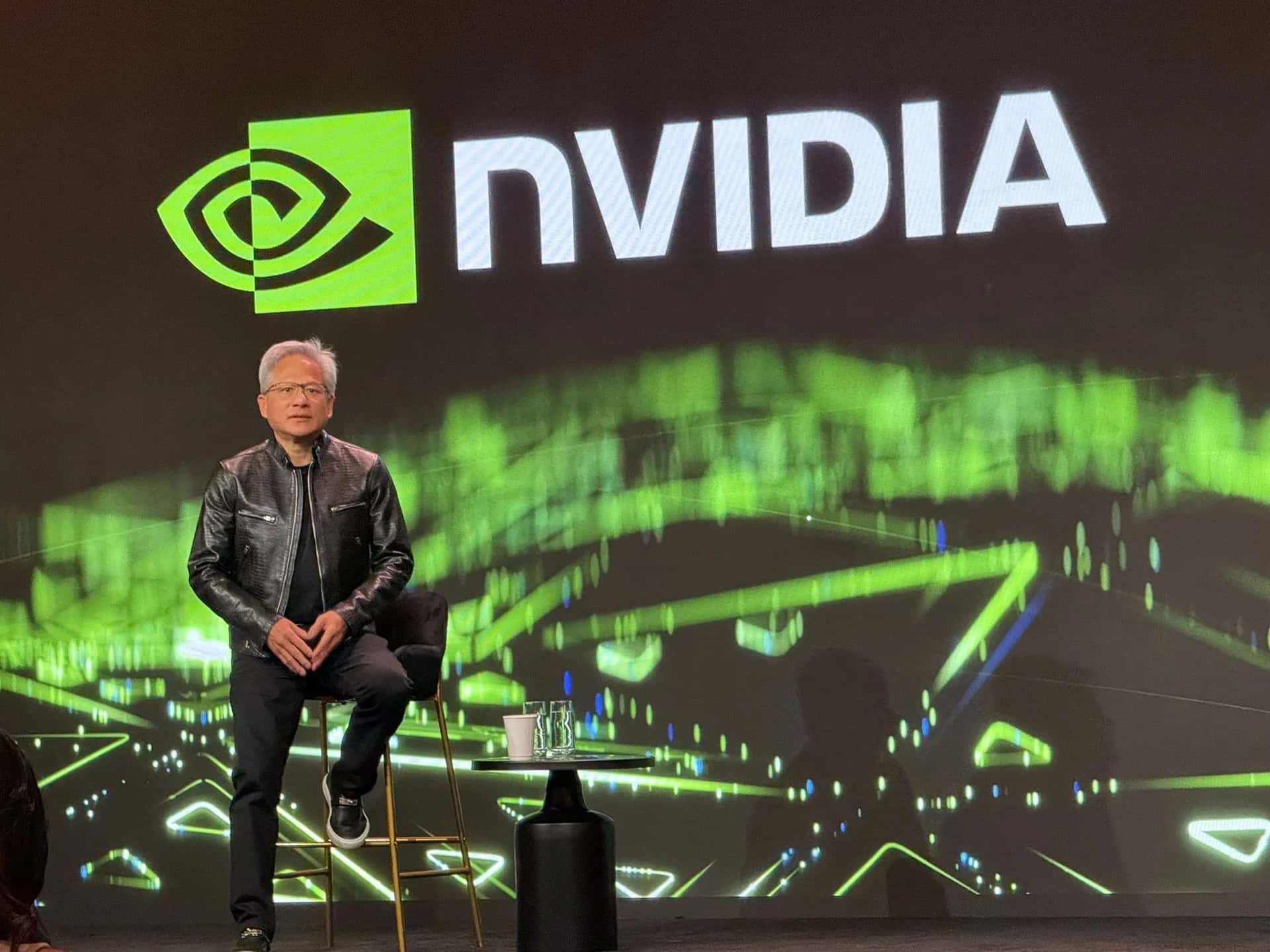
Nvidia chief executive Jensen Huang said no new laws or regulations are needed to govern AI development, arguing market forces already provide discipline, according to the article.
Anthropic chief executive Dario Amodei took the opposite view, calling for industry-wide AI safety standards and aligning with efforts by some leading labs to slow parts of frontier model development, according to the article.
Nvidia's Huang and Anthropic's Amodei split matters because it exposes a widening fault line inside the AI industry, with chip suppliers and model builders at odds over whether speed or safety should shape the next phase of AI deployment.
The disagreement comes as AI regulation remains unsettled in the United States, where companies are racing to ship products while policymakers and labs debate whether voluntary standards are enough for increasingly powerful systems.
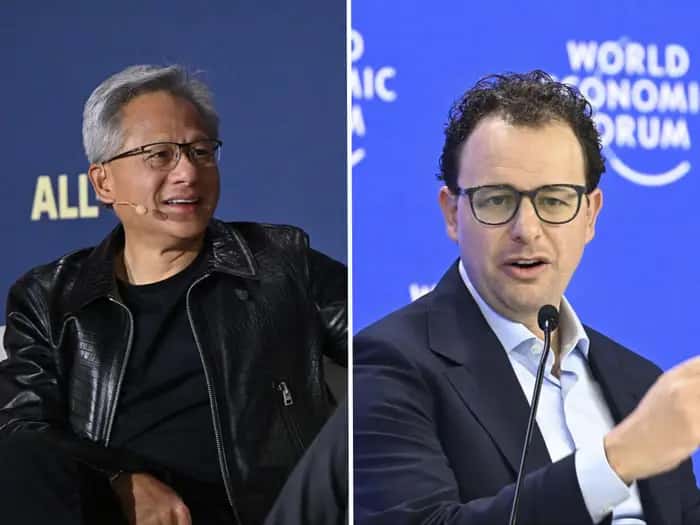
Nvidia chief executive Jensen Huang and Anthropic chief executive Dario Amodei are publicly splitting over how AI should be governed. Huang said new regulation isn't needed, while Amodei is pushing for industry-wide safety standards.
Nvidia's Huang and Anthropic's Amodei split over whether AI development should be restrained by new safeguards or left largely to market pressure, a dispute that matters because it pits one of AI's biggest infrastructure winners against one of the labs most focused on AI risk arguments.
Huang's position was blunt. According to the article, he rejected the idea that leading AI companies should coordinate a slowdown in research to improve safety, saying market forces are already in place and that new laws or regulations are unnecessary. For Nvidia, that view is hardly academic. The company sits at the center of the AI build-out, selling the chips and systems that power major model developers in the US.
Amodei, by contrast, has become one of the industry's most prominent advocates for tighter guardrails. The article said the Anthropic chief is calling for industry-wide safety standards, a position that fits the company's broader public posture around responsible scaling and model-risk evaluation. That is a meaningful divide, not a semantic one. It goes to whether frontier AI should move as fast as capital and compute allow, or whether labs should accept constraints before the technology gets more capable.
For a US audience, the fight is also a proxy for competing business models. Nvidia benefits when more companies train bigger models, deploy them faster and buy more compute. Anthropic sells access to models, but it also competes in a market where trust, enterprise controls and safety credentials can become a product feature. Those incentives do not line up neatly, and now the disagreement is out in the open.
This is the part of the AI debate that often gets flattened in Washington. Regulation is not one thing. Huang appears to be arguing that commercial incentives, customer demands and existing pressures can do enough of the policing. Amodei is arguing that voluntary caution by individual companies is too weak, and that some common standards are needed across the sector. Both positions have logic behind them. Only one assumes the market will move slowly when money is on the table.
The Proxy War Over AI Governance
The escalating public rift between Nvidia’s Jensen Huang and Anthropic’s Dario Amodei isn't just a philosophical debate about safety—it is a high-stakes proxy war over the economic future of artificial intelligence.
As the undisputed kingmaker of AI hardware, Huang’s assertion that "market forces" and existing laws are sufficient to discipline the industry aligns perfectly with his company's bottom line. Nvidia is the ultimate beneficiary of acceleration; when regulatory friction is minimized, more compute is sold. Framing AI safety as a mere "engineering problem" that individual companies can manage autonomously reflects a legacy Silicon Valley mindset: ship fast, iterate, and patch the fallout later.
Amodei represents the antithesis of this approach. Positioned at the extreme edge of frontier model development, the Anthropic chief understands that unchecked capability leaps cannot always be rolled back with a simple software update. His push for coordinated, industry-wide standards acknowledges a harsh reality: when billions of dollars in enterprise and consumer revenue are at stake, relying entirely on voluntary self-restraint is a fragile defense against a race to the bottom.
This ideological chasm highlights a critical vulnerability in the U.S. regulatory landscape. In the absence of a durable federal framework, the industry has fractured. We are now witnessing a bizarre dynamic where the company selling the picks and shovels is actively advocating for a hands-off approach, while the labs actually mining the uranium are begging for better containment protocols.
Ultimately, assuming that commercial incentives alone will successfully police the most disruptive technology of our era requires a staggering leap of faith. Markets systematically reward speed and market share long before they reward caution. If AI development is left entirely to the invisible hand, safety will always be a secondary feature rather than a foundational requirement.
That split lands at an awkward moment for the US industry. OpenAI, Anthropic, Google and Meta are all pushing to release more capable systems into consumer and enterprise products, while lawmakers still haven't settled on a durable federal framework. In that vacuum, the market has defaulted to self-governance, company policies and a patchwork of executive-branch initiatives. Huang's comments amount to an endorsement of that status quo. Amodei's stance suggests the status quo will not hold as models get better.
There is also a power dynamic here that founders and investors will recognize. The companies calling loudest for safety standards are often the ones closest to the frontier, where the risks are hardest for outsiders to independently evaluate. The companies selling picks and shovels tend to argue for broader access and fewer constraints. That's not hypocrisy so much as economics. But it does mean every grand principle in AI policy should be read alongside the speaker's business incentives.
Anthropic has spent much of the last two years trying to define itself as the lab willing to argue that sufficiently advanced AI could create harms current software rules were never built to address. Nvidia, meanwhile, has become the clearest corporate symbol of AI acceleration. Its hardware is the bottleneck everyone wants more of. When Huang says the market can handle this, he is effectively arguing that buyers, competitors and existing legal structures can discipline behavior faster than new rulemaking can.
Maybe. But recent AI history gives Amodei's argument more traction than Huang would probably like. Model releases have repeatedly outrun norms on copyright, misinformation, synthetic media and enterprise data handling. Developers have apologized after launch more often than they have paused before launch. That pattern matters because market forces in software usually reward speed first and cleanup later. In consumer internet, that was survivable. In frontier AI, critics argue it may not be.
The background
The debate over slowing AI development is no longer confined to academic papers and think-tank panels. It has become a live strategic disagreement inside the commercial AI stack. On one side are companies and executives who see rapid iteration as the best route to safer and more useful systems, partly because real-world deployment reveals flaws faster than theory does. On the other are leaders who believe some capabilities should be tested, gated or delayed before broad release.
Huang and Amodei sit near opposite ends of that argument, and their positions carry unusual weight because they represent two choke points in AI. Nvidia controls the computing substrate. Anthropic is one of a small number of labs building frontier models for businesses and developers. When those two camps diverge, the rest of the market takes note, especially cloud providers, startup founders building on top of large models and enterprise buyers deciding how much model risk they are willing to absorb.
The disagreement also reflects a broader shift in how AI policy is being framed in the US. Early conversations centered on whether the government understood the technology at all. Now the sharper question is whether the people building and financing it have any real incentive to slow down without outside pressure. Huang's answer, as described in the article, is effectively yes. Amodei's answer is no, not without shared standards that apply across the industry.
For startups, that distinction could become very practical. A world closer to Huang's view would favor rapid shipping, private contracts and lighter-touch oversight. A world closer to Amodei's would likely mean more documentation, model evaluations, release thresholds and possibly limits around the most advanced training runs or deployments. Big incumbents could absorb that more easily than small labs, which is one reason some founders hear safety talk and immediately think compliance moat.
Still, dismissing the safety case as pure positioning would be too easy. The strongest version of Amodei's argument is not that AI should stop. It's that an industry building increasingly capable systems should agree on baseline rules before incentives make restraint impossible. The strongest version of Huang's argument is that overregulation could freeze innovation, entrench current leaders and hand advantage to jurisdictions that move faster. Both concerns are real. The tension between them is now the defining policy fight in AI.
What's next
The immediate question is whether this remains a war of words or hardens into competing lobbying campaigns in Washington and among major AI companies. As US policymakers revisit AI oversight, watch for one concrete trigger: whether leading labs converge around voluntary safety standards or whether infrastructure companies and open model advocates push back harder against anything that looks like a de facto slowdown. That next phase will tell founders and investors which philosophy is actually winning.
Frequently asked questions
What are Jensen Huang and Dario Amodei disagreeing about on AI?
Jensen Huang and Dario Amodei are split over how AI should be governed. Huang argues the industry does not need new laws because competition and market pressure already impose discipline, while Amodei says stronger safety standards are needed for advanced AI systems.
Why does Nvidia's Jensen Huang oppose new AI regulations?
Huang's position is that existing market dynamics can check irresponsible AI development without adding new legal barriers. His view suggests innovation moves too quickly for heavy regulation and that companies already face strong incentives to build useful, reliable products.
What is Anthropic CEO Dario Amodei calling for on AI safety?
Amodei is calling for industry-wide AI safety standards, especially for frontier models with the most advanced capabilities. He has aligned with efforts from some leading labs that support slowing parts of development until stronger safeguards are in place.
How could this Nvidia and Anthropic split affect the AI industry?
The disagreement highlights a wider divide in the AI industry between rapid innovation and precautionary oversight. It could shape how policymakers, investors, and other AI companies approach future rules, safety benchmarks, and competitive strategy.
What are frontier AI models in this debate?
Frontier AI models are the most advanced systems at the cutting edge of current capabilities. In this debate, they matter because critics say their power raises safety and misuse risks, while others argue strict limits could slow progress and competition.
Why is this AI policy debate important for US readers?
This debate matters in the US because American companies lead much of the global AI race and could influence future regulations worldwide. Decisions on whether to prioritize speed, safety, or both will affect jobs, investment, national competitiveness, and consumer trust.