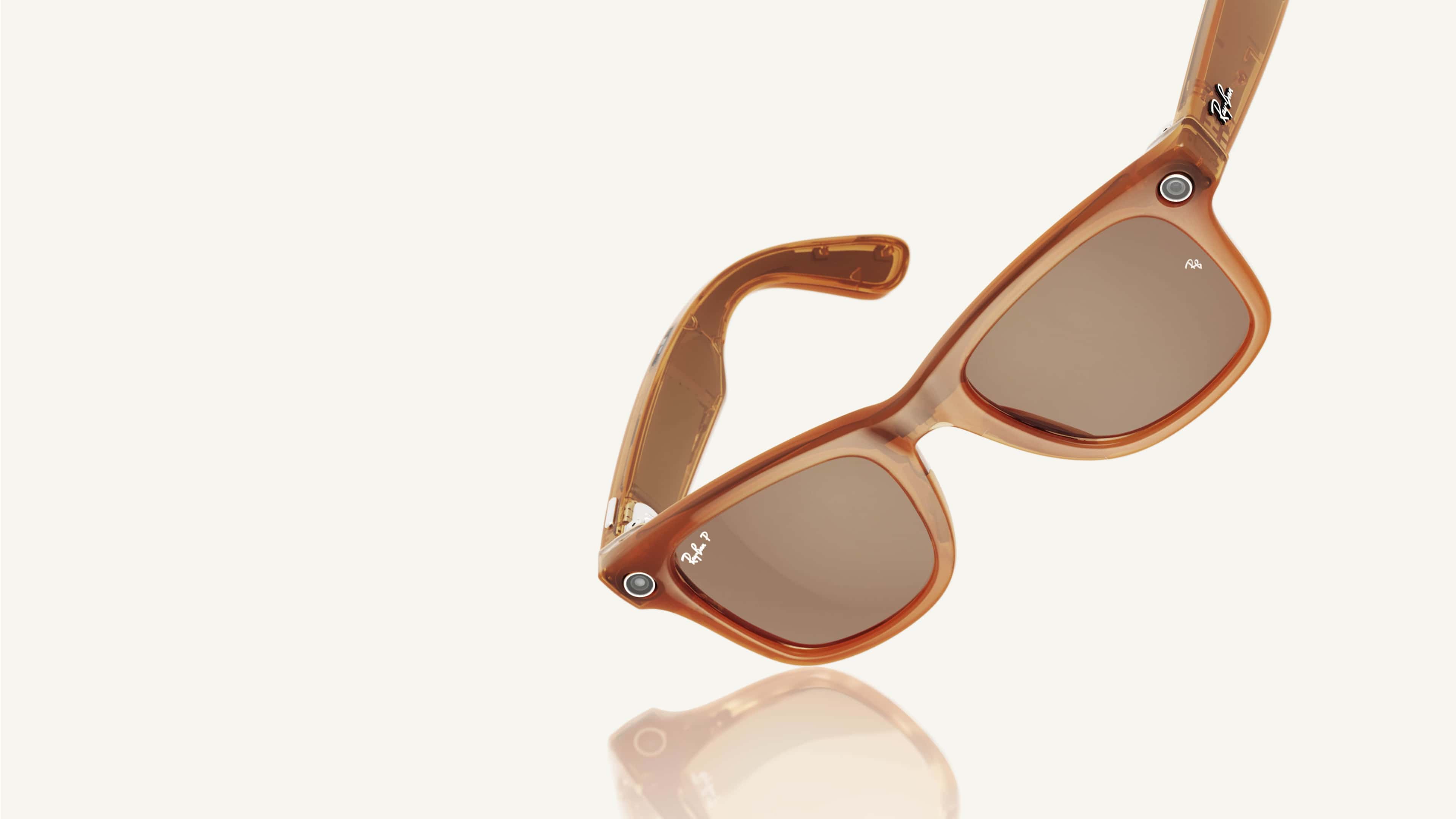
Meta’s reported shift drops cameras from AI glasses as it seeks broader adoption and fewer privacy flashpoints.
Meta plans to launch camera-free smart glasses, according to a September 15, 2026 report, a product shift aimed at easing privacy concerns that have shadowed wearable cameras.
The move suggests Meta is trying to widen the market for AI glasses beyond early adopters by removing one of the product category's biggest social and regulatory liabilities.
Camera-free hardware could help Meta keep pushing voice and audio based AI wearables while reducing the backlash that has followed recording features in consumer devices.
The launch matters because Meta has been one of the most aggressive large tech companies in smart glasses, and a no-camera model would signal that privacy pressure is shaping mainstream wearable product design.
Meta is preparing to launch camera-free smart glasses. The shift, reported September 15, 2026, points to a simpler message for consumers, and a tacit admission that built-in cameras have become a serious obstacle for wearable adoption.
Meta to Launch Camera-Free Smart Glasses is a sign that the company sees privacy, not just battery life or style, as a core constraint on AI wearables. Removing the camera could make the product easier to sell in workplaces, schools and public spaces where recording fears have repeatedly slowed broader uptake.
That matters because Meta has spent the past several years trying to normalize glasses as the next consumer computing form factor. A camera has been central to that pitch so far. It let users capture photos and video, and gave Meta a way to argue that its glasses were more than Bluetooth headphones on a face. But the same feature has also made the category socially awkward in a way smartphones are not. People generally know when a phone is pointed at them. Glasses are murkier.
The company appears to be responding to that friction directly. A camera-free model would let Meta keep the lighter-weight parts of its wearable strategy, including audio, voice commands and AI assistance, while dropping the hardware component most likely to trigger bans by employers, discomfort from bystanders and scrutiny from regulators. For a company with Meta's trust history, that's not a small concession. It's a commercial one.
The timing makes sense. The AI gadget market has been moving toward ambient computing, but consumers have shown much more tolerance for microphones than for face-mounted cameras. Smart speakers found a market despite privacy worries. Camera-first products have had a harder time escaping niche use cases. Google Glass became shorthand for social overreach. Snap's Spectacles stayed limited. Even newer AI wearables have struggled when the value proposition sounded thinner than the privacy tradeoff.
Meta's apparent recalibration also fits the company's recent hardware pattern. The company has shown it is willing to fragment its device lineup if that helps it reach different audiences faster. One version can push the frontier. Another can sand down the rough edges. A camera-free pair would likely be less flashy than Meta's more ambitious AR efforts, but it could be easier to explain and easier to wear every day. That's often the more important test.
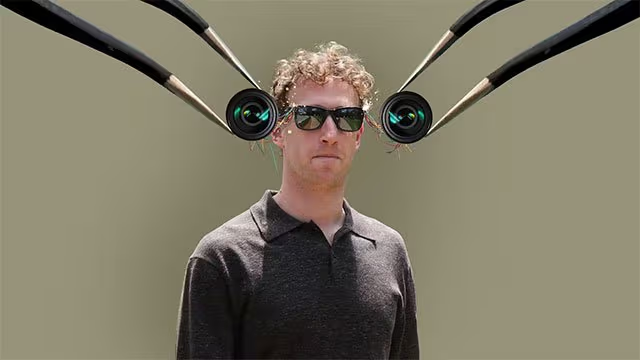
Surrendering the Lens to Win the Face
Meta's reported pivot to a camera-free version of its smart glasses—internally codenamed "Luna"—is a masterclass in reading the room. For years, the prevailing assumption in Silicon Valley has been that the future of ambient computing inherently requires a visual bridge. If artificial intelligence is going to be your ultimate companion, the logic went, it must see what you see.
But Meta is confronting a reality that technology companies continually underestimate: social friction is a far more formidable barrier than technological limitation. While early adopters embraced camera-equipped smart glasses, the broader public has pushed back. From venue bans in schools and cinemas to intensifying regulatory scrutiny over covert recording, the message has been clear: society is not ready to rewrite the etiquette of public spaces to accommodate a lens on every face.
By stripping out the camera and leaning heavily into a six-microphone array powered by its new consumer AI agent, Muse, Meta is making a strategic concession. They are betting that the true killer app for mass-market wearables isn’t passive visual capture, but frictionless, heads-up audio interaction. This effectively removes the social anxiety that has haunted the category for over a decade, immediately unlocking environments that had previously slammed their doors on wearable cameras.
This recalibration shifts the battleground for AI hardware. If visual search and object recognition are sidelined, the pressure falls entirely on the latency, naturalness, and utility of voice interfaces. Ultimately, Meta's camera-free glasses represent a pragmatic realization that sometimes, the best way to drive a revolutionary product into the mainstream is not to add another groundbreaking feature, but to remove the one making everybody uncomfortable.
There's also a competitive angle here that goes beyond privacy headlines. Apple has moved cautiously in head-worn consumer hardware and has generally framed privacy as a product feature, not a compliance burden. Amazon's wearable efforts never broke out. OpenAI and other AI players have signaled interest in devices, but most of the category is still searching for a form factor people will actually accept in public. If Meta can position glasses as useful AI companions without the creep factor of passive image capture, it may have a more practical route to scale than rivals chasing more futuristic hardware.
For founders and investors, the more interesting read is what this says about where value may accrue in AI devices. The camera has often been treated as the obvious bridge between AI and the physical world. Meta's move suggests that assumption may have been too neat. Many everyday AI use cases, reminders, messaging, translation, turn-by-turn guidance, simple queries, don't require constant visual sensing. If users prefer a less intrusive device, companies may decide that multimodal ambition can wait.
That could ripple across the supply chain and software stack. A glasses maker that removes the camera changes the economics of components, power consumption and heat management. It also changes what third-party developers can build, and what they cannot. Some categories, like visual search or object recognition, become harder or disappear. Others, like voice interfaces and notification layers, move to the center. The product may become less magical in demos and more usable in real life. Silicon Valley has a long record of underestimating that tradeoff.
Privacy pressure has been mounting from several directions at once. Consumers are more aware of passive data collection than they were when early smart glasses first appeared. Schools and offices have become stricter about recording. Policymakers have been more willing to ask what AI devices collect, where that data goes and how clearly users and bystanders are informed. Meta, in particular, doesn't get the benefit of the doubt. A no-camera option does not solve all of that, since microphones still raise their own concerns, but it removes the most visible flashpoint.
The other thing this launch would do is sharpen Meta's own product ladder. A camera-free pair can serve as an on-ramp product, cheaper in concept if not necessarily in final pricing, while more advanced glasses keep camera and AR features for users who want them. That gives Meta a broader funnel. It also gives the company a cleaner answer when someone asks why they should put AI on their face in the first place: because it can help, not because it can watch.
What it means for wearable tech
For the broader market, Meta's move is a reminder that consumer hardware categories don't win on capability alone. They win when social norms catch up. Smartphones succeeded in part because their cameras were legible. Laptops with webcams were accepted because the recording context was clearer. Smart glasses blur those boundaries, especially in restaurants, transit, stores and offices. A camera-free model lowers that barrier without asking society to rewrite etiquette overnight.
It also puts pressure on startups building AI hardware around "always available" sensing. The pitch has sounded compelling in fundraising decks. In the market, it has been messier. Users often want convenience, but not at any social cost. If Meta, one of the few companies with the balance sheet and distribution to push through resistance, is stepping back from cameras in at least one model, smaller players may have to rethink how aggressively they center passive visual capture in their own products.
What's next
The immediate question is whether Meta positions the device as a mainstream consumer product or as a lower-friction complement to its existing glasses lineup. The September 15, 2026 report establishes the direction. The next concrete trigger will be Meta's formal unveiling, including whether the company keeps the focus on AI assistance and audio, or uses the camera's removal to make a broader argument about privacy by design.
Frequently asked questions
Why is Meta launching camera-free smart glasses?
Meta is reportedly developing camera-free smart glasses to reduce the privacy concerns that have long followed wearable devices with built-in cameras. Removing the camera could make the product more acceptable in public settings and less vulnerable to regulatory scrutiny.
Will Meta’s camera-free smart glasses still have AI features?
Yes, the glasses could still support AI features even without a camera, such as audio-based assistance, voice commands, notifications, and possibly contextual responses. The main tradeoff is that visual functions like image capture or camera-based scene analysis would likely be limited or removed.
How do camera-free smart glasses address privacy concerns?
Camera-free smart glasses directly remove the most visible source of privacy anxiety: the possibility of being recorded without consent. That change may make people more comfortable around the device in workplaces, schools, restaurants, and other public spaces.
What does this mean for the smart glasses market?
Meta’s move suggests the company sees a larger market for smart glasses if the product feels less intrusive and easier to wear socially. A camera-free model could appeal to mainstream buyers who want AI assistance without the stigma attached to wearable cameras.
Could camera-free smart glasses face less regulation?
Potentially, yes, because many legal and policy concerns around smart glasses center on recording, facial recognition, and surveillance risks. By removing the camera, Meta may lower the chances of pushback from regulators, businesses, and privacy advocates.
When was the report about Meta’s camera-free smart glasses published?
The report cited here was published on September 15, 2026, and said Meta plans to launch camera-free smart glasses. The timing matters because it signals a strategic product shift as AI wearables move toward broader consumer adoption.