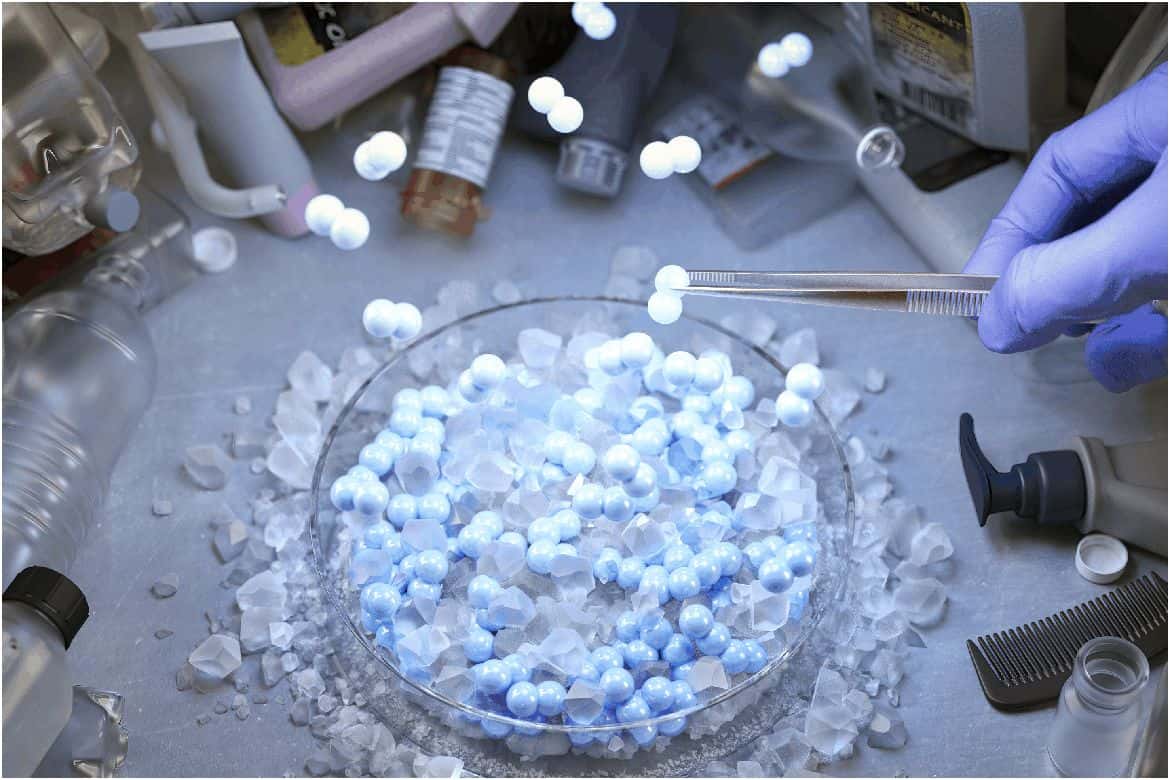
UCLA & Korean researchers revolutionize recycling by converting unsorted plastic directly into high-purity hydrogen fuel.
Researchers from the University of California, Los Angeles (UCLA) and South Korea have developed an innovative alkaline thermal treatment (ATT) process capable of converting unsorted plastic waste directly into hydrogen fuel with high purity, addressing two critical environmental challenges simultaneously.
This breakthrough technology works with common plastics like polyethylene terephthalate (PET), polyethylene (PE), and polypropylene (PP) without the costly and time-consuming sorting typically required in recycling. It operates at significantly lower temperatures than other methods and captures a substantial portion of carbon byproducts as a solid, preventing their release into the atmosphere.
The Pervasive Challenge of Plastic Waste and Energy Demands
Before this innovation, the world faced a daunting dual crisis: an overwhelming accumulation of plastic waste and an urgent need for clean, sustainable energy sources. Plastic production has soared globally, leading to mountains of discarded materials that persist in the environment for centuries. In the United States, despite growing awareness, only about 9 percent of plastics are currently recycled, largely due to the logistical and economic hurdles of sorting and processing diverse polymer types.
The vast majority of plastic waste ends up in landfills, incinerators, or pollutes natural ecosystems, contributing to soil contamination, water pollution, and greenhouse gas emissions. Traditional mechanical recycling processes are often limited by contamination, requiring meticulous sorting that adds significant cost and complexity, making it economically unviable for many mixed plastic streams.
Concurrently, the global push to decarbonize energy systems has highlighted hydrogen as a promising clean fuel. When combusted, hydrogen produces only water vapor, making it an attractive alternative to fossil fuels. However, most hydrogen production currently relies on natural gas, an energy-intensive process that generates substantial carbon dioxide emissions, undermining its "clean" fuel credentials. The challenge has been to find methods for producing hydrogen that are truly green, meaning they generate minimal to no greenhouse gas emissions throughout their lifecycle.
Introducing Alkaline Thermal Treatment: A Dual Solution
The new method, Alkaline Thermal Treatment (ATT), offers a transformative solution by tackling both plastic waste and clean hydrogen production in a single stroke. This process, previously explored by some of the same researchers for converting seaweed into high-purity hydrogen, utilizes sodium hydroxide and heat to facilitate hydrogen generation from plastics.
When applied to a mixture of PET, PE, and PP plastics, ATT successfully yielded hydrogen gas with purities exceeding 90 percent. A key advantage is its ability to process mixed plastic waste without prior sorting, which has been a major barrier to effective recycling. The process functions at temperatures approximately 300-400 °C (572-752 °F) cooler than alternative thermal approaches, leading to reduced energy consumption.
A significant environmental benefit of ATT is its robust carbon capture capability. The process captures approximately 75 percent of the carbon byproducts as a solid, rather than releasing them into the air as carbon dioxide. This direct carbon sequestration is a critical differentiator, offering a pathway to hydrogen production with substantially lower direct CO2 emissions compared to conventional methods.
To enhance the efficiency of the ATT process for certain plastics, researchers developed a pre-treatment step for PE and PP. These plastics typically resist chemical processing due to their molecular structure and lack of oxygen within their polymer chains. By pre-heating and oxidizing these materials, oxygen is strategically introduced into the polymer chains, making them more reactive and significantly improving hydrogen yields.
The Road Ahead: Scaling and Economic Implications
This innovative technology represents a significant step forward in the quest for a circular economy and sustainable energy. The ability to convert heterogeneous plastic waste into a valuable, clean fuel stream could fundamentally alter waste management paradigms and accelerate the transition to a hydrogen-based energy infrastructure. As chemical and biomolecular engineer Ah-Hyung Park of UCLA stated, the technology addresses "two urgent global problems at the same time."
From a market perspective, the economic implications are substantial. The current costs associated with plastic sorting, estimated to be a major portion of recycling expenses, could be drastically reduced or eliminated. This efficiency gain makes a wider range of mixed plastic waste streams economically viable for conversion, potentially reducing landfill burdens and the demand for virgin plastic production. The prospect of generating a high-value product like hydrogen from low-value waste could create new revenue streams for waste management companies and incentivize investment in advanced recycling facilities.
The United States is increasingly investing in the development of a robust hydrogen economy, driven by federal initiatives aimed at decarbonization. Technologies like ATT align perfectly with these objectives, offering a pathway to produce 'green' hydrogen from abundant waste resources rather than fossil fuels. This contributes to energy independence and reduces the overall carbon footprint of the energy sector.
The development of ATT also fits into a broader trend of advanced chemical recycling technologies. While other methods like pyrolysis and gasification aim to break down plastics into their chemical components or fuel, ATT uniquely targets direct hydrogen production with integrated carbon capture. This positions it as a highly specialized and potentially impactful solution within the growing portfolio of strategies to manage plastic waste and produce clean energy.
It is suggested that by reducing sorting costs and process complexity, ATT could become a core technology supporting both the hydrogen economy and the circular economy. This reflects a growing consensus that integrated solutions are necessary to address interconnected environmental and energy challenges.
Despite its promise, the immediate challenge for ATT is scaling up the process from laboratory conditions to commercial viability. Further work is required to optimize hydrogen yields, minimize carbon emissions, and maintain relatively low operating temperatures at an industrial scale. Researchers are focused on refining the process parameters to ensure efficiency and economic feasibility in larger applications.
The successful commercialization of ATT could provide a powerful tool in the fight against plastic pollution, especially for materials like those found in straws, bags, containers, and drink bottles. It offers a tangible pathway to convert pervasive waste into a critical component of a sustainable energy future, moving society closer to a truly circular economy where waste is transformed into resources.
Frequently asked questions
How can plastic waste be turned into hydrogen fuel?
Researchers developed an innovative alkaline thermal treatment (ATT) process that converts unsorted plastic waste directly into high-purity hydrogen fuel, addressing both plastic pollution and the demand for clean energy. This method simplifies the recycling process.
What is the benefit of this new plastic-to-hydrogen process?
The primary benefit is its ability to use unsorted plastic waste, simplifying recycling and addressing a major challenge in waste management. It also produces high-purity hydrogen, a clean energy source.
Who developed the alkaline thermal treatment (ATT) process?
The alkaline thermal treatment (ATT) process was developed by researchers from the University of California, Los Angeles (UCLA) and South Korea in collaboration.
Does this technology require sorting of plastic waste?
No, a key advantage of this breakthrough technology is that it can convert unsorted plastic waste directly into hydrogen fuel, eliminating the need for costly and time-consuming sorting.
What types of plastic can be used in this process?
The technology works with common plastics, including polyethylene terephthalate (PET), making it versatile for real-world waste streams and widely available materials.
How does converting plastic to hydrogen help the environment?
It helps by reducing plastic pollution in landfills and oceans while simultaneously producing a clean, renewable energy source (hydrogen), thereby mitigating climate change impacts and promoting a circular economy.