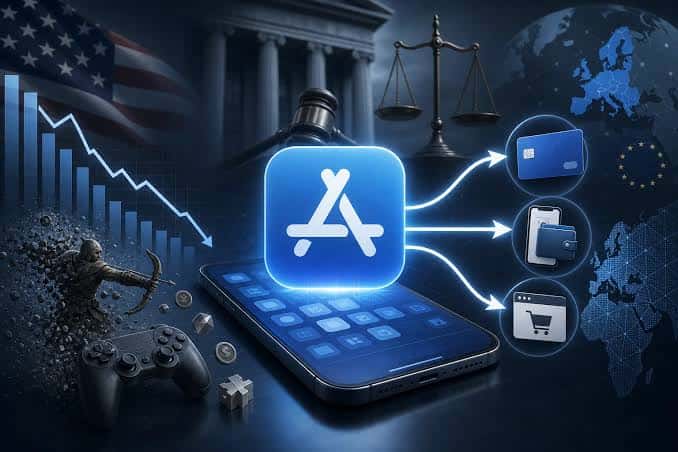
Apple's services revenue missed expectations due to mobile gaming slowdown and court-ordered App Store modifications, impacting stock.
Apple Inc.'s crucial services division, a key growth driver, missed Wall Street revenue expectations in its fiscal third quarter, sending the technology giant's stock tumbling in after-hours trading. The unexpected shortfall stemmed primarily from a slowdown in mobile gaming and significant court-ordered changes to the App Store's business model, particularly in the United States.
The Cupertino-based company reported $30.74 billion in services revenue for the quarter, falling short of the $31.22 billion analysts had projected. The services segment, encompassing the App Store, AppleCare, music, video, and cloud services, represents an increasingly vital component of Apple's valuation matrix.
The company attributed the revenue decline to several factors, highlighting the impact on the highly lucrative App Store. Paramount among these were a deceleration in mobile gaming engagement and the structural changes mandated by regulatory and judicial decisions, which alter how app developers process customer payments.
These court-ordered adjustments compel Apple to permit developers to route payments outside its proprietary App Store system, effectively bypassing Apple's standard commission structure. While the precise financial impact of these changes remains undisclosed, the company acknowledged their influence.
What Do App Store Policy Changes Mean for Apple's Bottom Line?
The App Store's evolving business model poses a direct challenge to a revenue stream traditionally characterized by high margins and consistent growth, significantly impacting Apple's services segment profitability. The shift towards allowing external payment processing could compress the effective take rate Apple extracts from digital transactions, compelling the company to explore alternative monetization strategies.
This regulatory intervention signals a broader trend of increased scrutiny on platform dominance across global markets, potentially setting a precedent for similar mandates in other jurisdictions. For investors, the implications extend beyond immediate revenue figures, raising questions about the long-term sustainability of Apple's established commission-based ecosystem and its capacity to maintain premium valuations.
Apple's services revenue reached $30.74 billion in the fiscal third quarter, missing analyst expectations of $31.22 billion.
What is the Background of Apple's App Store Battles?
Apple's App Store business model has faced escalating legal and regulatory challenges globally, with the Epic Games lawsuit in the U.S. serving as a landmark case that pushed for greater developer choice in payment systems. The ongoing legal battles reflect a broader antitrust sentiment that questions the exclusivity and commission rates charged by major app storefronts.
Internationally, legislators and regulators in markets like the European Union have introduced legislation, such as the Digital Markets Act (DMA), aimed at curbing the market power of large digital gatekeepers, further pressuring Apple to open its ecosystem. These developments collectively underscore a persistent trend toward dismantling aspects of the walled garden model that has long defined Apple's mobile platform strategy.
How are Analysts Reacting to Apple's Services Headwinds?
Analysts are closely scrutinizing Apple's ability to adapt its services strategy amid these structural changes and macroeconomic pressures, particularly regarding the highly profitable App Store. The services segment has consistently been a key narrative for Apple, providing a stable, recurring revenue stream that complements its hardware sales cycles and commands a higher multiple in valuation models.
The slowdown in mobile gaming, traditionally a robust category within the App Store, suggests a multifaceted challenge to sustaining the segment's historical growth trajectory. Market observers are likely to focus on Apple's diversification efforts within services, including the growth of its subscription base, as indicators of resilience.
Despite the recent miss, Apple's services business continues to expand its reach, surpassing 1.5 billion paid subscriptions.
Frequently asked questions
Why did Apple's services division miss revenue expectations?
Apple's services division missed expectations primarily due to a slowdown in mobile gaming and significant court-ordered changes affecting the App Store's business model, particularly in the United States.
What impact did this have on Apple's stock?
The unexpected revenue shortfall for Apple's services division caused the technology giant's stock to tumble in after-hours trading.
What are the 'App Store changes' mentioned?
The App Store changes refer to significant court-ordered modifications to its business model, which have impacted Apple's services revenue.
Is the gaming slowdown specific to Apple?
The article indicates a slowdown in mobile gaming broadly impacted Apple's services, rather than being exclusive to Apple's own gaming offerings.
Where did the App Store changes primarily take effect?
The significant court-ordered changes to the App Store's business model particularly impacted operations in the United States.
What is Apple's services division considered for the company?
Apple Inc.'s services division is a crucial growth driver for the company, making its revenue shortfall particularly significant.