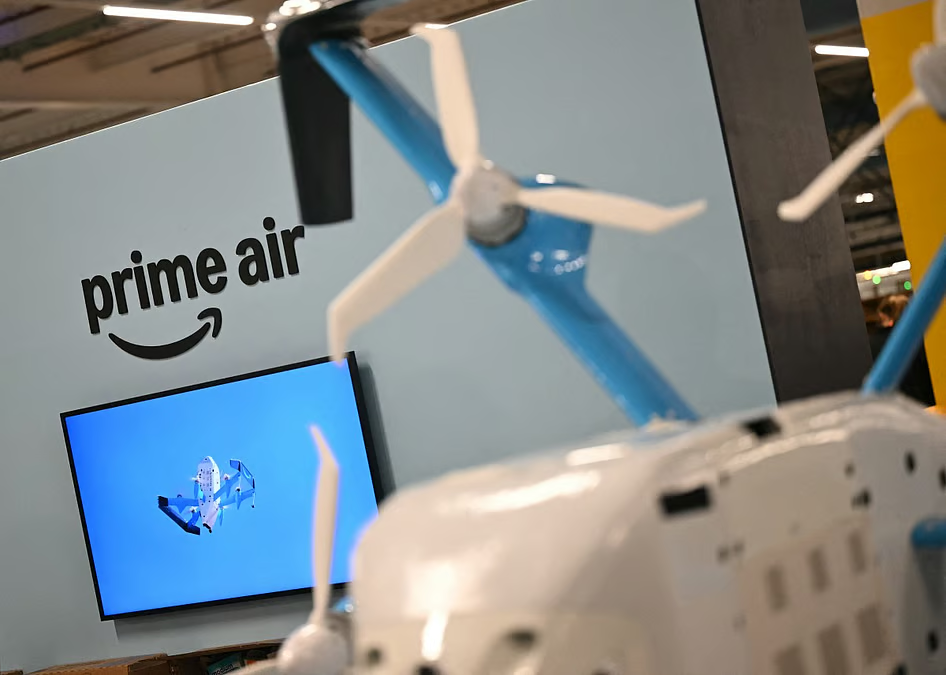
Amazon's ambitious drone delivery service, Prime Air, is expanding to nearly 500 US cities by 2026, revolutionizing e-commerce logistics.
Amazon's Drone Delivery Takes Flight in Nearly 500 US Cities, Redefining E-commerce Speed
Amazon's long-talked-about Prime Air drone delivery service is no longer a futuristic concept for a select few; it's on the cusp of a massive expansion, planning to reach nearly 500 cities across the United States by the end of 2026. This isn't just an incremental step, it's a bold move that could fundamentally transform how millions of consumers receive their online orders, pushing the boundaries of what "convenient" delivery truly means.
This ambitious rollout represents a significant increase in the service's current footprint, signaling Amazon's serious intent to make drone delivery a mainstream reality. The initial phase of this widespread expansion will see Prime Air launch in 11 new locations, spanning key markets from Tolleson, Arizona, to Ruskin, Florida, and across Kansas, Nebraska, Louisiana, Michigan, and Texas.
The return to Tolleson, Arizona, is particularly notable, given that this was the site of a drone accident last year where two drones collided with a crane. This incident, along with others involving a clipped internet cable and crashes into a garden and an apartment building, highlights the significant safety challenges inherent in autonomous aerial delivery. Amazon, keenly aware of public scrutiny, has been quick to emphasize Prime Air’s "industry-leading Detect-and-Avoid system," which is designed to continuously monitor the airspace and surroundings of each drone. These sophisticated drones rely on a suite of onboard cameras and sensors for precise navigation, robust obstacle detection, and secure package delivery. Furthermore, Amazon states that its drones are engineered to operate reliably in real-world conditions, including light rain and a broad range of temperatures, all while adhering to the Federal Aviation Administration's (FAA) Part 135 certification, the same rigorous regulatory framework used by commercial air carriers.
David Carbon, vice president of Amazon Prime Air, underscored the service's growing impact, stating that it has "already delivered hundreds of thousands of packages to customers by drone this year." He emphasized that Prime Air offers customers an "even speedier option" than Same- or Next-Day Delivery, with packages arriving in as fast as 30 minutes. Currently, Prime Air is operational across seven states, with Georgia, Ohio, Illinois, Idaho, and New York slated for launches soon. For Prime members, ultrafast drone delivery is free on eligible orders of $50 or more, with a modest $2.99 fee for orders under that threshold. Non-Prime customers will pay a $4.99 delivery fee. The service is designed to handle nearly all items weighing 5 pounds or less, covering a vast array of common household and personal goods.
Why This Matters for Brands and Consumers
From a marketing and consumer behavior perspective, this massive expansion of Prime Air isn't just about logistics; it's a strategic play for mindshare and loyalty that could redefine the very essence of e-commerce convenience. The promise of "delivery in as fast as 30 minutes" is an incredibly powerful value proposition. For brands, whether established giants or the burgeoning cohort of creators and small businesses leveraging Amazon's marketplace, this capability offers an unparalleled competitive edge. Imagine the marketing campaigns centered around instantaneous gratification, or the ability for local businesses to offer hyper-fast delivery that rivals or even surpasses brick-and-mortar immediacy.
This shift will undoubtedly impact consumer expectations. Once 30-minute delivery becomes accessible to a significant portion of the population, it ceases to be a novelty and rapidly becomes a baseline expectation. This accelerated gratification could drive an increase in impulse purchases, reduce cart abandonment rates, and fundamentally alter shopping habits, making online ordering the default for even the most urgent needs. My read is that this pushes the "convenience culture" to its extreme, forcing other retailers and delivery providers to innovate rapidly to keep pace, or risk being left behind in a new era of instant commerce.
The 30-Minute Mandate: Amazon Weaponizes the Sky
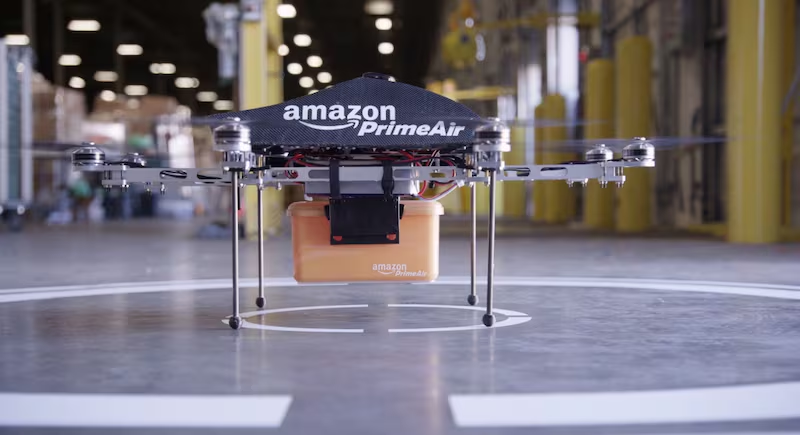
Amazon’s announcement to rapidly scale its Prime Air drone delivery network to nearly 500 U.S. cities by the end of 2026 is not merely a logistics update; it is a declaration of war on the concept of retail patience. For the past decade, the battleground of e-commerce has been fought over next-day or same-day delivery. By deploying autonomous, FAA-certified drones capable of dropping a package into a suburban backyard within 30 to 60 minutes, Amazon is fundamentally collapsing the time delta between impulse and fulfillment.
The strategic brilliance here lies in the payload constraints. By limiting drone deliveries to items under five pounds which Amazon notes covers roughly 60% of its most frequently purchased goods, the company is surgically targeting the highest-margin, highest-frequency retail categories: cosmetics, pharmaceuticals, household staples, and small electronics. This allows them to bypass the gridlock and labor costs of urban last-mile delivery vans, intercepting convenience-store runs before a consumer even grabs their car keys.
For the broader retail ecosystem, this massive 500-city expansion is a terrifying catalyst. Once a critical mass of tens of millions of consumers experiences 30-minute aerial delivery as a standard Prime perk, the psychological baseline for "fast delivery" permanently shifts. Walmart is already aggressively countering with its Alphabet-backed Wing partnership, but the rest of the logistics industry is now strictly on the defensive. Amazon isn't just building an aerial delivery network; they are engineering a consumer environment where waiting more than an hour for an online order feels like a failure of infrastructure. The era of instant commerce has officially left the ground.
The implications extend beyond just Amazon's own ecosystem. This widespread drone deployment will inevitably accelerate the development and adoption of drone technology across various sectors, creating new opportunities and challenges for urban planning, airspace management, and last-mile infrastructure. It's a clear trend line that points to a future where autonomous delivery, driven by demand for speed and efficiency, becomes increasingly commonplace.
Amazon's aggressive push also comes amidst a heated competitive landscape. Walmart, in partnership with Google parent Alphabet's Wing, has been steadily expanding its own drone delivery network, which the companies proudly describe as the largest in the U.S. Just recently, Walmart and Wing added seven new markets, building on an existing network that reaches hundreds of stores. This head-to-head battle between two retail behemoths validates the long-term viability and strategic importance of drone delivery. It's a race not just for technological supremacy, but for market share in the next generation of retail.
Beyond the immediate competition, the broader market context suggests that this move will force a reckoning across the entire delivery ecosystem. Traditional logistics companies will need to evaluate their own innovation pipelines, while startups in the autonomous delivery space will find both new avenues for partnership and increased pressure to differentiate. Regulatory bodies, like the FAA, will also face ongoing challenges to adapt frameworks that balance innovation with safety and public interest, especially as airspace becomes more crowded. What strikes me here is the potential for drones to address delivery gaps in more geographically dispersed or rural areas, where traditional delivery can be slower or more costly, while still navigating the complexities of urban operations.
Ultimately, Amazon's bold expansion of Prime Air into nearly 500 US cities marks a pivotal moment in the evolution of e-commerce. It's a massive bet on a future where ultra-fast, autonomous delivery is not a luxury, but a standard. The success of this endeavor will hinge not just on technological prowess and operational efficiency, but on public acceptance, sustained safety records, and the ability to integrate seamlessly into existing communities. As this aerial fleet takes to the skies across the nation, it’s clear that the future of how we receive our packages is rapidly accelerating, setting new benchmarks for speed and convenience across the entire commerce landscape.
Frequently asked questions
When is Amazon Prime Air expanding?
Amazon Prime Air plans a massive expansion to nearly 500 US cities by the end of 2026. This initiative aims to make drone delivery a widespread reality for customers across the country.
What is Amazon Prime Air?
Amazon Prime Air is Amazon's drone delivery service, designed to deliver packages to customers' homes using autonomous aerial vehicles. It aims to significantly reduce delivery times for select items.
How many cities will Prime Air reach?
Prime Air is projected to reach nearly 500 cities across the United States by the end of 2026. This expansion marks a significant step towards nationwide drone delivery.
What types of items can Prime Air deliver?
Prime Air is typically designed for lightweight packages that can be safely carried by drones, often focusing on urgent or smaller e-commerce orders. Specific item categories are usually defined by Amazon.
How does Prime Air benefit customers?
Prime Air benefits customers by offering extremely fast delivery times, potentially within 30 minutes, for eligible orders. It provides a new level of convenience and speed in e-commerce.
Is Prime Air safe?
Amazon states that safety is a top priority for Prime Air, with extensive testing and regulatory compliance. The drones are designed with multiple layers of redundancy and advanced sensing technology to ensure safe operation.