


Niklas Andersson
Director Electric Solutions at Volvo Trucks
Niklas Andersson holds a Master of Science degree in Mechanical Engineering. After working as a development engineer at several Swedish companies, including Ericsson, IKEA and Nobel Biocare, he joined the Volvo Group in 2007. There, he held various management positions within Volvo Group Trucks Technology.Since 2021, Andersson has served as Director Electric Solutions at Volvo Trucks. In this role, he is responsible for electric truck sales across Scandinavia, the Benelux countries, Germany, Austria and Switzerland.
linkedin.com“Battery-electric trucks should be used where possible” – Niklas Andersson of Volvo Trucks
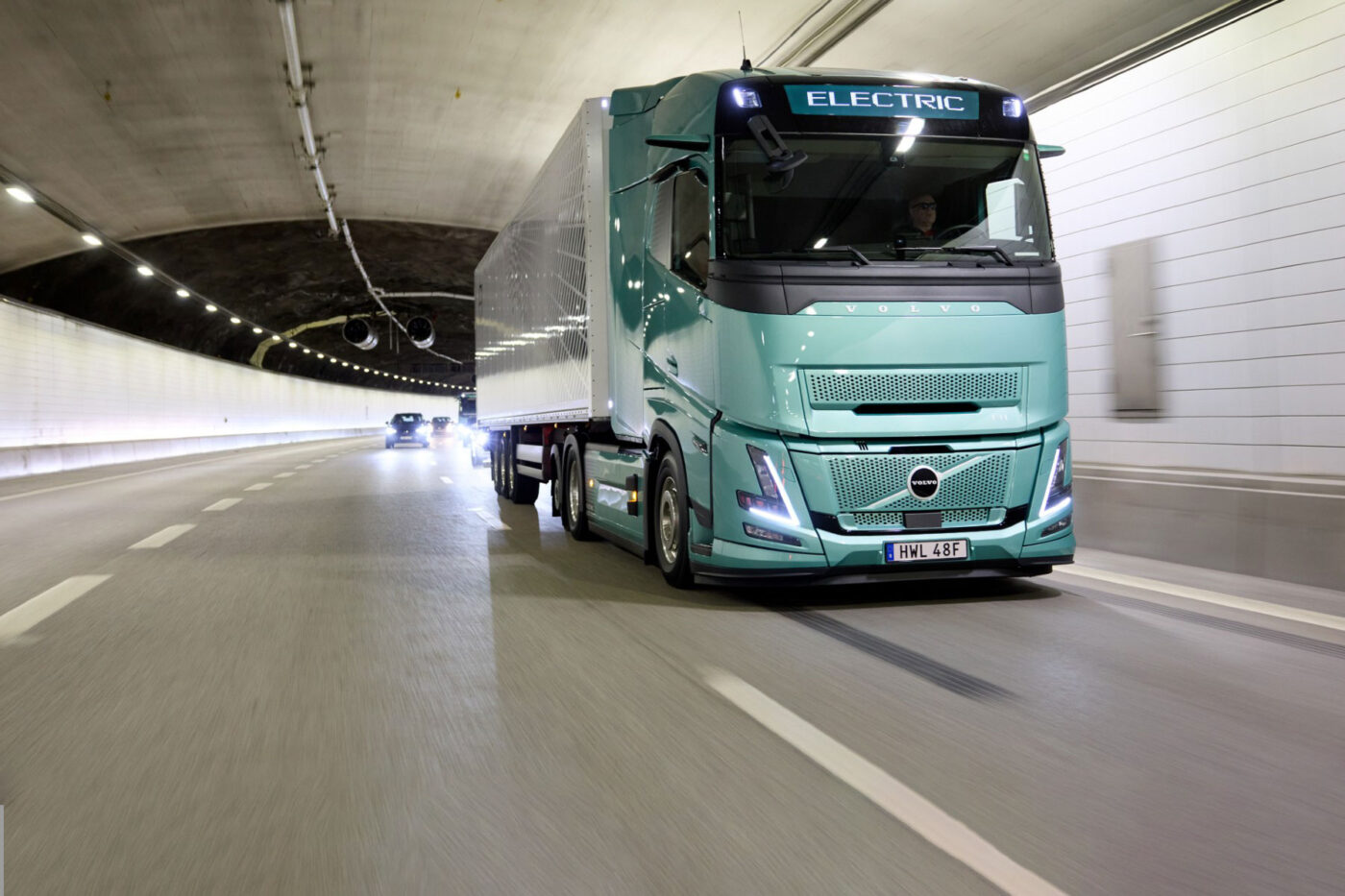
Volvo Trucks aims to become the first manufacturer to enable a battery-electric truck to complete a full day of long-haul operation without recharging. To achieve this, the company is equipping its upcoming electric flagship with around 100 kWh more usable battery capacity than most competing models. However, this approach involves several technical compromises, which we have examined in detail here.
While Volvo Trucks’ development work is largely complete, a new phase is now beginning for Niklas Andersson, Director of Electric Solutions at Volvo Trucks, and his team. Andersson is responsible for electric-specific sales activities in several European markets. For him, 15 June marked an important milestone, as Volvo Trucks officially opened order books for its second-generation battery-electric trucks.
Series production is scheduled to start in early September on flexible production lines alongside combustion-engine models at the company’s plants in Ghent, Belgium, and Tuve, Sweden. At the same time, Volvo Trucks will begin phasing out the first generation of its heavy-duty electric models: the FH Electric, FM Electric and FMX Electric.
In an interview with electrive, Andersson discusses the significance of the 700-kilometre range benchmark, the key lessons Volvo Trucks has learned from its first generation of battery-electric trucks, and why he would always recommend a battery-electric truck whenever the operating conditions make it a viable option.
***
Mr Andersson, how is Volvo’s competitiveness evolving with the introduction of the second generation of trucks?
We’re taking a significant step forward. With a range of up to 700 kilometers, we’re leading the industry. We’re also building on the proven flexibility of our solutions and can offer a wide variety of vehicle variants.
How important was it for your company to reach this ‘up to 700 kilometres‘ milestone?
Range is the central issue when people consider switching from diesel to electric trucks. It’s the first thing that comes to mind. With a range of up to 700 kilometres, we can give our customers peace of mind and ease.
What was the most important insight from the first generation of battery-electric trucks that you were able to incorporate into the second generation?
The most important lesson was that you can achieve much more with an electric truck than you initially think. There is often a certain reluctance towards new technologies. And as already mentioned: everyone focuses on range. But when you get your first truck and try it out, you realise that a wide variety of transport tasks can already be handled with electric drive.
This is precisely where we see that those customers who dare to simply give it a try are making the fastest progress. They buy their first truck, test it in various applications, and realise: There’s a lot you can do with this. Then they test more vehicles, put new drivers behind the wheel, and gradually expand their fleet.
The testing phase for the second generation of trucks took place out of the public eye. How did you organise this?
Most of our testing is carried out internally. We use our own proving grounds, conduct winter testing in northern Sweden and carry out summer testing in Spain. At the same time, we also run field trials with customers. We provide selected operators with pre-series vehicles to gain experience under real-world operating conditions.
Now that the market launch is approaching – and you are the Sales Director – what specific steps are you taking to bring the new trucks closer to customers?
We are preparing for the market launch with a wide range of activities. We are inviting journalists to experience our new products, while also providing extensive training for our sales teams to ensure the entire sales network is fully up to speed.
At the same time, we are delivering vehicles to our national sales companies so customers can experience the new trucks firsthand, explore them in detail and take them for a test drive.
One more strategic question: What role will battery-electric trucks play in the company’s future? And how strongly will Volvo Trucks continue to focus on internal combustion engines?
We at Volvo Trucks are a global company with operations in 130 countries, while the Volvo Group is active in even more markets. As a result, we are developing a broad portfolio of technologies that can serve customers around the world. We will therefore continue to rely on internal combustion engines, fuel cells and battery-electric drivetrains to ensure we can offer the right solution for every market.
The optimal technology depends on local conditions, such as the availability of green electricity, hydrogen or HVO, as well as taxation and other regulatory factors. However, wherever it is possible to operate an electric vehicle, we should do so. When you consider the entire energy chain—from generation to the wheels of the truck—a battery-electric vehicle is by far the most energy-efficient solution. It delivers the lowest energy losses and therefore represents the most efficient use of available energy.
How important is collaboration – even between companies that do not normally cooperate – to successfully bring a new technology like this to market?
It is hugely important. Our CEO often says: ‘Partnership is the new leadership.’ Everyone needs to be involved in this transformation. It is not enough for only the truck manufacturer or only the transport company to play a part.
The customers of logistics providers and public authorities also have a key role to play. If all stakeholders work together, we can successfully drive this transition forward.
When do you think battery-electric trucks will truly start contributing to a company’s profitability?
They already are.
Mr Andersson, thank you for the conversation.
Source link

0 Comments