AI startup hits a reported $3.2B valuation months after Series A, signaling investor demand for professional-grade AI
AfterQuery reportedly becomes Y Combinator’s fastest-ever unicorn, reaching a $3.2 billion valuation just months after its Series A.
The startup’s rise shows how AI’s next big prize may be training models to work like professionals, not just answer like chatbots.
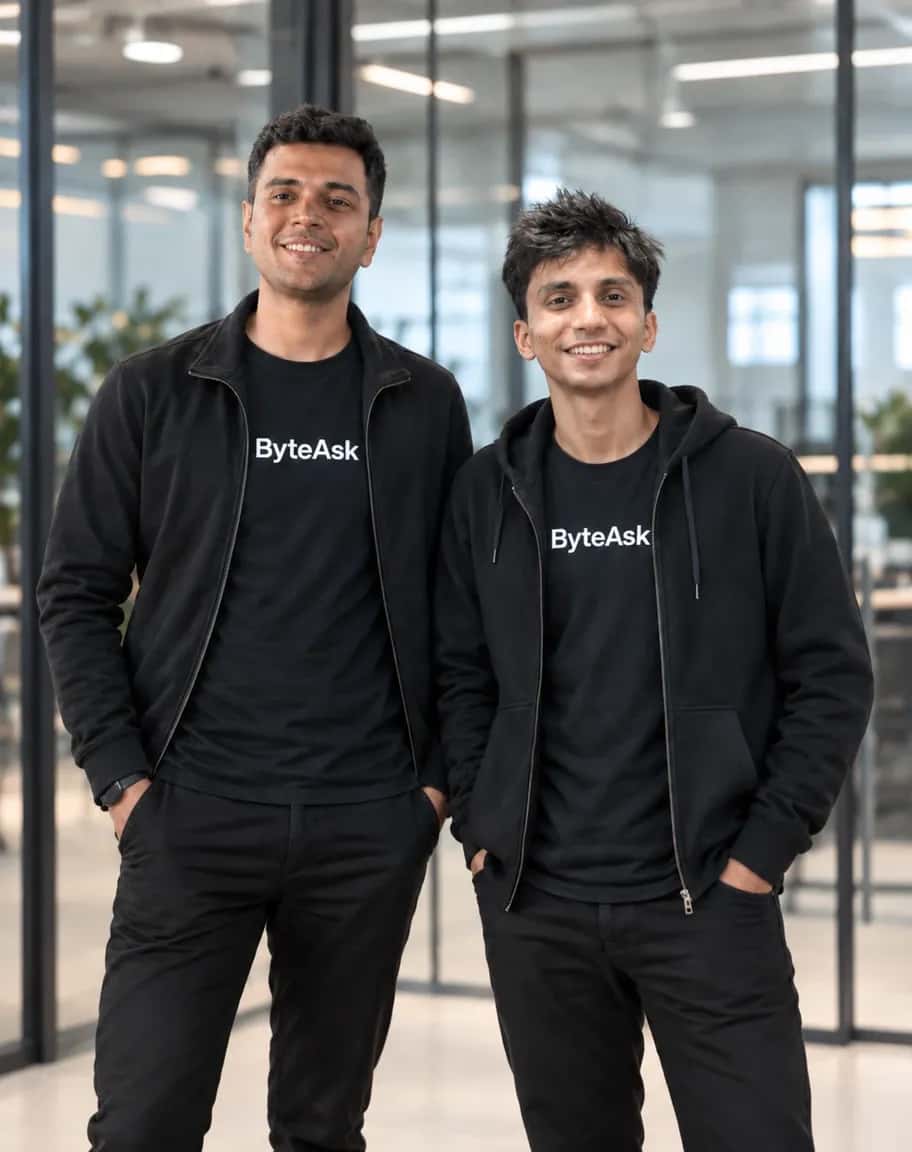
For AfterQuery’s founders, who are still only 22 and 23, the shift from promising startup to breakout AI company appears to have happened almost overnight. Just 18 months after joining Y Combinator’s Winter 2025 batch, the San Francisco startup has reportedly raised a round valuing it at $3.2 billion. Five months earlier, in April, it had announced a $30 million Series A at a $300 million valuation. The speed of that climb, from launch to unicorn status in record time for the accelerator, has turned a niche model training business into one of the clearest signals yet of where the AI market is headed next.
What started as a small idea was not simply about adding more human labor to AI pipelines. AfterQuery’s premise was more specific and, in some ways, more ambitious. Instead of focusing only on whether a model can answer a question correctly, the company has been building systems that teach models and AI agents how professionals actually approach work, how they reason, make decisions, sequence tasks, and apply judgment. In the company’s own framing, that means encoding the patterns, decisions, and reasoning of the world’s best practitioners. The goal is to move AI beyond polished responses and closer to professional-grade execution.
That distinction matters because the market has been rapidly evolving. The first wave of generative AI demand rewarded companies that could help models sound fluent, safe, and useful. The next wave is asking a tougher question: can AI systems behave like a capable lawyer, doctor, analyst, or operator when a task is messy and real? AfterQuery sits squarely in that second category. It is part of a newer set of startups, alongside names such as Mercor and Scale, that use networks of knowledge workers and specialists for model training. But its pitch is that professional work is not just information retrieval. It is process, tradeoff, and tacit judgment.
That is one reason its growth appears to have accelerated so sharply. In April, the company said it had reached an annualized revenue run rate of $100 million and was already working with many of the biggest labs. It has publicly named Nvidia, Legora, and Motif Technologies as customers. Those names say something important about the company’s position in the stack. These are not casual users testing an AI toy. They are serious buyers with incentive to improve model quality where failure is expensive, whether in enterprise workflows, legal reasoning, or broader agent behavior.
There is also a timing advantage here that many outside the AI industry may miss. Training data has become one of the most strategic choke points in the entire sector. Chips, cloud capacity, and model talent still matter enormously, but once foundational models reach a certain baseline, differentiation starts to shift toward the quality of post-training, feedback loops, domain-specific evaluation, and workflow design. My read is that investors are rewarding AfterQuery not simply because it is growing quickly, but because it has inserted itself into a bottleneck that could become more valuable as enterprises demand dependable AI agents instead of flashy demos.
That helps explain why a move from a $300 million valuation in April to a reported $3.2 billion valuation by September 1, 2026, while still striking, fits a wider pattern in AI venture funding. Capital has been chasing companies that solve infrastructure problems around model deployment, reliability, and enterprise adoption. The headline around AfterQuery is the pace, more than a 10x increase in less than half a year, but the deeper story is the category. Investors seem increasingly willing to pay up for businesses that make AI systems usable in high-stakes settings, not just broadly accessible.
For founders across South and Southeast Asia, this is where the story gets especially relevant. India, Singapore, and other regional ecosystems have been producing a growing pool of domain experts in healthcare, legal services, finance, coding, and operations. Those talent pools have often been discussed in terms of outsourcing or service delivery. AfterQuery’s rise suggests a different possibility. The same expertise can become training infrastructure for AI, creating new startup models around structured human judgment, specialized evaluation, and sector-specific agent design. In practical terms, that opens a path for regional startups to build valuable AI businesses without necessarily training frontier models from scratch.
India in particular has an edge in this shift because it combines software talent with deep process knowledge across global industries. As AI products move from generic copilots to task-performing agents, the winners may be companies that understand workflows in accounting, law, medicine, logistics, and customer operations at granular level. That should sound familiar to Indian entrepreneurs, many of whom have built businesses around process intensity and execution discipline. If the new prize is teaching AI how real work gets done, then the operating knowledge embedded in India’s service economy could become a strategic asset.
AfterQuery’s customer mix also points to another trend line: the buyers for this kind of infrastructure are becoming more varied. Nvidia’s presence hints at demand from the core AI ecosystem itself. Legora suggests legal and professional applications. Motif Technologies reflects the international nature of the market, and it matters that a Korean AI lab is on the list. The geography of AI demand is no longer confined to Silicon Valley. South Korea, Singapore, India, and Southeast Asia more broadly are all becoming serious adopters and builders of enterprise AI. A company that can serve large labs and applied AI companies across regions stands to benefit from that widening market.
Still, speed can distort as much as it reveals. A valuation of $3.2 billion this early places enormous pressure on any startup, especially one founded by people barely out of college age. The expectation from here is not just continued growth, but durable category leadership. Building a business around expert-driven model training sounds compelling, yet it also requires difficult operational discipline. Supply quality, consistency of professional contributors, customer concentration, and the pace at which model makers internalize some of these capabilities will all shape what happens next. Fast-growing AI infrastructure startups often look strongest when demand is surging. The harder test comes when customers begin to rationalize spend and ask which layers they truly need to own externally.
That said, AfterQuery appears to have crossed an important threshold already. Startups can get attention with a good cohort, a sharp pitch, or a few marquee names. They rarely get this kind of valuation jump unless buyers are signaling urgency and investors believe the market window is opening now. According to a Y Combinator partner, it is the fastest any startup has gone from launch to unicorn status in the accelerator’s history. That kind of milestone is symbolic, but symbols matter in venture. They influence where talent goes, what categories attract new founders, and which problems look newly investable.
The Rise of RLPF: Why Expertise is the New Compute
The astonishing velocity of AfterQuery’s markup, right from a $300 million Series A to a $3.2 billion valuation in just five months, exposes a critical bottleneck in the AI value chain: the exhaustion of high-quality, scrape-able internet data. We are moving past the era of generic RLHF (Reinforcement Learning from Human Feedback), where armies of gig workers click buttons to make chatbots sound polite.
AfterQuery’s explosive growth signals the dawn of RLPF: Reinforcement Learning from Professional Feedback. For the enterprise decision-makers reading StartupNews.fyi, this shift fundamentally rewrites the investment thesis for AI application layers. The moat is no longer just the model architecture; it is the proprietary capture of tacit human judgment.
The "Tacit Knowledge" Premium
When a foundational model writes a legal contract or diagnoses a supply chain failure, it cannot rely on statistical probability alone; it requires domain-specific reasoning. The buyers driving AfterQuery’s revenue which includes titans like Nvidia and specialized labs like Legora, are paying a massive premium for systems that understand how a senior partner redlines a contract or why a veteran logistics manager reroutes a shipment. They are buying the undocumented, intuitive processes of highly skilled professionals.
The Indian Arbitrage: From BPO to AI Infrastructure
This structural shift presents a generational opportunity for the South Asian tech ecosystem. Historically, India’s IT and BPO sectors capitalized on labor arbitrage for standardized, high-volume processes. The AfterQuery model proves that the next massive value unlock lies in cognitive arbitrage. India possesses one of the world's deepest benches of domain experts across medicine, corporate law, global accounting, and software architecture. Rather than deploying this talent purely for offshore service delivery, regional founders can productize it. By building specialized infrastructure that captures the workflows and decision trees of these professionals, Indian startups can become the indispensable training engines for global AI agents. They can transition from being the back office of the Fortune 500 to the neural training ground for the AI systems that will eventually automate those back offices.
The Valuation Risk
While the $3.2 billion valuation is a powerful signaling mechanism for the category, it also prices in flawless execution. The operational friction of managing networks of highly paid doctors, lawyers, and engineers is vastly different from managing mechanical turk labelers. The long-term test for AfterQuery—and the startups following its blueprint—will be whether they can maintain the quality of this expert feedback loop without their gross margins collapsing under the weight of professional labor costs.
There is also a subtle but important shift in how AI value is being described. Much of the public conversation around generative AI has centered on model size, consumer products, and chat interfaces. AfterQuery’s rise puts the spotlight back on labor, expertise, and the structure of professional reasoning. In other words, the future of AI may depend less on making models say impressive things and more on making them do useful things with the discipline of a trained specialist. That is a very different commercial proposition, and it likely expands the set of founders who can participate.
For South and Southeast Asia, that could have real consequences. The region has no shortage of founders building wrappers, copilots, and vertical AI tools. What stories like this suggest is that the deeper opportunity may lie one layer below, in the systems that shape how models are trained, evaluated, and trusted in production. If that idea catches on, the next wave of regional AI startups may look less like consumer apps and more like infrastructure built on domain mastery.
What AfterQuery reportedly becoming Y Combinator’s fastest-ever unicorn ultimately signals is not just one company’s extraordinary leap, but a wider reset in what investors think is scarce. Scarcity now sits in trustworthy judgment, repeatable expertise, and the ability to turn human know-how into machine behavior. For aspiring founders in India and across Southeast Asia, that is an encouraging message. The next breakout AI company may not come from building the loudest product, but from understanding work deeply enough to teach a machine how to do it well.
Frequently asked questions
What is AfterQuery and why is it making news?
AfterQuery is an AI startup that reportedly became Y Combinator’s fastest-ever unicorn. It is making news because its valuation reportedly jumped to $3.2 billion just months after its Series A round, marking an unusually fast rise for a young company.
How much is AfterQuery reportedly worth now?
AfterQuery is reportedly valued at $3.2 billion. That figure places it in unicorn territory and suggests investors see strong commercial potential in its approach to AI products.
Why is AfterQuery being called Y Combinator’s fastest-ever unicorn?
The label refers to how quickly the company reportedly reached a $1 billion-plus valuation after its early funding stages. In this case, the reported pace from startup traction to unicorn status appears faster than previous Y Combinator-backed companies.
What does AfterQuery’s growth say about the AI market?
Its rise suggests investors are increasingly interested in AI systems that can perform work more like trained professionals, not just generate chatbot-style responses. That points to growing demand for tools that support specialized, higher-value business tasks.
How old are AfterQuery’s founders?
According to the article preview, the founders are still only 22 and 23 years old. Their age stands out because the company’s reported valuation and growth have happened at an unusually early stage in their careers.
Why does a $3.2 billion valuation matter for startups and investors?
A valuation at that level signals strong investor confidence in a company’s future revenue potential, market position, and technology. For the broader startup ecosystem, it also shows that AI companies can still command premium pricing when they appear to solve meaningful business problems.