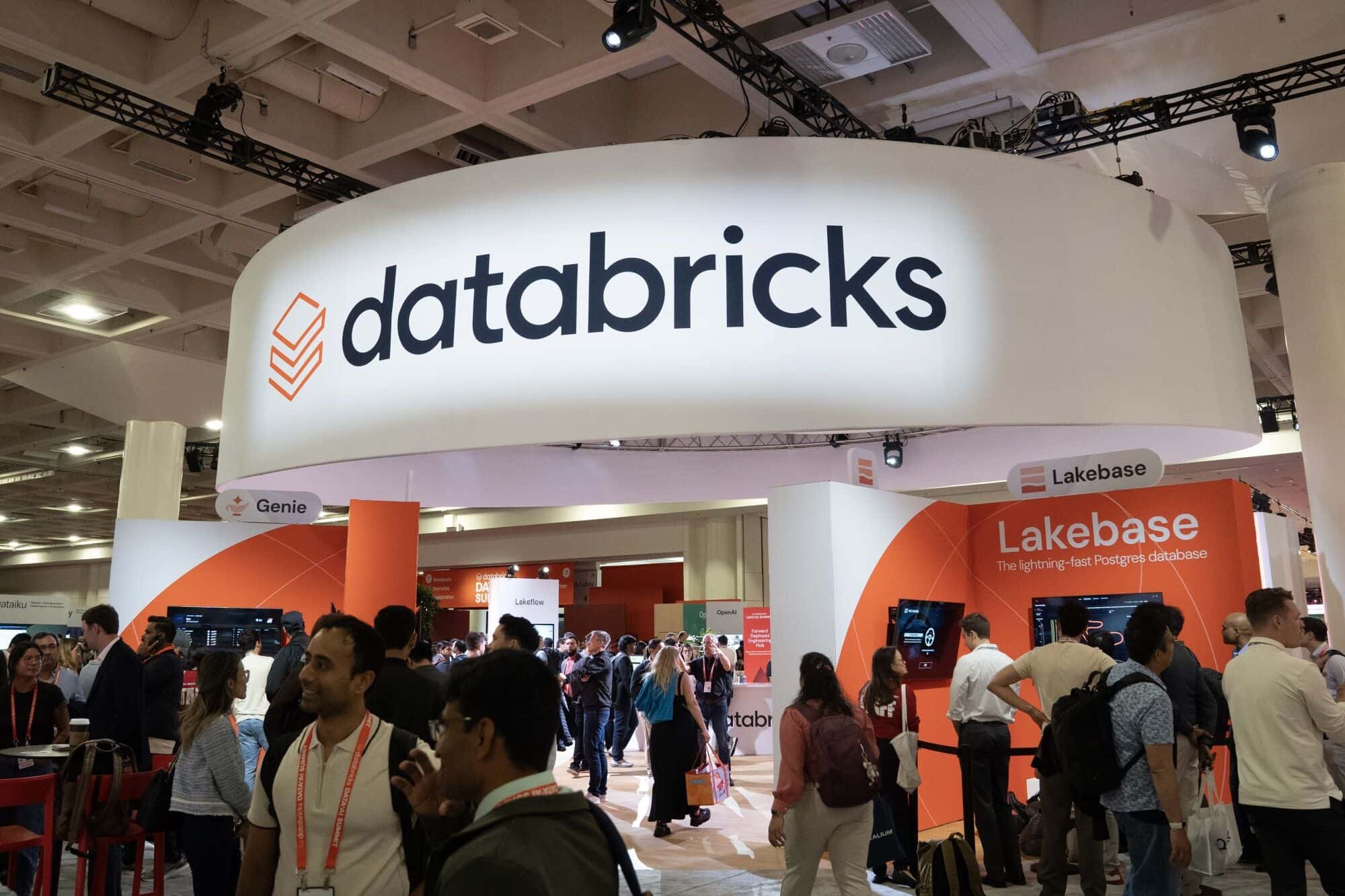
Databricks lands $5B funding at $190B valuation. Investor interest soared to $15B, vastly exceeding the initial $1B target.
Databricks secured $5 billion in its latest funding round, exceeding its initial target.
The big-data firm's valuation reached $190 billion following the oversubscribed investment.
Investor interest for the round surged to $15 billion, far surpassing the $1 billion Databricks initially sought.
Databricks secured $5 billion in new funding, pushing its valuation to $190 billion. The cloud-based data and AI firm initially intended to raise $1 billion, but investor demand for the round reached $15 billion. The significant interest prompted Databricks to issue more stock than planned, Ghodsi stated.
Why did Databricks raise more capital than planned?
The unexpected increase in funding stemmed from a surge in investor interest, according to CEO Ali Ghodsi. Late-stage startups often navigate a delicate balance in fundraising, sometimes selling more shares than desired to accommodate existing and new investors, market observers note. Databricks faced this scenario, choosing to expand its offering to avoid potential friction with long-term backers eager to participate, Ghodsi indicated. The increased capital also reflects the high expenditure associated with developing advanced artificial intelligence capabilities, a point Ghodsi emphasized by stating that AI is expensive.
Fifteen billion dollars in investor demand for a one billion dollar target isn't just an oversubscribed round; it’s a panic buy. Databricks pulling in a massive $5 billion at a staggering $190 billion valuation is the ultimate proof that the AI arms race has definitively shifted from the foundational model layer down to the data infrastructure layer. Enterprises are realizing that the smartest language model in the world is useless if it cannot seamlessly access, process, and query internal company data in real-time. As CEO Ali Ghodsi bluntly puts it, AI is brutally expensive. The lightweight software-as-a-service playbook of the 2010s, characterized by cheap cloud bills and high gross margins, is dead. We have re-entered an era of heavy capital expenditure. Running autonomous AI agents that actually execute complex enterprise workflows requires an unfathomable amount of serverless database instances firing every second to create and test application environments. This funding round is a massive reality check. By absorbing the extra $4 billion just to keep long-term backers from getting elbowed out, Databricks is signaling that the barrier to entry for the next generation of enterprise AI isn't just engineering talent anymore, it's raw, unadulterated capital. The investors piling in at $190 billion aren't betting on a startup; they are buying real estate on the absolute bedrock of the next decade's digital economy.
What are the market implications of this funding round?
The substantial funding secured by Databricks highlights the intense investor appetite for companies at the forefront of artificial intelligence and big data, industry analysts suggest. This trend indicates a continued flow of capital into firms that provide foundational infrastructure for AI development and deployment. The $190 billion valuation positions Databricks among the most highly valued private technology companies globally, reflecting confidence in its market leadership and growth trajectory. The round's oversubscription, with $15 billion in interest for a $1 billion target, underscores a broader market phenomenon known as investor "fear of missing out" (FOMO) in high-growth sectors. This dynamic can drive valuations higher and compel companies to raise more capital than initially planned. Such large late-stage investments are a hallmark of the current technology landscape, where scale and rapid innovation are critical for competitive advantage, financial reports often indicate.
What is the competitive landscape for AI data platforms?
Databricks operates in a highly competitive market, providing a unified data platform that integrates data warehousing and machine learning capabilities. The company's large funding round suggests robust demand for its solutions, particularly as enterprises increasingly adopt AI-driven strategies. This investment also reflects a broader trend toward consolidating data processing and AI workloads onto single platforms, rather than managing disparate systems, technology research firms report. The market for data and AI infrastructure includes established hyperscale cloud providers such as Amazon Web Services, Microsoft Azure, and Google Cloud, which offer their own integrated services. Specialized players like Snowflake also compete in the data warehousing space. Databricks' ability to secure significant funding amidst this competition underscores the perceived strength of its Lakehouse architecture, which aims to combine the best features of data lakes and data warehouses for AI workloads. The ongoing AI boom continues to fuel innovation and investment in this critical sector, with companies striving to offer the most comprehensive and scalable solutions.
Frequently asked questions
What was Databricks' latest funding round amount?
Databricks secured $5 billion in its latest funding round. This amount exceeded its initial target, demonstrating strong investor confidence in the big-data firm.
What is Databricks' current valuation?
Following its latest funding round, Databricks' valuation reached $190 billion. This significant valuation reflects the company's growth and market position.
How much investor interest did Databricks receive?
Investor interest for Databricks' funding round surged to $15 billion, far surpassing the $1 billion the company initially sought.
Who is Ali Ghodsi?
Ali Ghodsi is the CEO of Databricks, who provided details about the funding round.
What kind of company is Databricks?
Databricks is a big-data firm specializing in data and AI solutions, widely used by enterprises for analytics and machine learning.
Why was the funding round oversubscribed?
The funding round was oversubscribed because investor interest, at $15 billion, significantly exceeded the $1 billion Databricks initially sought, indicating high demand for shares.