Sources say the cash deal brings Thrive-backed AI startup Console into Palo Alto Networks' Cortex portfolio
Palo Alto Networks paid $500M for Console, according to two people with knowledge of the deal, while the companies disclosed the acquisition on September 2, 2026 without sharing financial terms in the official announcement. The purchase adds a young AI startup to Palo Alto Networks’ Cortex portfolio.
According to people with knowledge of the development, the consideration was $500 million in cash and stock for Console, a startup backed by Thrive Capital. Palo Alto Networks said in its announcement that Console will be integrated into Cortex, its platform that uses AI to automatically detect and neutralize threats, and the company said the startup’s agentic capabilities would help security teams investigate and resolve alerts using natural language. Console had raised $29 million across two rounds since 2024, including a $6.2 million seed led by Thrive Capital and a $23 million Series A co-led by DST Global and Thrive, while PitchBook data cited in the report put its pre-sale valuation at $157 million. The report said Palo Alto Networks declined to comment on the deal value, and that the company has now completed its seventh acquisition of 2026, following transactions that included Chronosphere at a valuation of $3.35 billion and Koi for $400 million, according to PitchBook.
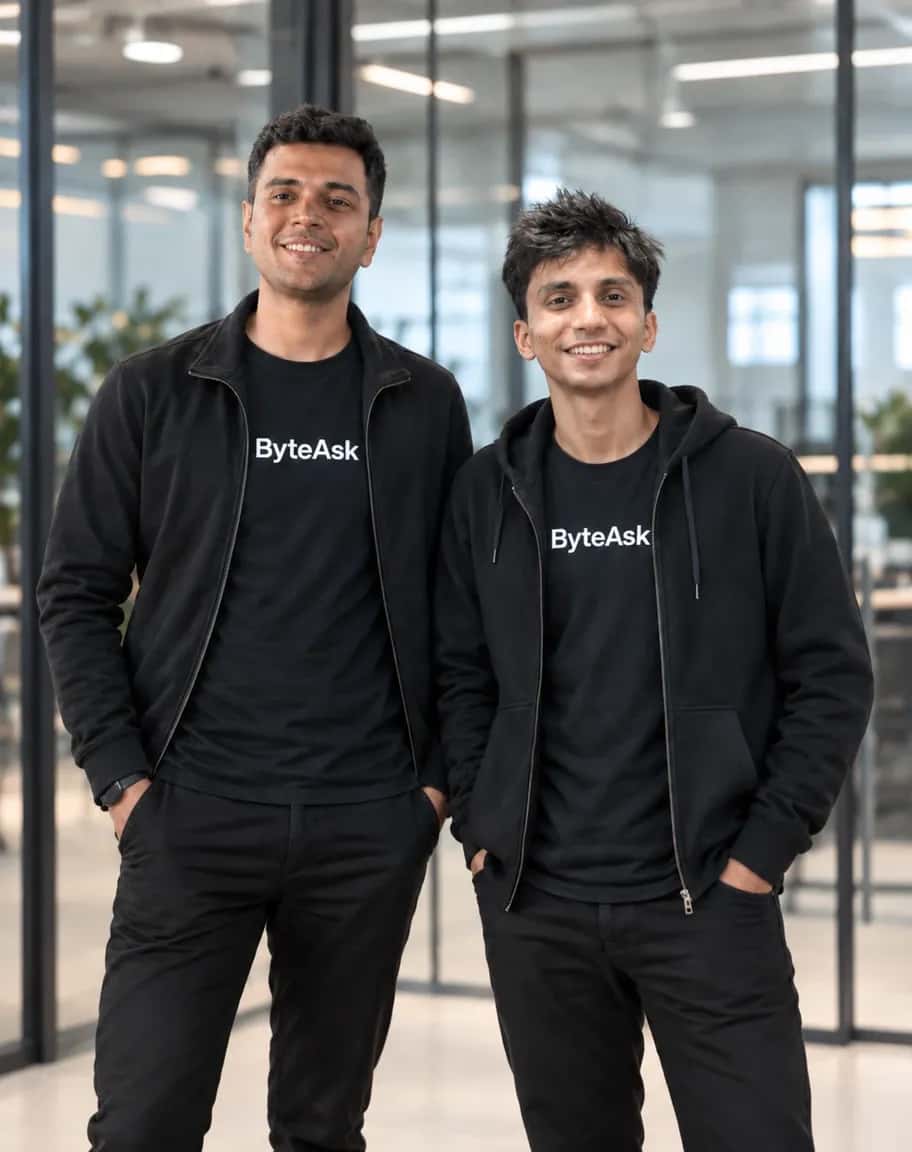
Console was founded in 2024 by Andrei Serban, shortly after his earlier startup Fuzzbuzz was acquired by Rippling. The company builds AI agents for routine IT help desk work, handling tasks such as password resets, app access for tools including Figma and Miro, and routine troubleshooting without direct human involvement. Its customers included Ramp, Flock Safety, and Scale AI. The deal also stands out because Palo Alto Networks CEO Nikesh Arora had participated in Console as an angel investor.
In the broader market, Console had been competing with Serval, another startup focused on AI-driven service management that reached a $1 billion valuation after raising a $75 million Series B led by Sequoia last December. Serval began with AI tech support and later expanded into HR, legal, and finance workflows, according to the report.

The "Agentification" of the Security Operations Center
Palo Alto Networks' $500 million acquisition of Console is not a standard cybersecurity tuck-in; it is a deliberate architectural pivot from automated security to agentic security.
While Console was initially built as an IT help desk tool—handling password resets and software provisioning for high-growth companies like Ramp and Scale AI—the underlying technological capability is exactly what a modern Security Operations Center (SOC) desperately needs. Palo Alto’s Cortex platform is trying to solve the primary bottleneck in enterprise security: alert fatigue. By ingesting Console’s natural-language agentic workflows, Palo Alto is effectively attempting to automate away the Tier 1 SOC analyst, allowing software to independently investigate, prioritize, and remediate low-level threats without human intervention.
The Platform Roll-Up Strategy
Under CEO Nikesh Arora, Palo Alto Networks has aggressively weaponized its balance sheet to prevent vendor fragmentation and consolidate the enterprise IT stack. Console marks the company's seventh acquisition in 2026 alone, following massive bets like the $3.35 billion purchase of observability platform Chronosphere and the $400 million deal for cyber startup Koi.
This M&A velocity proves that Arora is building a unified "operating system" for enterprise security. Chief Information Security Officers (CISOs) are exhausted by managing dozens of disjointed point solutions; they are actively consolidating vendors. By integrating observability (Chronosphere) and agentic remediation (Console) directly into Cortex, Palo Alto ensures it remains the unavoidable center of gravity for corporate security budgets.
The Valuation and The Strategic Exit
The financial mechanics of this deal highlight the extreme premium placed on demonstrable AI execution. Paying $500 million for a startup founded in 2024—a massive 3x step-up from its recent $157 million valuation—is aggressive.
However, Console was facing a brutal, highly capitalized war of attrition in the IT service management space against heavily funded competitors like Serval, which recently secured a $1 billion valuation after a $75 million Series B led by Sequoia. For Console founder Andrei Serban, exiting for half a billion dollars after raising just $29 million is an elite venture outcome.
The deal also highlights a unique Silicon Valley dynamic: Nikesh Arora’s prior angel investment in Console. While this requires careful corporate governance and recusal protocols during the M&A process, it also means Palo Alto’s leadership had unfiltered, early access to Console’s execution velocity and codebase, significantly reducing the technical due diligence risk that usually plagues nine-figure acquisitions.
The Economics of the Agentic SOC
The integration of AI agents into the Security Operations Center (SOC) fundamentally rewrites the unit economics of enterprise cybersecurity. By fully automating the Tier 1 triage layer, companies are not just buying software; they are eliminating one of the most expensive and inefficient human capital loops in modern IT.
The MTTR Collapse (Response Times)
The traditional SOC is breaking under the sheer volume of telemetry. A large enterprise can easily generate upwards of 3,000 security alerts per day, resulting in a staggering 62% of alerts being ignored entirely due to a lack of human capacity.
Replacing Tier 1 analysts with AI agents directly attacks Mean Time to Respond (MTTR) and Mean Time to Detect (MTTD) by changing how investigations are structured:
Sequential vs. Parallel Processing: A human Tier 1 analyst typically takes 30 to 60 minutes to manually investigate a single alert—opening the SIEM, pivoting to EDR consoles, checking external threat intelligence feeds, and documenting the findings. An AI agent executes these queries simultaneously across disconnected systems, compiling a fully enriched incident dossier and rendering a decision in 2 to 5 minutes.
False Positive Eradication: Legacy systems require humans to manually dismiss benign alerts. Modern agentic platforms report automatically filtering and closing between 70% and 90% of false positives without any human intervention.
The Net Speed Gain: By clearing the queue of noise and instantly enriching valid threats, platforms deploying agentic AI report baseline MTTR reductions of 60% or more, with some achieving up to 10x faster response times compared to traditional human-led triage.
The End of the "Burnout Tax" (Operational Costs)
The financial argument for agentic AI goes far beyond software licensing—it eliminates the massive operational overhead associated with staffing a 24/7 Tier 1 operation.
Turnover and Training: Tier 1 triage is grueling, repetitive "swivel-chair" work. Currently, 71% of SOC analysts report severe burnout driven by alert fatigue. This drives brutal turnover cycles that frequently plunge below 18 months. Replacing this layer halts the continuous, highly expensive cycle of recruiting, onboarding, and training junior analysts who inevitably leave just as they become proficient.
The 24/7 Shift Premium: Maintaining a "follow-the-sun" global Tier 1 presence requires massive headcount to cover nights, weekends, and holidays. AI agents provide infinite, constant triage scale at a fixed compute cost. A 3 AM phishing alert receives the exact same rigorous, multi-source investigation as an alert at 10 AM.
Strategic Reallocation: The market is already pricing in this transition. According to McKinsey data, 35% of security leaders now expect AI agents to completely replace their Tier-1 analysts within the next three years. Consequently, AI's share of enterprise security budgets is projected to more than triple from roughly 4% to 15% in that same timeframe.
For Palo Alto Networks and its competitors, the pitch to the C-suite is clear: the modern SOC will no longer employ entry-level triage analysts. Instead, cost savings will be redirected to hire highly specialized Tier 2 and Tier 3 threat hunters and incident responders—human operators whose sole job is to manage the AI workforce and intervene only during high-stakes, deeply complex breaches.
Frequently asked questions
How much did Palo Alto Networks pay for Console?
Palo Alto Networks paid $500 million for Console, according to two people with knowledge of the transaction. The companies announced the acquisition on September 2, 2026, but did not disclose the purchase price publicly.
Did Palo Alto Networks officially disclose the Console deal value?
No, the official announcement did not include financial terms. The $500 million figure comes from sources familiar with the deal who said the consideration was paid in cash.
What is Console and why did Palo Alto Networks buy it?
Console is a young AI startup backed by Thrive that builds technology relevant to enterprise security operations. The acquisition adds Console to Palo Alto Networks' Cortex portfolio, signaling a push to strengthen AI capabilities in cybersecurity.
Was the Console acquisition a cash deal?
Yes, people with knowledge of the development said the consideration was $500 million in cash. That detail was not included in the companies' formal announcement.
When was the Palo Alto Networks acquisition of Console announced?
The acquisition was disclosed on September 2, 2026. While the deal itself was announced that day, the companies did not share the financial terms in the press release.
How does Console fit into Palo Alto Networks' Cortex portfolio?
Console is expected to become part of Cortex, Palo Alto Networks' platform for security operations and related tools. Adding an AI startup there suggests the company wants to improve automation, workflows, and intelligence for enterprise security teams.