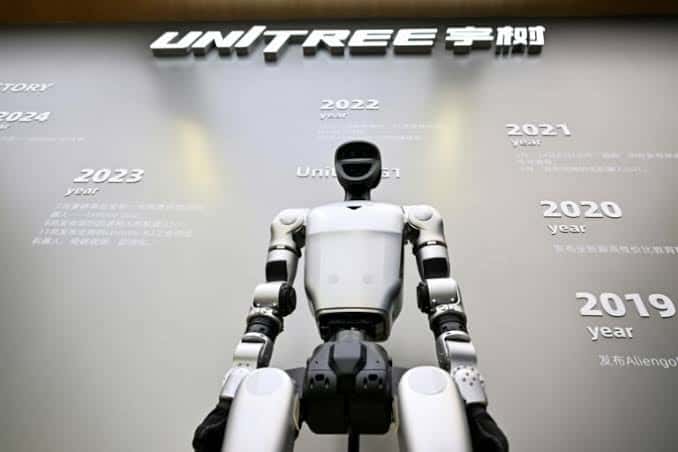
Unitree Robotics' explosive stock market entry highlights growing investor appetite for advanced Chinese deep tech and robotics innovations, reshaping global valuations.
Unitree Robotics, a prominent Chinese developer of humanoid and quadruped robots, is reportedly accelerating its plans for a public listing on a Shanghai exchange, a move signaling a significant maturation in the global deep tech investment landscape and potentially recalibrating valuations for advanced robotics startups. This pivotal step could unlock substantial capital for further research and development, intensifying the race for market dominance in a sector poised for exponential growth.
The company, known for its agile quadruped robots and increasingly sophisticated humanoid prototypes, aims to tap into investor appetite for artificial intelligence and automation plays, particularly within China's robust domestic capital markets. This push towards an IPO underscores a broader trend where venture-backed hardware innovators are seeking public funding to scale production and commercialize cutting-edge technologies that require immense capital expenditure. The listing would provide a crucial benchmark for other emerging robot manufacturers globally.
This signals a founder-level confidence in the long-term viability of general-purpose robotics, moving beyond niche industrial applications into broader consumer and service markets. Unitree’s strategic timing suggests a belief that the commercialization curve for advanced humanoids is shortening, demanding liquidity to accelerate product cycles. My read is that this isn't just about funding; it's about establishing a market leadership narrative on a global stage.
What Does Unitree's IPO Signal for Global Robotics?
Unitree's planned public offering stands as a bellwether for the entire humanoid robotics industry, providing a tangible measure of investor confidence in a sector often viewed through a speculative lens. This move legitimizes the business models and technological advancements achieved by companies operating at the forefront of AI-powered mechatronics. It effectively bridges the chasm between venture capital and public markets for sophisticated hardware startups.
The listing could trigger a re-evaluation of private sector robotics investments, compelling venture capitalists to recalibrate their exit strategies and portfolio valuations. Founders in the space, particularly those developing general-purpose robots, will watch closely to gauge market reception, which could either open floodgates for subsequent listings or temper expectations. This event underscores China's strategic commitment to leading in critical emerging technologies, leveraging its vast manufacturing capabilities and talent pool.
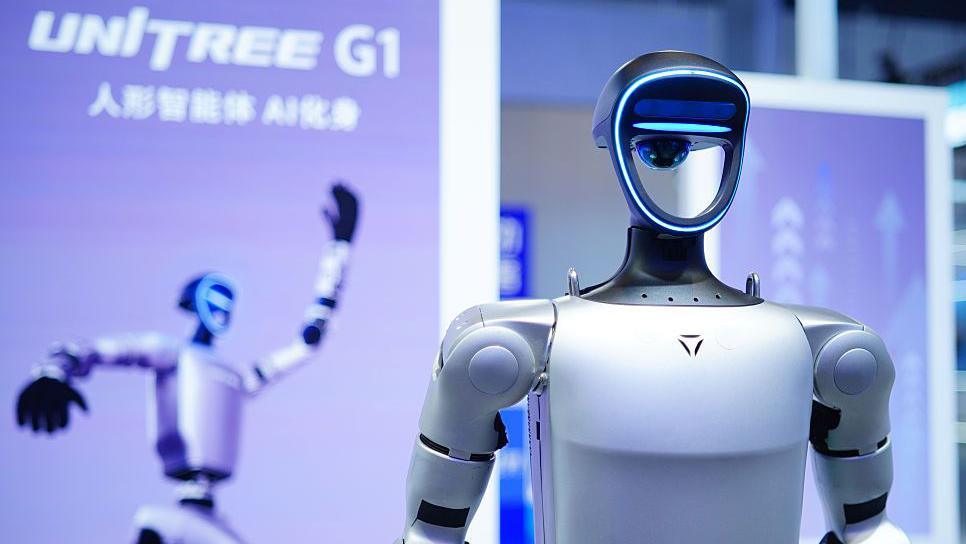
Global robotics market is projected to exceed a significant value by 2030, driven by advancements in AI, sensor technology, and increased automation adoption across various industries.
What is the Landscape for Humanoid Robotics?
The humanoid robotics landscape is rapidly evolving, characterized by intense innovation and competition across multiple continents. Companies like Boston Dynamics, Agility Robotics, and Tesla are pushing the boundaries in the West, focusing on dynamic movement, dexterous manipulation, and increasingly sophisticated AI. Unitree's entry into the public market highlights a distinct, often government-supported, trajectory for Chinese firms, emphasizing rapid prototyping and commercial application within vast domestic markets.
This sector faces considerable technical hurdles, including energy efficiency, robust perception systems, and the development of truly intelligent, adaptable AI. Furthermore, the economic viability of mass-producing and deploying humanoids at scale remains a significant challenge, with current costs per unit still prohibitive for widespread consumer adoption. However, the potential applications span logistics, elder care, hazardous environments, and even personal assistance, creating a vast total addressable market.
The $66 Billion Backflip: Unitree Breaks the Public Market
Unitree Robotics didn't just quietly test the public markets; it absolutely shattered price discovery on the Shanghai STAR Market. Today, the stock surged an absurd 629% at the opening bell, rocketing from its $9 billion IPO valuation to briefly command a $66 billion market cap before settling. This isn't just retail mania, it is the moment "embodied AI" gets its public price tag. As the world's first publicly listed pure-play humanoid robot maker, Unitree just provided a massive valuation anchor for the entire private robotics ecosystem. When a company trading at roughly 1,200 times trailing earnings gets oversubscribed by retail investors 5,500 times over, it proves that the capital appetite for hardware AI is utterly insatiable.
The $904 million raised gives Unitree a lethal war chest to expand manufacturing and deepen its AI models, backed by strategic placements from tech giants like Tencent, Alibaba, and AI darling DeepSeek. Unitree is unusual in this space because it actually ships hardware at volume (over 5,500 humanoids last year) and is already profitable. But the geopolitical overhang is massive. While Unitree dominates the domestic narrative, aligning perfectly with Beijing's strategic push for robotics dominance, they are functionally locked out of the West. The US Pentagon has already designated them as a contributor to China's defense industrial base, and the FCC recently moved to block imports of foreign-made humanoids. For the global venture ecosystem, the takeaway is brutal but clear: the race for humanoid dominance is no longer constrained by capital. The funding floodgates are officially open, and the proxy war between US and Chinese embodied AI has moved from the R&D lab directly to the stock exchange.
The strategic importance of this sector is undeniable, with nations vying for technological supremacy and the economic benefits that accompany it. China's emphasis on humanoid robotics aligns with its "Made in China 2025" initiative, targeting self-sufficiency and global leadership in advanced manufacturing and high-tech industries. This geopolitical dimension adds another layer of complexity and opportunity for investors.
The Long-Term Bet on Humanoids
From an ecosystem-insider perspective, Unitree's public market debut is more than just a company milestone; it is a foundational moment for the entire humanoid robotics industry. It validates years of deep tech investment and signals to founders that patient capital can indeed find pathways to liquidity, even for moonshot hardware ventures. My opinion is that this move will catalyze further venture funding into the space, especially for companies with demonstrable progress in autonomy and versatile hardware platforms.
However, investors should temper enthusiasm with a clear-eyed view of the inherent risks. The path to profitability for humanoid robotics remains long and capital-intensive, fraught with regulatory complexities, ethical considerations, and the constant threat of technological obsolescence. The "bear case" hinges on whether these robots can truly move beyond proof-of-concept into economically viable, mass-produced solutions that deliver tangible ROI beyond early adopter enthusiasm.
What to watch for in the coming quarters includes the specific valuation Unitree achieves, which will set a precedent for future deep tech listings, and the company's deployment strategy post-IPO. Any significant partnership announcements with major industrial players or consumer brands could further de-risk the investment thesis, providing clearer indicators of commercial traction and accelerating the industry's maturation towards widespread adoption.
Frequently asked questions
What is Unitree Robotics?
Unitree Robotics is a leading Chinese developer specializing in the research, development, and production of high-performance humanoid and quadruped robots for various applications.
How much did Unitree's stock open at?
Unitree's stock opened over 600% higher than its initial public offering price on its Shanghai debut, marking a significant market event and strong investor confidence.
Where did Unitree Robotics list its shares?
Unitree Robotics listed its shares on a Shanghai stock exchange, indicating its strategic focus on the Chinese capital market for growth and expansion.
What kind of robots does Unitree make?
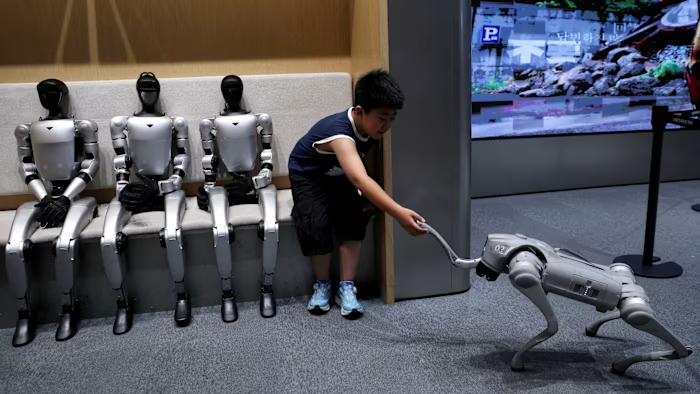
Unitree Robotics is known for developing both advanced humanoid robots, designed to mimic human form and movement, and quadruped robots, which are dog-like robots used for various industrial and consumer tasks.
What does Unitree's IPO signify for the robotics industry?
The explosive IPO of Unitree Robotics signals a maturing global deep tech investment landscape and a robust investor appetite for advanced robotics startups, potentially recalibrating valuations across the sector.
What impact does Unitree's debut have on tech investment?
Unitree's successful debut is expected to unlock substantial capital for further research and development within the robotics sector, attracting more investment into advanced deep tech companies globally.