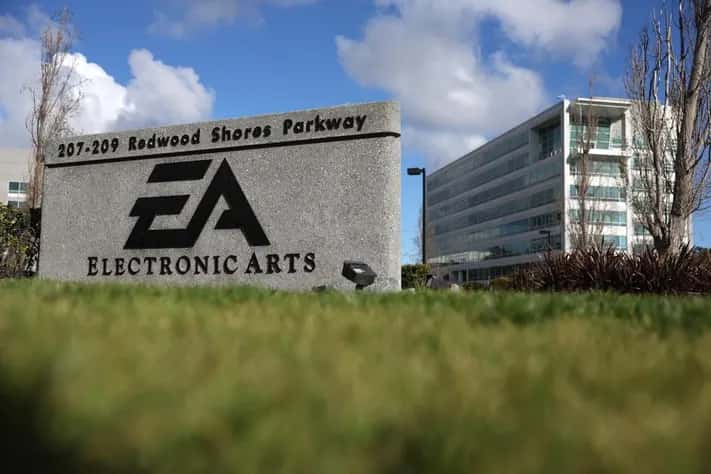
Landmark $55 billion acquisition of Electronic Arts signals major Saudi expansion into global sports and gaming, reshaping entertainment capital flows.
Electronic Arts was acquired in a deal worth $55 billion.
Its shareholders will receive cash per share.
The deal represents further Saudi expansion into the world of sports and gaming, signaling a significant shift in global capital flows into the entertainment sector.
In a landmark transaction that reverberated across global financial markets and the sprawling digital entertainment landscape, a consortium led by Saudi Arabia’s Public Investment Fund (PIF) has finalized the acquisition of video game behemoth Electronic Arts (EA) for a reported $55 billion. The deal, which officially concluded, sees the gaming giant transitioning into private ownership, with its shares delisted from the Nasdaq.
The monumental purchase involved financing from Affinity Partners, the investment vehicle spearheaded by Jared Kushner, former President Donald Trump’s son-in-law. Existing EA shareholders will receive cash for each of their shares, marking a lucrative exit for many long-term investors.
The acquisition underscores a pronounced strategic push by the Saudi sovereign wealth fund into the burgeoning sectors of sports and interactive entertainment. This sentiment aligns with the fund's stated focus on entertainment and sports as key strategic areas. This aligns with a broader strategy to diversify the economy away from oil dependence by investing heavily in new industries and fostering a more vibrant domestic and international presence.
From an investor's standpoint, particularly those of private equity firms such as Affinity Partners, the acquisition represents a calculated play on the enduring growth of interactive entertainment, coupled with the potential for significant financial engineering and strategic oversight to unlock further value. The gaming market, consistently outpacing traditional media in revenue generation and audience engagement, offers a compelling target for capital seeking high returns. For EA's public shareholders, the all-cash offer provided a clear and immediate premium, offering certainty in a volatile market and a clean exit from a company that has faced its own share of market and operational pressures over the years.
The sheer scale of the deal is noteworthy, particularly its financing structure. Reports indicate that the PIF is leveraging substantial financing to finalize the proceedings. This substantial debt component has drawn scrutiny from financial analysts, who are examining the implications of such a highly leveraged acquisition on EA’s future operational flexibility and profitability. While leveraged buyouts can offer enhanced returns by magnifying equity gains, they also introduce considerable risk, particularly if market conditions or company performance falter. The success of this strategy hinges on the new owners’ ability to generate sufficient cash flow to service the debt while simultaneously investing in growth and innovation.
EA’s $55 Billion Buyout Turns Gaming Into a Sovereign-Capital Power Play Electronic Arts’ $55 billion acquisition by a consortium led by Saudi Arabia’s Public Investment Fund, alongside Silver Lake and Affinity Partners, marks a defining shift in global gaming ownership. EA shareholders receive $210 per share in cash as the company exits Nasdaq and enters private ownership. In our view, the deal validates gaming as strategic entertainment infrastructure, not merely a consumer-media category. Private ownership could give EA greater freedom to invest beyond quarterly market pressures. However, the reported $20 billion debt component may encourage cost reductions, franchise concentration and aggressive monetisation. The critical test is whether the new owners strengthen EA’s studios and creative pipeline or prioritise financial returns over innovation. Saudi capital can accelerate global expansion, but lasting value will depend on protecting player trust and creative independence.
For those who built Electronic Arts from its nascent stages, seeing the company transition under new ownership in a deal of this magnitude would likely evoke a complex mix of pride in its valuation and reflection on its evolving identity. EA grew from a pioneer in personal computer gaming to a global powerhouse, home to some of the most recognizable franchises in sports simulation and action-adventure. The sale marks a significant milestone in the company's journey, closing its chapter as a publicly traded entity and opening a new one under private stewardship, where the balance between creative vision, technological advancement, and shareholder return will be carefully managed.
For the millions of gamers globally who immerse themselves in EA's flagship titles—from the annual iterations of its rebranded FC (formerly FIFA) and Madden NFL series to the competitive esports scene of Apex Legends and the narrative depth of its Star Wars titles—the acquisition might spark questions about the future of their beloved franchises. Users often express concerns regarding potential shifts in game development philosophy, monetization strategies, or even the creative direction of intellectual property under new ownership. The challenge for the consortium will be to reassure this passionate user base that the quality and innovation they expect will not only be maintained but enhanced, even as financial objectives are pursued.
This acquisition is not an isolated event but rather a significant acceleration of a clear trend: Saudi Arabia's burgeoning presence in the global entertainment and sports sectors. Over recent years, the PIF has reportedly made substantial investments across various high-profile ventures. Beyond gaming, the fund has reportedly expanded its portfolio in traditional sports. These moves are viewed as multifaceted, aiming to create new revenue streams, bolster the kingdom's international image through "soft power" diplomacy, and provide entertainment options for its youthful domestic population.
The market implications of this deal are far-reaching. The entry of such a deep-pocketed sovereign wealth fund as a major player in the gaming industry could trigger further consolidation or spur other national funds to explore similar investments. It signals a recognition of interactive entertainment not just as a niche market but as a core component of the global economy and cultural zeitgeist. Furthermore, the sheer financial muscle behind this acquisition demonstrates a significant validation of the gaming sector’s long-term growth prospects, potentially attracting even more institutional capital and reshaping competitive dynamics among leading publishers.
My read on this development is that it represents a pivotal moment for both Electronic Arts and the broader entertainment investment landscape. For EA, while the offer presents a clear win for shareholders, the transition to private ownership under a consortium with diverse strategic goals presents a complex operational challenge. The new owners will need to deftly navigate the intricacies of game development, community management, and technological evolution while simultaneously optimizing for financial returns to service the substantial debt. The ongoing debate among analysts about the future of EA’s intellectual property—whether it will be nurtured for long-term growth or potentially streamlined for quicker profitability—will be a critical watch point.
What happens next will be a test of strategic vision and execution. The consortium's ability to maintain and enhance EA's brand value, innovate within its core franchises, and potentially expand into new areas of interactive entertainment will determine the ultimate success of this ambitious $55 billion bet. It also serves as a potent reminder of the increasing influence of sovereign wealth funds in shaping global industries, as they deploy vast reserves to secure future economic prosperity and strategic advantage.
Frequently asked questions
What is the recent big deal involving the Saudi wealth fund and Jared Kushner?
The Saudi Public Investment Fund, in partnership with Jared Kushner's Affinity Partners, has finalized a $55 billion deal to acquire Electronic Arts, commonly known as EA Sports. This transaction marks a significant expansion of Saudi investment into the global sports and gaming sectors.
What is the value of the EA Sports acquisition?
The acquisition of Electronic Arts (EA Sports) by the Saudi wealth fund and Affinity Partners is valued at $55 billion.
Who are the key parties involved in the EA Sports deal?
The key parties involved are the Saudi Public Investment Fund, Jared Kushner's Affinity Partners, and Electronic Arts (EA Sports).
What does this deal mean for the gaming industry?
This deal signifies a major shift in global capital flows into the entertainment sector, particularly increasing Saudi influence and investment in the gaming and sports industries.
How will EA Sports shareholders be compensated?
EA Sports shareholders are expected to receive cash per share as part of the $55 billion acquisition deal.
Why is Saudi Arabia investing in sports and gaming?
Saudi Arabia's expansion into sports and gaming is part of a broader strategy to diversify its economy away from oil and establish itself as a major player in global entertainment and technology sectors.