Honda shifts focus from humanoid ASIMO to advanced industrial robotic hands, signaling a major strategic pivot in its robotics future.
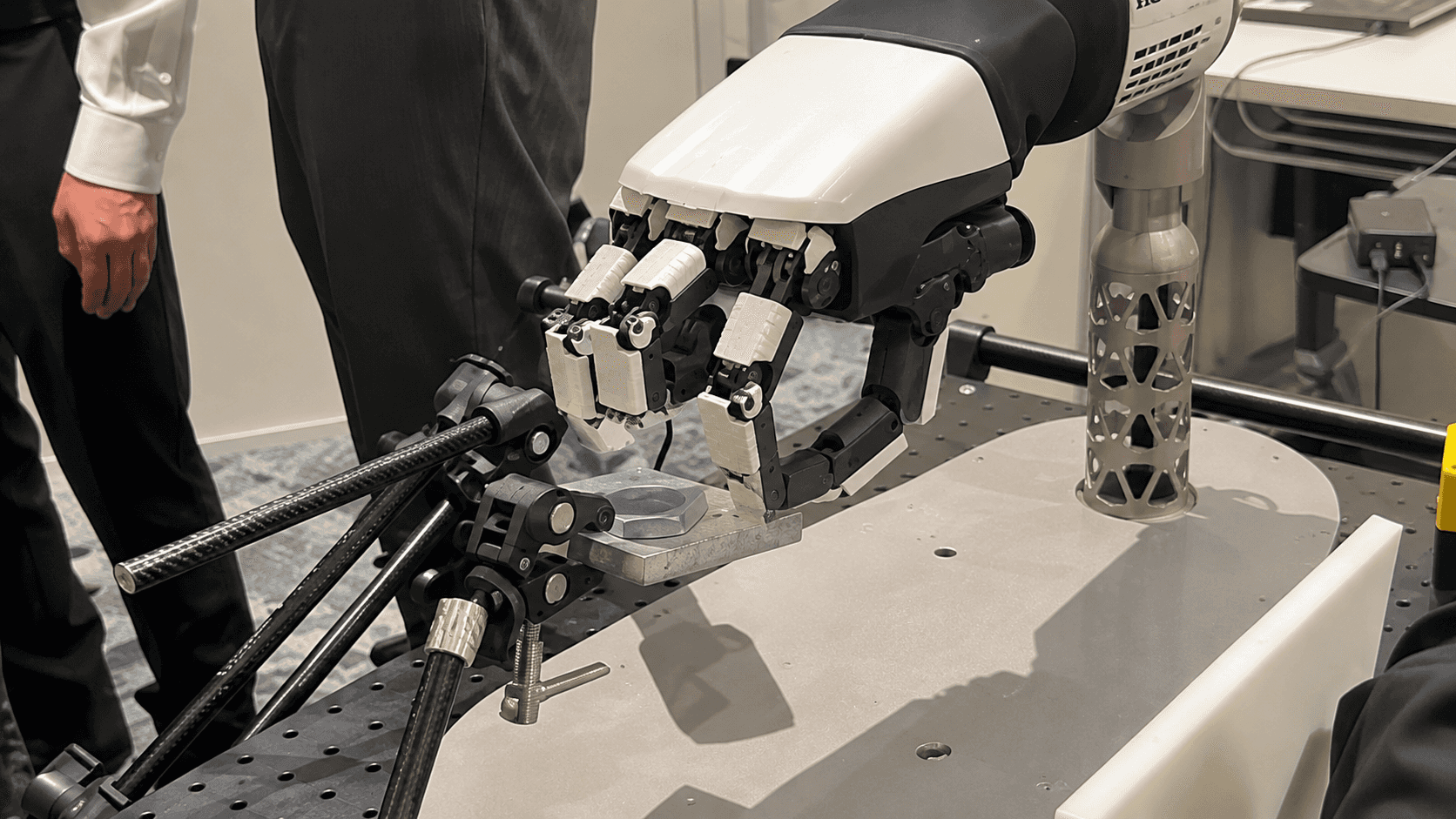
Honda Motor Co. has unveiled a highly dexterous, multi-fingered robotic hand, marking a significant strategic shift in its long-standing robotics program. This development signals a clear pivot from its iconic humanoid ASIMO project towards practical, industrial automation solutions. The automotive giant intends to commercialize this advanced robotic hand for manufacturing applications by the early 2030s.
This move by the Japanese powerhouse represents a renewed, pragmatic focus on robotics, specifically targeting the pressing global challenge of labor shortages within factory environments. It stands in stark contrast to the general-purpose, public-facing approach that defined ASIMO, indicating a more direct and viable path to market adoption. For founders and VCs assessing industrial tech, this isn't just a technical reveal; it’s a tangible statement on the future direction of efficient, adaptable manufacturing.
The technological leap is notable: the new system can grasp a minuscule 1.6-millimeter diameter screw, rotate it, and insert it with precision into a screw hole. Beyond fine motor control, it also demonstrates strength, capable of lifting objects up to 5 kilograms using only its fingertips. Takahide Yoshiike, executive chief engineer at Honda R&D Co., highlighted the "remarkable level of smoothness" achieved, even in the most delicate manipulation tasks, attributing this to a newly developed, patented drive system.
This quiet re-entry into the robotics spotlight follows the retirement of ASIMO.
The global manufacturing sector is at an inflection point, battling acute labor deficits and an escalating demand for automation that extends beyond simple, repetitive tasks. Japan, already a formidable global leader in industrial robotics production through giants like Fanuc, Yaskawa, and Kawasaki, faces particular demographic headwinds, making sophisticated, adaptable automation not just an advantage, but a national economic imperative. This context elevates Honda’s pivot from a mere product announcement to a strategic response to macro-economic forces impacting global supply chains.
My read on this is that Honda has clearly absorbed the lessons from its ASIMO era, recognizing that the immediate, commercially viable frontier for advanced robotics lies not in general-purpose humanoids, but in highly specialized, dexterous industrial applications. This is a shrewd move, leveraging their deep engineering heritage in precision mechanics and directly addressing a clear, urgent market need for flexible automation that existing fixed-function robots cannot meet. The emphasis on "creating new value" through original development, rather than imitating rivals, speaks to a long-term strategic vision, focusing on foundational capabilities that can be scaled.
This shift aligns with a broader industry trend towards intelligent, adaptable manufacturing systems and "cobots"—collaborative robots designed to work alongside humans or perform highly adaptive tasks. The integration of tactile sensors, multi-fingered manipulation, and the ability to orient components correctly before assembly are critical for handling the variability inherent in modern production lines. This signifies a move beyond mere automation towards augmentation, where robots handle the intricate, repetitive, or hazardous aspects of complex assembly, freeing human workers for higher-value tasks.
Honda’s plan to begin full-scale field testing at its Yorii factory in Saitama Prefecture, specifically for sorting large volumes of parts supplied by subcontractors, demonstrates a pragmatic pathway to validation. This initial application targets a common manufacturing bottleneck, highlighting the immediate utility of a single robot capable of performing multiple, precise tasks. Such versatility could significantly reduce the need for specialized, single-purpose machinery and human labor in high-mix, low-volume production environments.
Honda’s Robotic Hand Turns Humanoid Research Into Industrial Opportunity. Honda’s multi-fingered robotic hand reflects a smart transition from the futuristic appeal of ASIMO to solving immediate manufacturing challenges. The system combines 16 actuated joints, significant fingertip strength and more than 450,000 durability-test cycles, indicating that Honda is prioritising practical reliability alongside dexterity. Its ability to manipulate a 1.6-millimetre screw while handling loads of up to five kilograms could make one robotic system useful across multiple precision-assembly tasks. In our view, industrial deployment is the right commercial path for Honda’s robotics expertise, particularly as manufacturers confront labour shortages. However, technical demonstrations must translate into affordable, maintainable systems that integrate smoothly with existing production lines. Honda’s real breakthrough will not be creating a hand that resembles human capability, but proving that it can deliver dependable productivity at factory scale.
Honda’s quiet resurgence in robotics, now prioritizing sophisticated dexterity and undeniable industrial utility over generalized humanoid ambition, could indeed redefine its competitive standing in the global automation landscape. The challenge ahead involves successfully commercializing this precision technology by the early 2030s to meet the formidable, evolving demands of next-generation manufacturing. This strategic patience and methodical execution position Honda for a potential, impactful comeback in a critical tech sector.
Frequently asked questions
What is Honda's new focus in robotics after ASIMO?
Honda is shifting its robotics program from humanoid designs like ASIMO to practical, multi-fingered robotic hands. These new solutions are intended for industrial automation and manufacturing applications, marking a strategic pivot in its long-standing efforts.
What kind of robotic technology is Honda developing?
Honda is developing highly dexterous, multi-fingered robotic hands for industrial use.
When does Honda plan to commercialize its new robotic hand?
Honda intends to commercialize this advanced robotic hand for manufacturing applications.
Why did Honda move away from the ASIMO project?
Honda pivoted from ASIMO to focus on more practical, industrial automation solutions rather than humanoid designs.
What industry will Honda's new robotic hand target?
The new robotic hand is primarily targeting manufacturing applications for commercial use.
Is Honda still involved in robotics after ASIMO?
Yes, Honda is actively reviving and refocusing its robotics ambitions with new industrial applications and a strategic pivot.