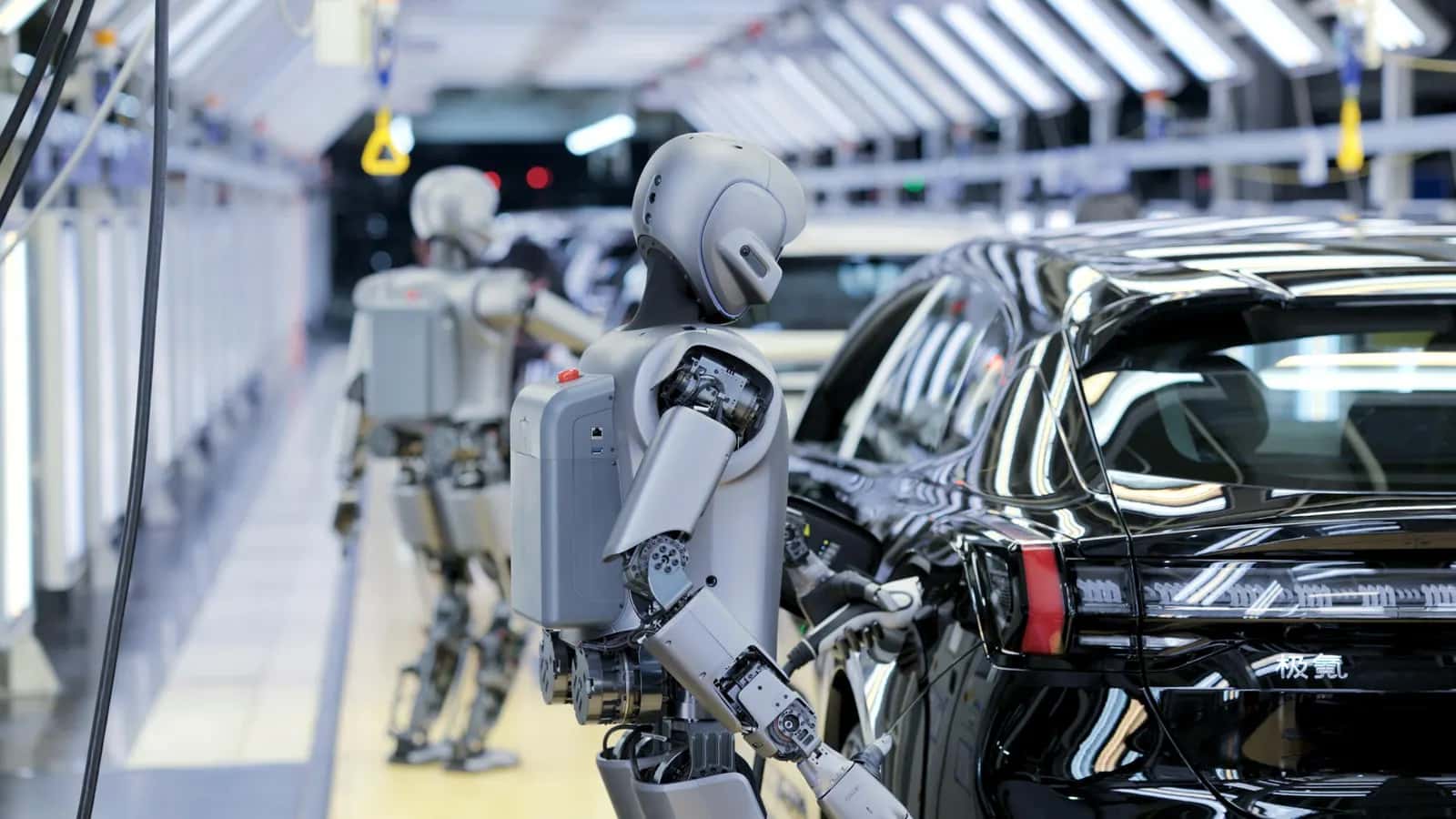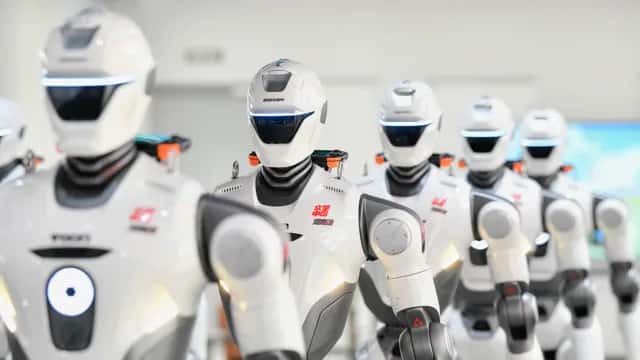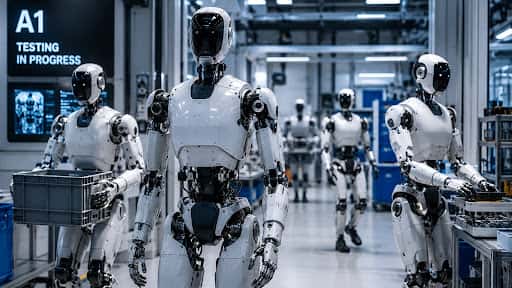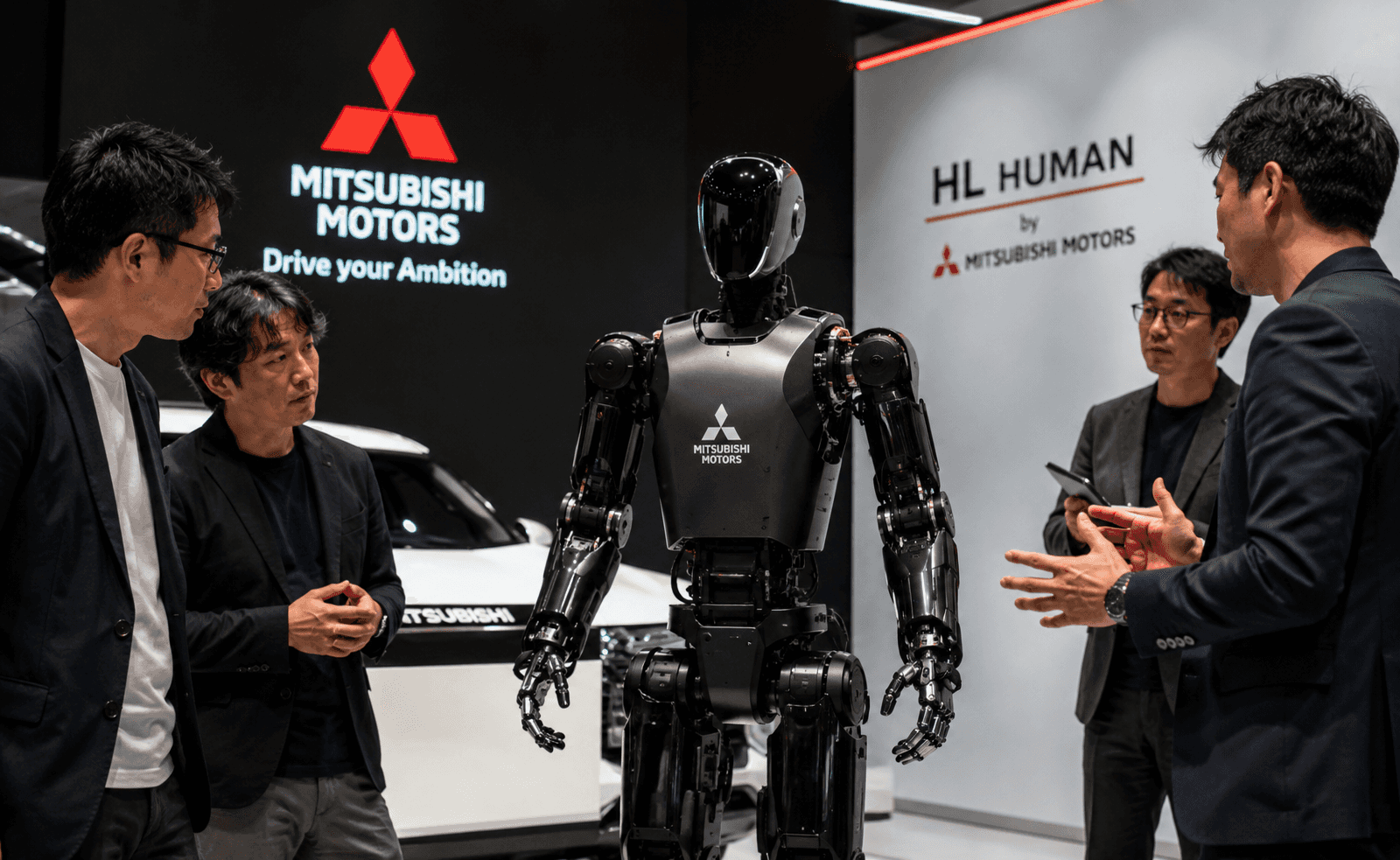
Industrial giant Mitsubishi repurposes an engine line in Japan to scale humanoid robot manufacturing, aiming for 1,000 units monthly.
Mitsubishi is making a bold move into the humanoid robotics space, announcing plans to mass-produce many units of its new humanoid robot monthly. This is not some distant R&D project; the industrial giant intends to repurpose an existing engine production line in Japan for this ambitious manufacturing push.
For decades, Mitsubishi has been synonymous with heavy industry, from cars to elevators, and a leader in industrial automation with its extensive range of robotic arms and factory solutions. This pivot into full humanoid production signals a serious intent to capture a significant share of a nascent, yet rapidly accelerating, market, placing them squarely in competition with agile startups and other tech behemoths.
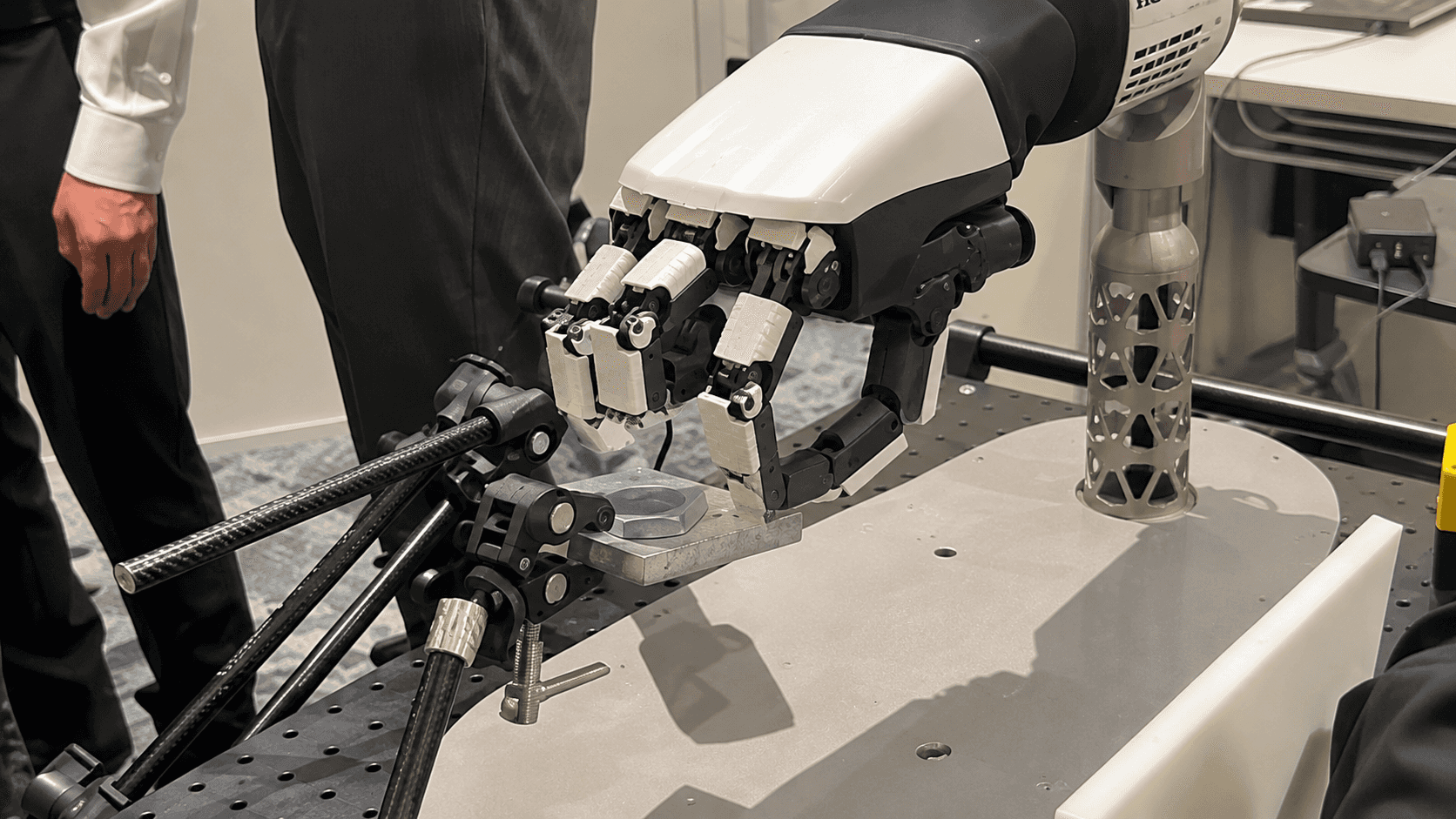
The new robot, set for an upcoming unveiling, promises advanced capabilities, boasting significant articulation and AI-powered autonomy. That level of articulation suggests a design capable of complex manipulation and adaptive movement, crucial for navigating the unstructured environments often found outside tightly controlled factory settings.
However, the transition from controlled industrial robots to versatile humanoids capable of nuanced, human-like tasks presents immense engineering and software challenges. Building many units a month is one thing; ensuring each performs reliably in varied, dynamic real-world scenarios, especially with an ambitious rollout target, is another entirely. This is where the rubber meets the road, where the ambition of advanced articulation and AI autonomy will truly be tested against the messy realities of the shop floor or logistics hub.
The broader robotics industry has been buzzing with humanoid developments, fueled by advancements in AI, particularly large language models, and a global manufacturing crunch. Several companies are all vying for leadership in this next frontier of automation. Mitsubishi's entry, leveraging its deep manufacturing prowess, instantly lends credibility and scale to the field, shifting the conversation from theoretical prototypes to industrial-scale deployment.
This aggressive production target by Mitsubishi is not just about competing; it’s a strategic play to address acute labor shortages plaguing industries worldwide, especially in Japan's rapidly aging society. Deploying humanoids that can perform diverse tasks on existing infrastructure, rather than requiring complete overhauls, could be a game-changer for maintaining productivity and competitiveness.
My read on this is that Mitsubishi is leveraging its core strength: manufacturing efficiency and scale. Repurposing an engine line isn't just cost-effective; it shows a pragmatic, founder-like approach to market entry. They’re not waiting for a perfect, purpose-built factory; they’re adapting existing assets, which could accelerate their time to market significantly.
The venture capital world has poured significant capital into humanoid startups, betting on their potential to unlock new levels of automation. Mitsubishi's commitment to substantial monthly production serves as a validation of that thesis, signaling that major industrial players also see the commercial viability and are willing to invest substantial capital and infrastructure.
The "AI-powered autonomy" aspect is key. With advanced articulation, the hardware is capable, but the software, especially the AI, will dictate the robot's true utility. It will need to learn, adapt, and make decisions on the fly in complex, human-centric environments. That requires robust perception, planning, and control systems, all areas where AI is rapidly evolving.
I think this matters because it moves humanoid robotics beyond the realm of speculative prototypes and into tangible, industrial-scale deployment. Many startups struggle with scaling manufacturing; a company like Mitsubishi inherently understands that challenge and possesses the infrastructure to overcome it. This isn't just about building a robot; it's about building an ecosystem for its mass deployment.
The implications for the global workforce are also significant. While some fear job displacement, the more immediate impact will likely be in augmenting human labor in dangerous, repetitive, or undesirable roles. As societies face demographic shifts, humanoids offer a compelling solution to maintain economic output and ensure continuity in essential services.
This move by Mitsubishi signals a maturation of the humanoid robotics market. We're moving past the "can it walk?" phase into "can it work effectively and at scale?" This is where the true value will be unlocked for founders and enterprises looking to integrate advanced automation into their operations.
Mitsubishi’s Humanoid Strategy Is Promising, but Mass Production Is Not Yet Confirmed Mitsubishi’s move into humanoid robotics reflects a practical response to Japan’s labour shortage and growing demand for flexible factory automation. However, the announcement is more cautious than the article suggests. Mitsubishi Motors, not the wider Mitsubishi group, has signed an MOU with University of Tokyo-origin startup Highlanders to jointly develop humanoids and evaluate production at its Kyoto plant. The companies are examining whether manufacturing could begin in early 2027 using currently unused buildings; no official monthly production target or engine-line conversion has been confirmed. In our view, Mitsubishi’s manufacturing, durability and quality-control expertise could help Highlanders cross the difficult gap between prototype and industrial product. Yet the commercial test will be whether these robots deliver safe, reliable productivity at a cost competitive with conventional automation—not how ambitious the production narrative sounds.
The coming years will be a crucial test for these new robots and their competitors. The success of these first-generation industrial humanoids will largely depend on their reliability, cost-effectiveness, and ease of integration into existing workflows. Mitsubishi’s deep client relationships within manufacturing could provide an invaluable proving ground and a fast track to market adoption.
Ultimately, this isn't just about Mitsubishi. It's about Japan's industrial strategy and, by extension, a global trend towards smarter, more resilient manufacturing. The race to deploy autonomous humanoids at scale is on, and an industrial powerhouse like Mitsubishi entering the fray with such clear production targets just turned up the heat considerably for everyone else.
Frequently asked questions
How many humanoid robots will Mitsubishi produce monthly?
Mitsubishi plans to mass-produce 1,000 humanoid robots per month by repurposing an existing engine production line in Japan.
What is Mitsubishi repurposing for robot production?
Mitsubishi is repurposing an unused engine production line in Japan for the mass manufacturing of its new humanoid robots.
Where will Mitsubishi's humanoid robots be produced?
The humanoid robots will be produced in Japan, utilizing an existing engine production line.
What is Mitsubishi's strategic shift?
Mitsubishi is making a bold strategic shift into the humanoid robotics space, moving from traditional heavy industry to advanced robot manufacturing.
What is the significance of this move for Mitsubishi?
This move signifies Mitsubishi's entry into high-volume humanoid robot production, positioning them as a major player in the evolving robotics market.
When will Mitsubishi start mass-producing humanoid robots?
The article states Mitsubishi is announcing plans to mass-produce, indicating that production will commence soon after the repurposing of the engine line.