Northrop Grumman's MRV ushers in a new era of in-orbit satellite servicing, promising a more sustainable and economically viable space economy.
A new era for satellite operations is unfolding high above Earth, promising to transform how we utilize and maintain critical space infrastructure. Northrop Grumman's robotic Mission Robotic Vehicle (MRV) is making its debut by replacing an existing in-orbit servicing spacecraft, signaling a pivotal shift toward a more sustainable and economically viable space economy for everyone from internet users to global businesses.
Here's what happened: a Mission Extension Vehicle (MEV) built and operated by Northrop Grumman has previously serviced an Optus communications satellite, extending its life. This paves the way for a next-generation solution, demonstrating the growing maturity of in-orbit satellite servicing as a genuine alternative to costly satellite replacement.
MEVs have effectively served as thrusters for aging satellites, including an Optus satellite which launched in 2009 and was originally designed for a 15-year lifespan. By extending operational life beyond built-in fuel reserves, MEVs have allowed operators like Optus to continue generating revenue and providing services for longer, directly impacting their bottom line and ensuring continuity for customers.
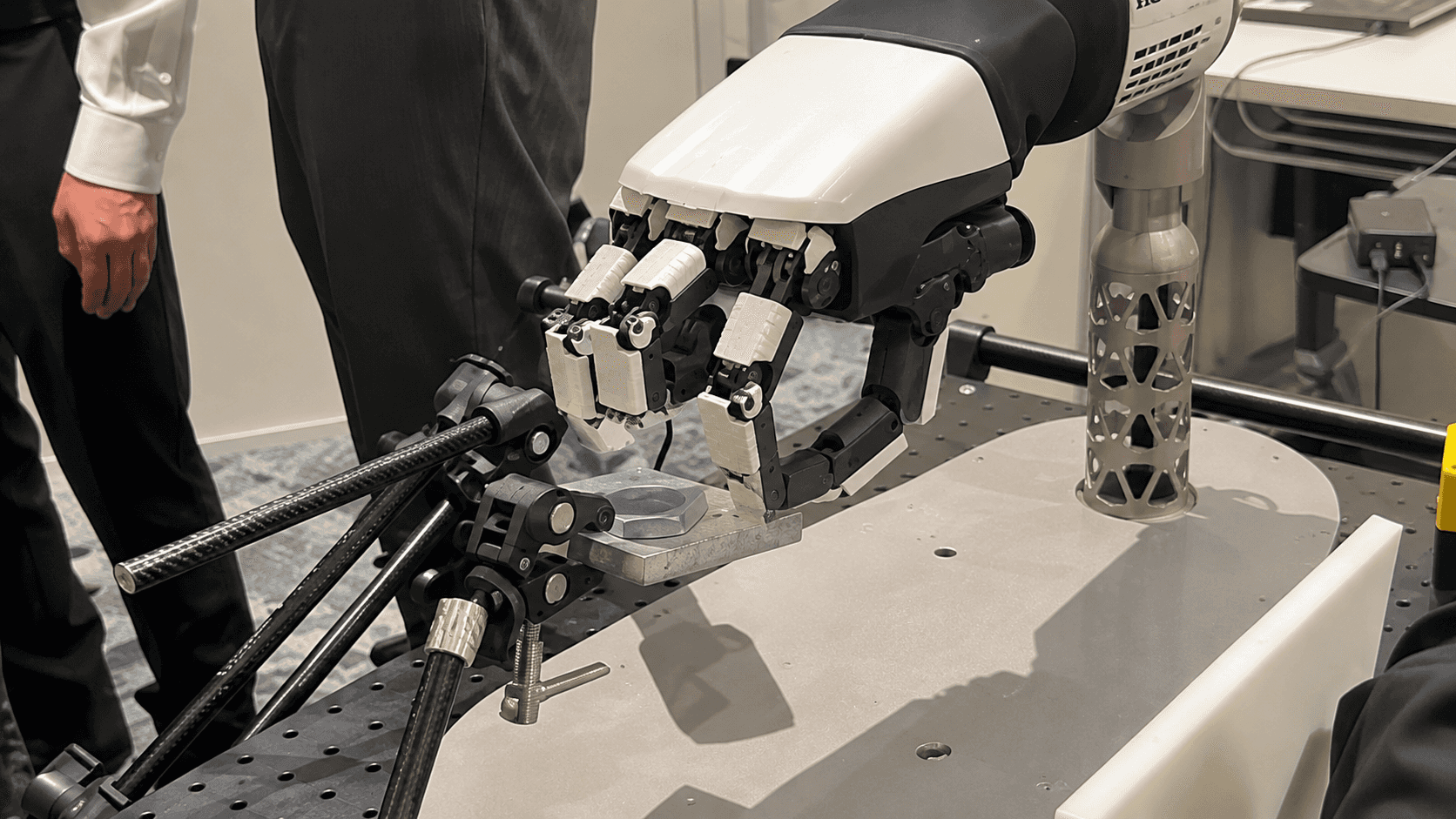
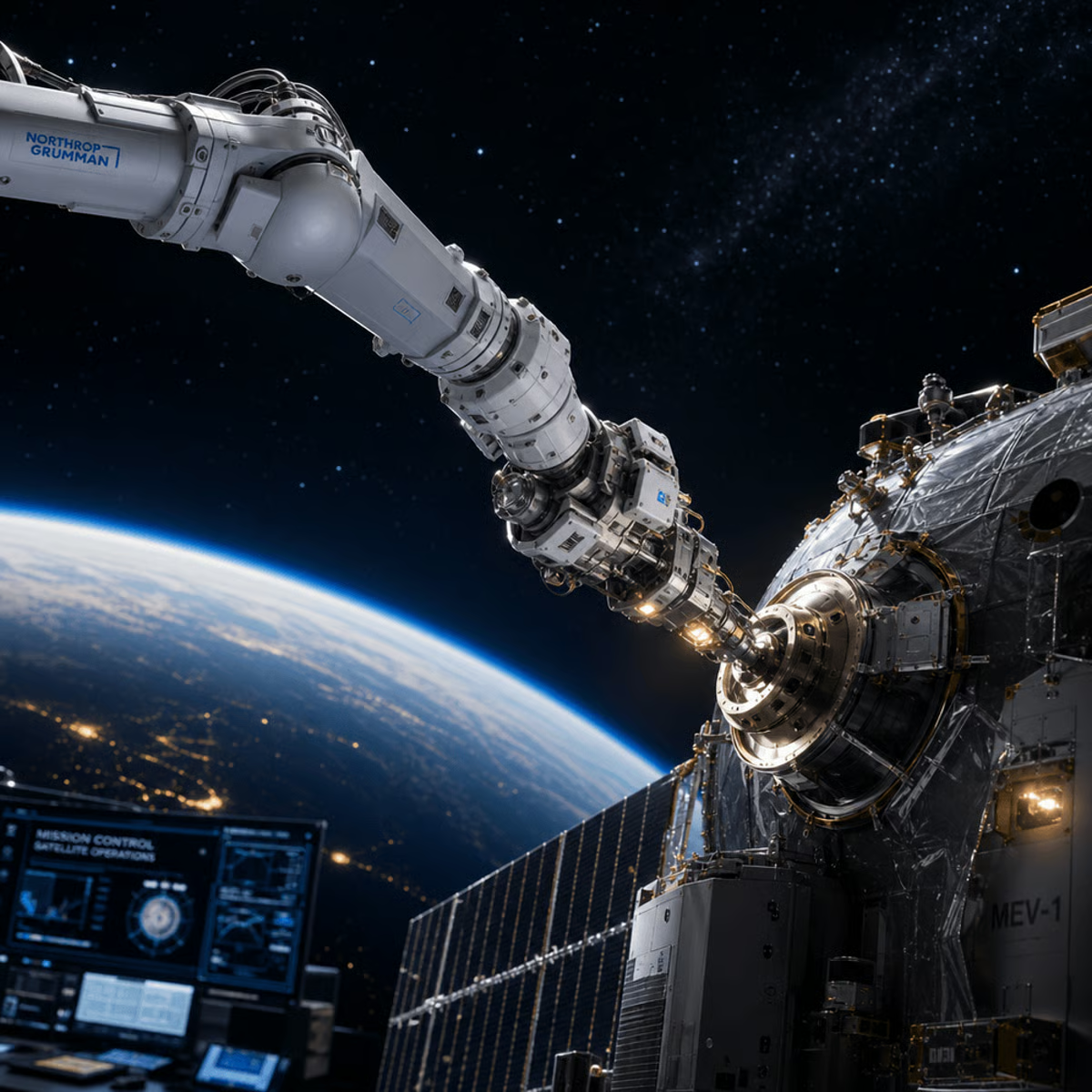
The replacement is not just another MEV, but a more advanced system. The Mission Robotic Vehicle (MRV) is a sophisticated satellite equipped with two advanced robotic arms developed in collaboration with DARPA, the U.S. military's research arm. The mission also involves Mission Extension Pods (MEPs), which are essentially modular propulsion units designed to be attached to client satellites by the MRV.
These spacecraft are now journeying to their targets high above Earth. In an upcoming mission, the MRV will undertake a groundbreaking maneuver: using its robotic arms to precisely attach one of the MEPs to the Optus satellite. This innovative approach is expected to grant the satellite several more years of operational life, potentially allowing it to fly, and thus generate revenue, for longer beyond its original design life.
Satellites typically reach the end of their lives not because their core electronics or transceivers fail, but because they run out of the propellant needed to maintain their correct orbital position. This critical limitation has traditionally meant that functional, valuable hardware is decommissioned and becomes space debris. However, the confluence of cheaper launch costs, driven largely by companies like SpaceX, and lower-cost, more resilient space components is rapidly making spacecraft repair and life extension missions an increasingly attractive reality.
This initiative represents a significant step towards a paradigm shift in how space is viewed, moving towards a sustainable and resilient architecture where spacecraft repairs, life extension, and even upgrades and maintenance of satellites are possible. This vision aligns with future-forward thinking needed in the global tech ecosystem, moving away from a disposable model towards one of perpetual utility.
Why is in-orbit servicing such a big deal for the space economy?
For founders and investors in the space sector, this is more than just a cool robot in orbit; it's a fundamental recalibration of the economics of space. Traditional satellite operations involve designing, building, launching, and operating a satellite for a fixed lifespan, after which a new, expensive replacement must be deployed. This new model, championed by Northrop Grumman, introduces a crucial "service" layer that promises to unlock significant value by extending the utility of existing assets.
Consider the sheer capital expenditure involved in launching a new geostationary satellite, which can easily run into hundreds of millions of dollars, not including insurance and operational costs. By contrast, an in-orbit servicing mission like those performed by MEVs or the forthcoming MRV/MEP combination offers a fraction of that cost, allowing operators to defer massive capital outlays and maintain predictable revenue streams from their existing constellations for years longer. This is a clear win for balance sheets and investor confidence.
My read is that this development is a critical accelerant for the "space as a service" trend, a concept of increasing importance. It moves beyond simply providing data or connectivity to offering tangible, ongoing maintenance and upgrade services in space. This opens up entirely new business models for startups focused on everything from advanced robotics and AI for autonomous repair to component design for modular, serviceable satellites. The ability to repair and upgrade in situ makes space infrastructure far more agile and responsive to evolving market demands.
What does this mean for the future of space infrastructure and innovation?
The recent launch of Northrop Grumman's Mission Robotic Vehicle (MRV) and Mission Extension Pods (MEPs) aboard a SpaceX rocket marks the definitive end of the disposable satellite era. Currently en route to geostationary orbit, the MRV, equipped with DARPA-developed robotic arms, is on a groundbreaking mission to attach a propulsion pod to the aging Optus D3 satellite. This maneuver, slated for late 2027, will grant the satellite up to six more years of operational life. At StartupNews.fyi, we see this as a monumental shift in the economics of the deep tech and space sectors. For decades, satellites that simply ran out of fuel became dead weight, forcing companies into massive capital expenditures for full replacements. In-orbit servicing completely flips the script. Extending the lifespan of assets worth hundreds of millions of dollars fundamentally transforms telecom balance sheets and investor confidence. More importantly, this paves the way for a booming "space as a service" industry. Startups focused on advanced orbital robotics, modular components, and debris mitigation now have a clear commercial validation. The future of orbital infrastructure isn't just about launching new hardware; it’s about repairing and upgrading it directly in the vacuum of space.
The shift towards in-orbit servicing also has profound implications for space sustainability. By extending the life of satellites, the need for new launches is reduced, which in turn mitigates the exponential growth of space debris. If satellites can be maintained and even repurposed, rather than simply allowed to drift into junkyard orbits, we can ensure the long-term viability of space for future generations and countless emerging applications. This focus on circularity in space is a massive opportunity for innovation in materials science and robotics.
The viability of this model is demonstrated by previous missions. Mission Extension Vehicles have provided life extension to several customers. One MEV is currently awaiting its next customer in a parking orbit, while another MEV will remain attached to
Frequently asked questions
What is Northrop Grumman's Mission Robotic Vehicle designed to do?
Northrop Grumman's Mission Robotic Vehicle (MRV) is designed for in-orbit satellite servicing. It can perform tasks like inspecting, repairing, refueling, and even relocating satellites to extend their operational lifespan and enhance space sustainability.
How does the MRV contribute to a sustainable space economy?
By extending the life of existing satellites, the MRV reduces the need for new satellite launches, thus lowering costs and decreasing space debris. This fosters a more economically viable and environmentally sustainable approach to space operations.
What kind of satellites can the MRV service?
The MRV is primarily designed to service geostationary (GEO) satellites, which are critical for communications and weather monitoring. Its capabilities can potentially be adapted for other orbital regimes in the future.
When is Northrop Grumman's MRV expected to become operational?
The MRV is making its debut by replacing an existing in-orbit servicing spacecraft, signaling its entry into operational phases. Specific timelines for widespread commercial availability are often phased.
What are the benefits of in-orbit satellite servicing?
Benefits include maximizing asset utilization, cost savings by avoiding premature satellite replacement, reducing space junk, and enabling new capabilities for aging spacecraft, ultimately enhancing overall space infrastructure resilience.
Is Northrop Grumman the only company developing robot space mechanics?
While Northrop Grumman is a leader with its MRV, several other companies and space agencies globally are also developing technologies for in-orbit servicing, maintenance, and manufacturing, indicating a growing trend in the space industry.