Following tragic teen fatalities, an Irish parliamentary committee demands TikTok address its content moderation on dangerous driving content.
Irish Lawmakers Summon TikTok Over Viral Dangerous Driving Content Following Fatalities An Irish parliamentary committee has formally summoned TikTok to provide a full accounting of its content moderation practices, specifically targeting videos that appear to glorify dangerous driving. This move comes directly in the wake of a tragic incident where five teenagers died in a car crash attributed to reckless driving, allegedly fueled by the pursuit of social media engagement. The platform now faces direct scrutiny over its role in amplifying content that incites illegal and hazardous behavior on public roads. TikTok, as the undeniable heavyweight in the short-form video space, finds itself once again at the nexus of viral trends and real-world harm. This isn't just a local regulatory spat; it's a global test case for how platforms are held accountable for user-generated content that rapidly escalates from digital stunt to fatal consequence, particularly among younger demographics.
The pressure is mounting for the company to demonstrate concrete steps beyond boilerplate policy statements. Supporting the gravity of the situation, the head of Irish police stated that young people are actively driving on the wrong side of motorways, explicitly for social media likes. The parliamentary committee, which has asked TikTok to explain its content removal practices, highlighted that serious questions have arisen about the circulation of social media content which appears to glorify dangerous and illegal behavior on roads, calling for meaningful action from social media platforms. TikTok, for its part, has maintained a guarded stance, declining to comment directly on the parliamentary invitation. The company did issue a general statement earlier, affirming it was monitoring content related to the five deaths and removing videos and accounts found to be violating its rules. This standard response, while procedurally correct, often falls short of satisfying regulators and the public who demand proactive solutions.
This incident fits into a broader, increasingly urgent narrative around platform accountability, especially as governments worldwide grapple with the unintended consequences of algorithmic amplification. For the venture capitalists and founders observing this space, the rising regulatory heat signals a shift: platforms are no longer just tech companies; they are public squares with public responsibilities. This has profound implications for brand safety, advertiser trust, and ultimately, the valuation of companies built on user-generated content, forcing a re-evaluation of the engagement-at-all-costs model. This isn't TikTok’s inaugural dance with dangerous trends; the platform has a contentious history with a string of viral "challenges" that have led to real-world injuries and even deaths. From the "Benadryl Challenge" to the "Blackout Challenge," the pursuit of virality, of that next trending sound or stunt, has repeatedly sidestepped critical questions of safety and impact.
The platform's algorithms, designed with an almost singular focus on engagement, often inadvertently or perhaps inevitably amplify risky behaviors, creating a challenging feedback loop that escalates content well beyond its initial intent. My read on this, from a marketing and creator economy perspective, is that this issue is a persistent, growing shadow over platforms that thrive on user content. The very mechanisms that drive astronomical growth and creator success unfettered sharing, algorithmic promotion, the pursuit of trending status are the same ones that can expose platforms to immense liability. Companies need to evolve beyond reactive moderation to proactive ethical design, embedding safety and responsibility into the core product rather than bolting it on as an afterthought. Otherwise, the creator economy itself faces an existential threat from over-regulation. Adding to the chorus of concern, Ireland's media regulator has also independently requested a "full account" from TikTok regarding its measures against risky driving content. Further escalating the situation, a body representing police officers has claimed that numerous gangs of male youths are actively trying to outdo each other, using social media videos to document interactions with police and dangerous maneuvers like driving against traffic on motorways. The government's response has been swift and stern, promising police forces all necessary resources and proposing new legislation to make driving the wrong way down a motorway a separate, distinct offense. A stark, unambiguous warning was delivered to anyone considering such actions, stating that they could end up in jail or in a grave.
The Algorithmic Accomplice: TikTok’s Irish Reckoning
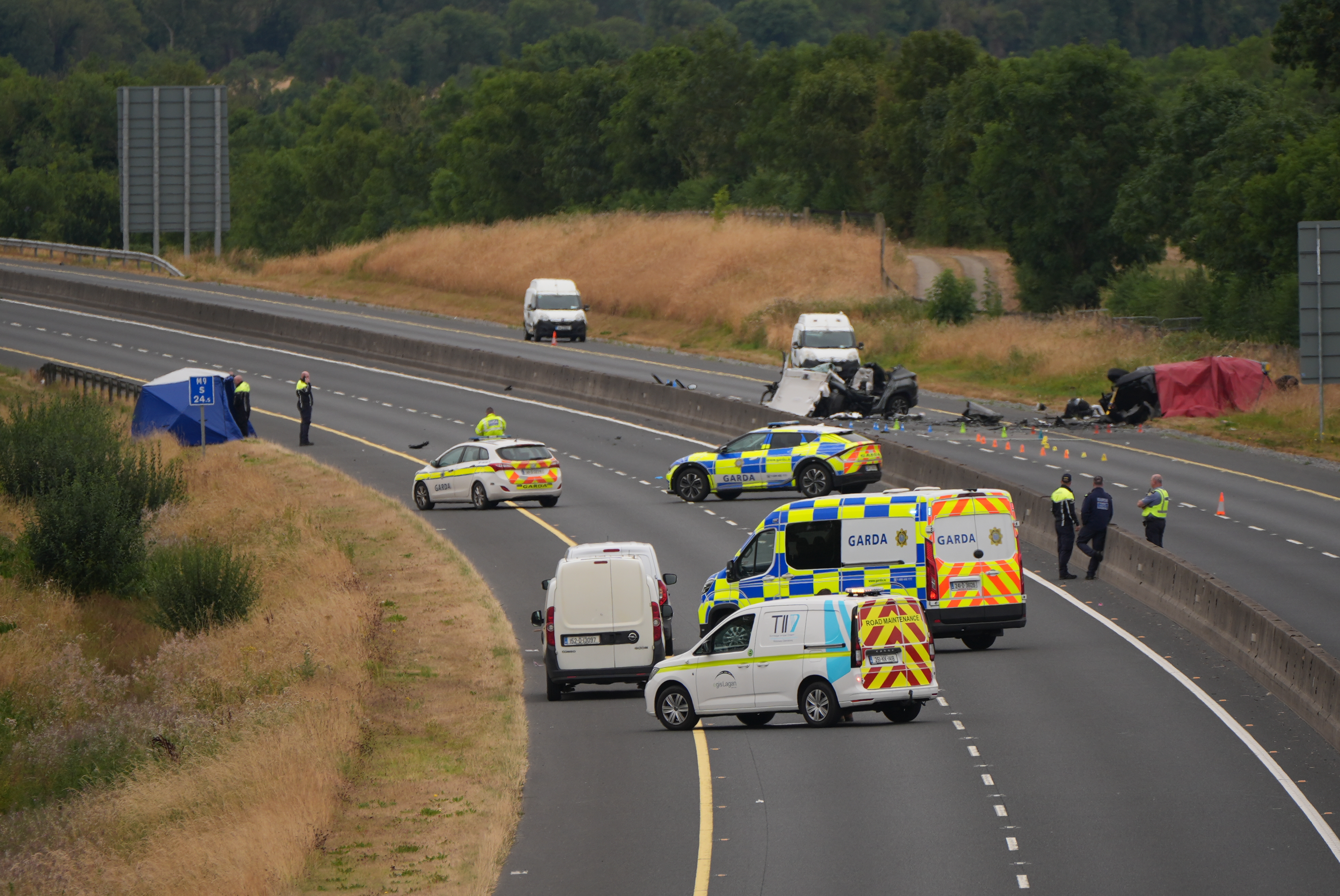
The horrific tragedy on Ireland’s M9 motorway where five teenage boys died in a head-on collision after driving the wrong way to allegedly chase social media clout, is forcing a brutal, overdue confrontation regarding the architecture of virality. By formally summoning TikTok to explain itself, the Irish parliamentary committee is no longer just questioning a moderation failure. They are putting the engagement-at-all-costs business model on trial. For years, short-form video giants have relied on a reactive defense: citing boilerplate safety policies and promising to scrub violating content after the fact. But the "neutral platform" argument is collapsing under the weight of real-world casualties. When a proprietary algorithm is ruthlessly optimized to prioritize high-adrenaline, pattern-breaking content, it inherently incentivizes extreme behavior. The platform ceases to be a passive digital square and becomes an active catalyst for offline harm.
What we are witnessing in Ireland is the physical infrastructure of a state straining to manage the fallout of digital product design. The fact that the Gardaí (Irish police) are now being forced to introduce specialized vehicle-pursuit training to combat youth gangs attempting to go viral with wrong-way highway stunts proves that algorithmic consequences have breached the digital divide. For the global tech ecosystem, this is a glaring regulatory warning. With the EU already heavily scrutinizing TikTok under the Digital Services Act, lawmakers are losing patience with reactive, whack-a-mole moderation. If platforms do not fundamentally re-engineer their recommendation engines to prioritize safety by design, governments will stop treating them as technology companies and start regulating them like public hazards. The ultimate cost of unchecked virality is an existential threat to the creator economy itself.
The police themselves are adapting, planning to introduce specialized vehicle-pursuit training for officers before the year's end. This operational shift underscores the severe real-world impact that online behavior is having on public safety and law enforcement resources. It's no longer just about content moderation in the digital realm; it's about tangible threats requiring tangible, often costly, responses. Ultimately, the incident in Ireland underscores an escalating global tension between the pursuit of digital virality and the imperative of public safety. Platforms like TikTok are at a make-or-break moment, needing to find a more sustainable balance between growth metrics and genuine social responsibility. Failure to do so risks not only further reputational damage but also increasingly stringent legislative intervention that could fundamentally reshape the open, innovative landscape of the creator economy.
Frequently asked questions
Why have Irish lawmakers summoned TikTok?
Irish lawmakers summoned TikTok to address concerns over content moderation practices, specifically regarding videos that glorify dangerous driving, following tragic car crash fatalities involving teenagers.
What specific content is TikTok being questioned about?
TikTok is being questioned about videos that appear to glorify or encourage dangerous driving practices, especially those that have gone viral on its platform.
How many fatalities prompted this action?
The summons comes in the wake of a tragic incident where five teenagers died in a car crash, which has been attributed to dangerous driving content.
What is the role of the parliamentary committee in this summons?
An Irish parliamentary committee has formally summoned TikTok to provide a full accounting of its content moderation practices and address public safety concerns.
What could be the outcome of this summons for TikTok?
The outcome could include TikTok being required to implement stricter content moderation policies, face fines, or adjust its algorithms to prevent the spread of harmful content.
Does this incident relate to broader social media regulation efforts?
Yes, this incident contributes to a growing global conversation around social media platform accountability, content moderation, and the regulation of online content to protect users.