Delaware ruling bars the Twitter name but allows 'Tweet' as X and Operation Bluebird fight over trademarks
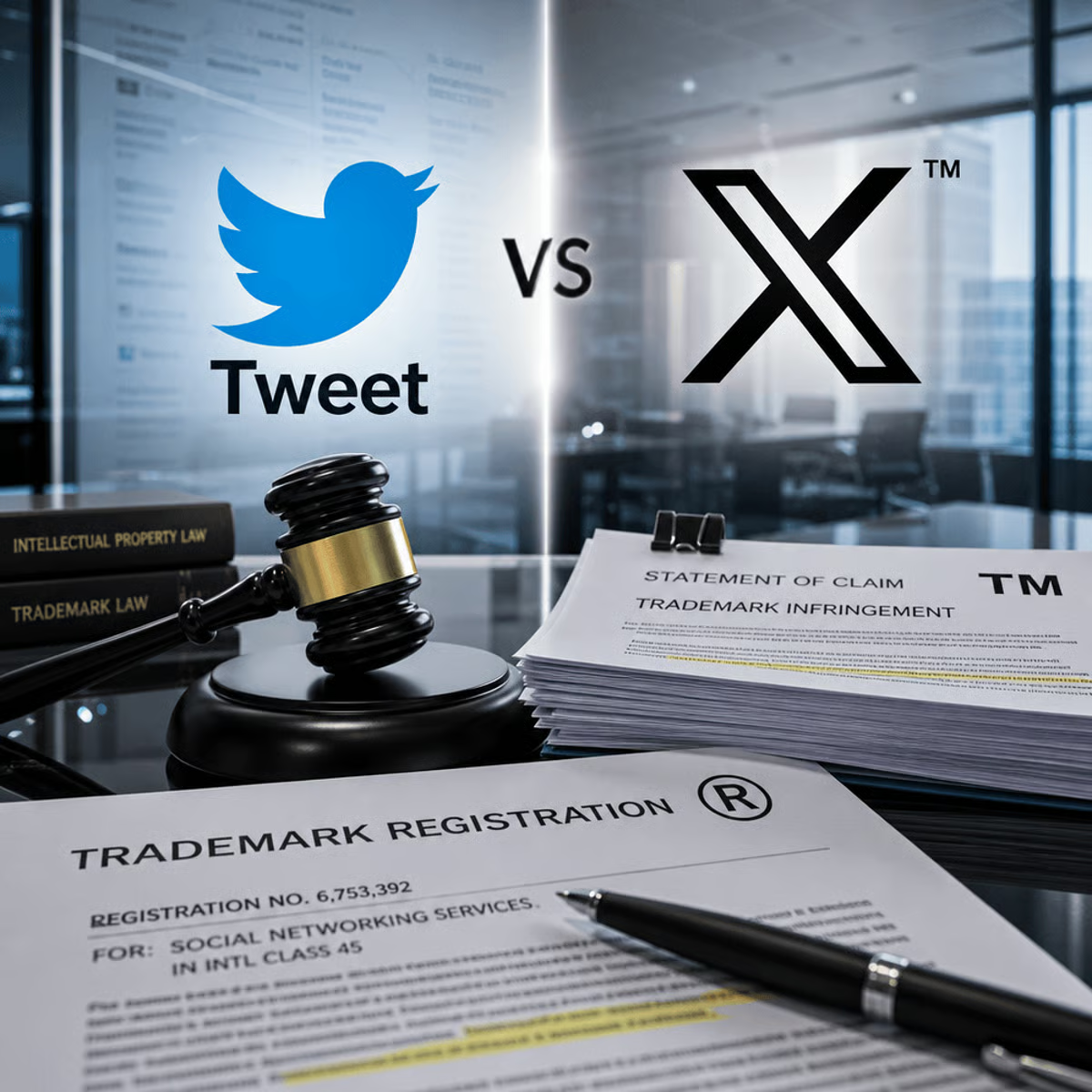
Judge blocks X rival from using the Twitter name, but a federal court in Delaware has allowed the use of "Tweet" for now, according to a preliminary ruling in the trademark dispute between X and Operation Bluebird. The split order matters beyond one startup because it draws a line between a platform name that still carries active trademark protection and product language that a court believes may have been abandoned after a rebrand.
U.S. District Court Judge Colm F. Connolly granted X’s request for a preliminary injunction on eight Twitter-related marks, but denied it for the "Tweet" mark and the Twitter bird logo, according to the court opinion dated September 4, 2026. Operation Bluebird, which had launched under Twitter.now, has since rebranded to Tweet.app and opened to the public. The effort is led by Michael Peroff and Stephen Coates, with Coates identified as president of Operation Bluebird and a former trademark lawyer at Twitter. The judge wrote that Bluebird was likely to succeed in proving X had discontinued bona fide use of the Tweet mark and Bird logo and did not intend to resume use. The case is not final and will continue on the broader question of whether X retains rights in any of the legacy Twitter marks after shifting the service to X branding. Operation Bluebird said that more than 172,000 people requested a handle before launch, and that it is charging users $20 to reserve a handle and join the network. That commercial detail is not incidental. My read is that the startup is testing whether dormant internet brands can still convert nostalgia into distribution, even before a product proves itself. In consumer internet, names are not just legal assets, they are acquisition channels, and this case turns trademark law into a growth story.
Operation Bluebird is a Virginia-based social networking startup, founded by lawyers including Illinois-based Michael Peroff, with Stephen Coates also leading the effort. The company’s stated model, as described on its own website, is to revive parts of the Twitter identity that X left behind after Elon Musk’s rebrand. In plain English, the startup is not only building another text-first social app, it is trying to package abandoned user language, symbols, and memory into a usable brand system. That is what makes this more than a niche trademark fight. In South and Southeast Asia, where social products often spread through recognizable internet shorthand rather than formal brand advertising, control over a verb or icon can matter as much as the app itself. X still appears to hold the higher-value corporate mark around "Twitter," according to the ruling, but the court’s view on "Tweet" suggests a company can keep the house while losing the catchphrase if it stops using it long enough.
The wider pattern is visible across social and creator platforms, where legacy naming still shapes user behavior long after official branding changes. Meta’s Threads, ByteDance’s TikTok, Telegram, and Reddit all compete for public conversation flows, while decentralized networks like Bluesky and Mastodon have also benefited from dissatisfaction with X. None of these companies are in the same legal position as X and Operation Bluebird, but the comparison is useful because distribution in social increasingly sits at the intersection of product design, creator habit, and linguistic ownership. When users keep saying "tweet" after a company tries to retire it, the market is effectively voting on what still has reach. That is why this case will be watched beyond the U.S. court system, including by startups in India and Southeast Asia that often build on borrowed user behavior before they build scale of their own.
Operation Bluebird is executing a highly calculated growth strategy masquerading as a legal dispute. By successfully arguing that the aggressive rebranding to "X" constituted the legal abandonment of "Tweet" and the iconic blue bird, founder Stephen Coates—a former Twitter trademark lawyer—is essentially weaponizing intellectual property law. For consumer internet startups, Customer Acquisition Cost (CAC) is the ultimate bottleneck. Bluebird is bypassing this entirely by securing 172,000 handle reservations at $20 apiece, generating instant cash flow simply by recycling a global cultural vernacular that X voluntarily discarded.
The Delaware court’s split ruling exposes a structural vulnerability in corporate rebranding in the digital age. A platform can legally defend its corporate umbrella mark ("Twitter"), but if it actively suppresses its own product lexicon to force a new identity, it forfeits the verbs that actually define user behavior. Social media platforms do not just build networks; they build languages. By abandoning "Tweet" to push a super-app narrative, X created an intellectual property vacuum that competitors are now monetizing.
For the broader ecosystem of microblogging challengers like Bluesky, Mastodon, and Threads, this ruling confirms that ingrained user habits outlive corporate edicts. If a startup can legally appropriate the foundational verbs of a legacy platform, it drastically lowers the friction of user migration. Bluebird is ultimately testing a novel thesis in consumer tech: whether legal arbitrage of abandoned brand equity can serve as a viable foundation for a new social network.
Frequently asked questions
What did the judge block X rival from using in the trademark case?
A federal judge in Delaware blocked Operation Bluebird from using the Twitter name, finding that X still has active trademark rights tied to that brand. The ruling was preliminary, which means the core case is still moving forward.
Did the court ban the word 'Tweet' in the dispute between X and Operation Bluebird?
No. The court allowed Operation Bluebird to keep using 'Tweet' for now, signaling that the word may be treated differently from the Twitter brand name. That part of the order is also preliminary and could change later in the case.
Why does the Twitter name get more protection than the word 'Tweet'?
Courts often protect brand names more strongly when they are directly tied to trademark ownership and source identification. A term like 'Tweet' can be harder to lock down if it is seen as descriptive, generic, or widely used in common speech.
Who is Operation Bluebird in the X trademark lawsuit?
Operation Bluebird is the company at the center of the trademark dispute with X over the use of Twitter-era branding. The case matters because it tests how much control X still has over names and terms linked to Twitter after the rebrand.
What does this Delaware ruling mean for startups using old Twitter branding?
The ruling suggests startups should be cautious about using the Twitter name because courts may still view it as protected trademark property. At the same time, some product language connected to Twitter could receive more limited protection depending on context and market use.
Is this the final decision in the X versus Operation Bluebird case?
No, this is a preliminary ruling, not a final judgment on all claims. It gives an early read on how the court views the trademark issues, but the parties can still keep litigating and the outcome may evolve.