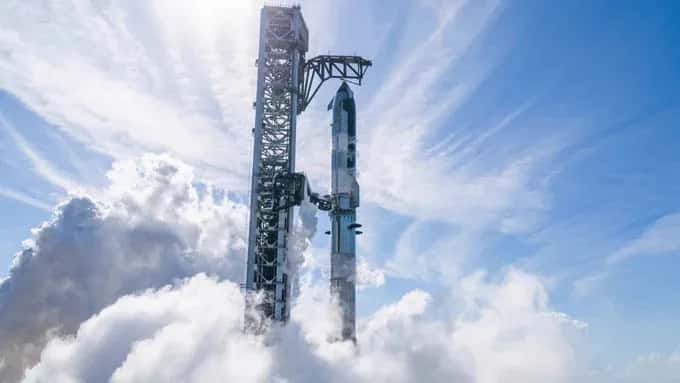
Beijing's successful land recovery of a rocket first stage, using Zhuque-3, signals a new era of reusable space tech & intensifies competition.
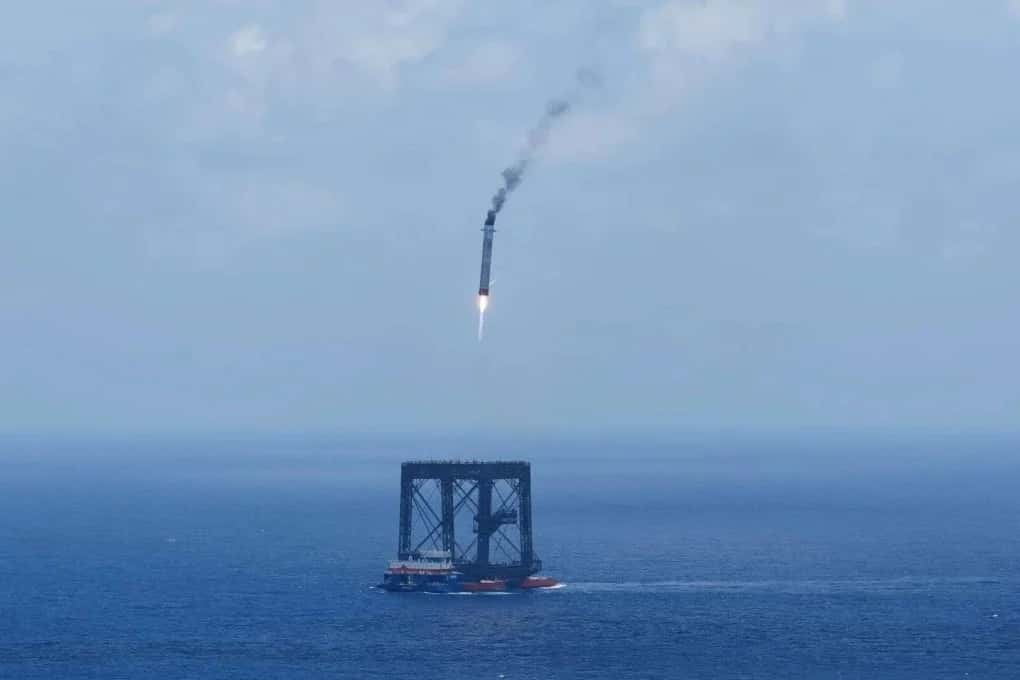
China's successful recovery of a rocket's first stage on land marks a pivotal moment for its burgeoning space industry, signaling intensified competition in the global launch market and potentially reshaping venture capital interest in reusable space technology. This achievement, utilizing deployable landing legs for the first time on the Zhuque-3 rocket, dramatically lowers the long-term cost of space access, directly challenging established players like SpaceX and Blue Origin. The recovery, reported Wednesday by state media, follows China's initial successful sea-based recovery in July, demonstrating a rapid progression in its reusable rocket capabilities. This dual approach, mirroring strategies employed by Western firms, underscores a strategic push to reduce the prohibitively high expenses associated with discarding multi-million dollar hardware after a single launch.
The Zhuque-3 launch and subsequent land recovery highlights a maturation of China's domestic space engineering and manufacturing prowess, crucial for independent advancement in space exploration and commercialization. This technical feat is not merely about national prestige; it carries significant commercial implications that resonate across the entire space value chain, from component suppliers to satellite operators, signaling a shift in the global cost curve for launch services. For the global startup ecosystem, particularly those reliant on affordable access to orbit, this development is a double-edged sword. While it theoretically broadens the array of launch options and could drive down prices further, geopolitical considerations and export controls will continue to dictate which providers are viable for specific ventures. The speed of China's progress, moving from a sea-based recovery using a net-capture system to a more advanced land recovery with deployable legs in just over a month, suggests an aggressive timeline for market penetration.
This rapid iteration capacity could exert considerable pressure on Western space startups, whose funding cycles and regulatory hurdles often move at a different cadence. It was noted that the accelerated pace of innovation means new players can quickly reach parity with, or even surpass, established leaders, potentially drawing investment capital towards new geographies. This technological leap is fundamentally about economics. Reusability drastically alters the unit economics of space launches, shifting from a pure operational expenditure model to one with significant capital expenditure amortized over many flights. By recuperating and refurbishing a significant portion of the rocket, providers can offer more competitive pricing. This expanded addressable market for satellite deployment facilitates the proliferation of mega-constellations for broadband, Earth observation, and IoT applications, which in turn fuels demand for smaller, more frequent, and more cost-effective launches. For venture-backed space companies globally, this dynamic means a wider array of affordable launch options, yet the underlying strategic implications compel a closer look at the competitive landscape, particularly how this will impact valuation multiples for early-stage launch providers.
What It Means
My read is that this accelerates the commoditization of launch, pushing the value proposition further up the stack towards in-orbit services, satellite technology, and downstream data applications. This development is a game-changer for the global space economy and the venture capital landscape within it. For venture capitalists and founders in the space tech sector, it signals a renewed urgency for innovation and cost efficiency, particularly in the launch segment. The perceived technical lead held by companies like SpaceX, largely built on their reusable Falcon 9 system, is now being directly contested. This could trigger a re-evaluation of investment theses, particularly concerning the competitive landscape for launch services, which has long been dominated by a few key players. It shifts the narrative from "if" China can achieve sophisticated reusability to "how quickly" they will scale it and what market share they aim to capture. Startups focused purely on launch without a clear path to significant cost reduction or a unique niche will face immense pressure to differentiate. This is a clear signal that the cost barrier to space access is eroding faster than many anticipated, opening up new frontiers for businesses but also demanding greater agility and deeper technological moats from those operating within the sector. The implications extend beyond just launch; cheaper access to space makes myriad other space-based ventures, from asteroid mining concepts to space manufacturing, more financially viable, potentially unlocking new categories of deep tech investment.
**China's Zhuque-3 rocket's first stage recovery marks its second successful reusability demonstration in just over a month, highlighting a rapid advancement in cost-saving launch technology, following an initial sea-based recovery in July.**
The Context
The pursuit of reusable rocket technology gained significant traction with SpaceX's Falcon 9 first stage landing in 2015, revolutionizing the industry by slashing launch costs previously thought immutable. This paradigm shift involved not only the complex engineering of vertical landing but also the development of rapid refurbishment processes, which together allowed for dramatically increased flight cadence and lower per-kilogram-to-orbit costs. Blue Origin, with its New Shepard system, also entered the fray, albeit focusing primarily on suborbital tourism and payload delivery, showcasing its own version of vertical landing and reuse. These private ventures catalyzed a global shift, forcing state-backed programs and traditional aerospace giants to re-evaluate their strategies and invest heavily in similar capabilities. Japan's own recent test flight of an experimental reusable rocket in July further demonstrates this worldwide imperative to reduce the cost of access to orbit and maintain competitiveness in a rapidly evolving market. China's space program, historically reliant on expendable rockets, has been systematically investing in capabilities across all segments, from lunar exploration to satellite navigation, and now, advanced launch systems. This includes a robust network of state-owned enterprises like CASC (China Aerospace Science and Technology Corporation) and emerging private space companies such as LandSpace, the developer of Zhuque-3. Many of these entities draw heavily on government contracts and strategic directives, aligning their efforts with national goals of space dominance and technological self-sufficiency. The successful land recovery of the Zhuque-3's first stage, a critical milestone, positions China to leverage these cost efficiencies for its ambitious plans, including the construction of its own space station, large-scale satellite constellation deployments, and potentially future crewed missions beyond low Earth orbit. This move is part of a broader, multi-decade strategy to become a leading space power, rivaling the capabilities of the United States and its allies.
The Falcon 9 Monopoly is Officially Broken
China’s successful land recovery of the Zhuque-3 first stage is the shot heard round the global space industry. For the last decade, SpaceX has enjoyed a near-absolute monopoly on orbital-class reusability, using the Falcon 9’s rapid turnaround to undercut every competitor on the planet and subsidize the Starlink empire.
That structural advantage is now facing a direct, high-speed challenge. By demonstrating advanced leg-deployable land recovery, just a month after a net-capture sea landing of the Long March 10B, China's state-backed and commercial space sectors are proving they have mastered the hardest physics of the launch stack. This isn't just about national prestige; it is a brutal economic pivot. By shifting space access from a disposable OPEX model to an amortized CAPEX model, China is drastically lowering the cost barrier for its own sovereign mega-constellations.
But for the global startup ecosystem, this creates a deeply bifurcated market. While a massive new supply of cheap, reusable lift capacity theoretically democratizes access to orbit, Western space startups will likely be barred from using it due to export controls and strict supply chain mandates. The ultimate result? Launch itself is rapidly commoditizing. If you are a Western aerospace startup without a viable, immediate path to high-frequency reusability, your business model is essentially dead on arrival. The real venture capital alpha is officially moving up the stack, away from the rockets themselves, and into the in-orbit services, satellite infrastructure, and data applications those rockets will deploy.
What Analysts Say
While official statements from Chinese state media emphasize the technological breakthrough, the broader financial community is now parsing the potential market share implications and the long-term impact on global launch services. Analysts at several investment banks suggest that while the technology is proven, the scalability, reliability, and frequency of China's reusable systems will be key determinants of their global commercial impact. The geopolitical landscape, including existing export controls, technology transfer restrictions, and the broader push for supply chain resilience among allied nations, will heavily influence the ability of non-allied nations to utilize Chinese launch services, regardless of any compelling cost advantages. This suggests a potentially bifurcated market emerging, where some nations prioritize economic incentives while others emphasize supply chain security, alliance alignment, and adherence to international regulatory frameworks.
For startups seeking to deploy satellites, this means strategic choices about launch partners are becoming increasingly complex, balancing economic pragmatism with long-term strategic positioning. Furthermore, industry observers point to the necessity for Western launch providers to double down on their own innovation pipelines, not just in reusability but in next-generation propulsion, materials science, and operational efficiencies. Industry observers point out that the competitive pressure is now tangible, and for every new capability China demonstrates, others face increased urgency to either match or leapfrog. It was emphasized that the focus extends beyond just building rockets to building an entire ecosystem that can sustain rapid innovation and deliver consistent, affordable access to space, and critically, attract the necessary follow-on capital. This could spur increased M&A activity in the space sector as companies seek to consolidate technologies or acquire niche capabilities to stay competitive.
The sheer volume of capital required for next-generation reusable systems, such as fully reusable heavy-lift rockets, means that only well-capitalized entities, whether state-backed or heavily venture-funded, will be able to compete effectively at the highest tiers, potentially squeezing out smaller, less differentiated players. Looking ahead, the market will closely watch China's frequency of reusable launches and the pace at which it opens these services to international clients. Key indicators include the announced pricing structures for future Zhuque-3 missions and any bilateral agreements that emerge for satellite deployment. The competitive response from Western launch providers, particularly their strategies for further cost reduction, increased launch cadence, and innovation in next-generation systems, will be critical. This breakthrough ensures that the global space race, driven by both national ambition and commercial imperative, will continue to accelerate at an unprecedented pace, demanding agility and strategic foresight from all participants. The next frontier in this competition will likely be the demonstration of rapid, high-frequency reusability, a metric where current Western leaders still hold an edge, but perhaps not for long.
Frequently asked questions
What is the significance of China's rocket stage land recovery?
China's first land recovery of a rocket stage marks a major advancement in its space program, demonstrating capabilities in reusable rocket technology. This significantly reduces launch costs and positions China as a stronger competitor in the global space market.
Which rocket was used for this successful recovery?
The recovery was achieved using the Zhuque-3 rocket, featuring deployable landing legs for the first time in a land-based operation.
How does this impact the global space industry?
This achievement intensifies competition in the global launch market, pushing other nations and private companies to accelerate their reusable rocket development.
What is the financial implication of reusable rocket technology?
Reusable rocket technology dramatically lowers long-term launch costs by eliminating the need to build new first stages for every mission, making space access more affordable.
Will this attract more venture capital to the space sector?
Yes, this successful recovery is likely to reshape and increase venture capital interest in reusable space technology and related innovative aerospace companies.
Has China recovered rocket stages before?
Yes, China had previously recovered rocket stages at sea, but this marks their first successful recovery on land.