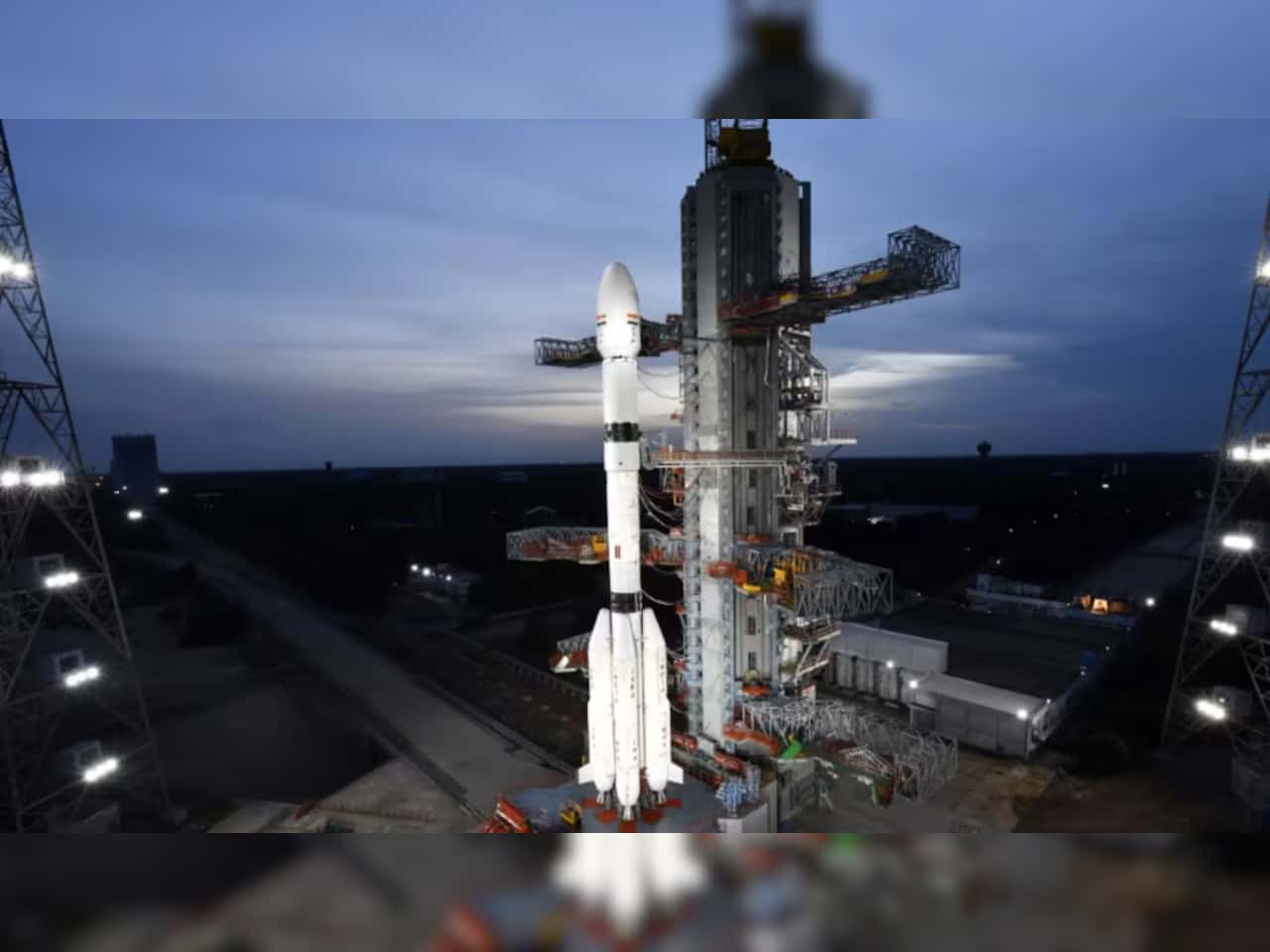
India’s space agency may shift mature rocket and satellite production to private firms while focusing on advanced missions.
ISRO planned to shift production of mature rockets and routine satellites to private companies.
Nine employee associations wrote to India’s Department of Space on September 4 seeking clarity on reports that SSLV, PSLV and LVM3 production could move to the private sector.
ISRO intended to keep its focus on new technologies and complex missions while using a model similar to NASA, ESA and JAXA.
Reports under discussion also covered private operation of new launch infrastructure.
ISRO planned to outsource routine rocketry and satellite production to private industry while focusing on advanced missions. The proposed shift covered mature launch vehicles such as SSLV, PSLV and LVM3, along with routine satellite manufacturing. The plan had raised concern inside the Indian space agency because it touched core production work that had long sat within the state system.
Nine employee associations wrote to the Department of Space on September 4 seeking clarity on the reported plans. The letter asked whether production of ISRO’s rockets could eventually move to private companies and whether new launch infrastructure would also be run outside the agency. ISRO’s direction resembled the broad approach used by NASA, the European Space Agency and the Japan Aerospace Exploration Agency. Under that model, government agencies kept responsibility for strategic missions and difficult technology while industry handled repeatable production and operations. That shift matters beyond institutional design because it would move India’s space program from a state-built model toward a market-built supply chain. In plain terms, it is the difference between a national lab making every part itself and acting instead like a system architect that sets standards, buys launches and concentrates engineering talent on harder problems.
On September 4, nine employee associations sought clarity from the Department of Space on the reported outsourcing plan.
The Transition to the "Industrial Prime" Model
ISRO’s intent to offload mature launch platforms—specifically the SSLV, PSLV, and LVM3—signals an overdue transition from a vertically integrated national laboratory into a strategic ecosystem architect. This mirrors the exact playbook NASA executed to catalyze the American commercial space sector. By outsourcing the repeatable, commoditized manufacturing of rockets to private consortiums, ISRO can reallocate its constrained engineering headcount away from routine assembly lines and toward high-risk, frontier capabilities: human spaceflight, deep space exploration, and next-generation propulsion.
Scaling Throughput Beyond State Capacity
The underlying driver here is launch cadence. India cannot capture a larger share of the global commercial launch market if its throughput is permanently bottlenecked by state-run manufacturing schedules. Private operators bring access to agile supply chains, scalable production, and capital efficiency. The structural goal is to transform reliable rockets into commercial workhorses, enabling ISRO to eventually act as an anchor customer rather than an artisanal manufacturer.
The Inevitable Labor Friction
However, the immediate pushback from the nine employee associations highlights the acute growing pains of deep-tech privatization. Transforming a sovereign capability into a market-driven supply chain inevitably triggers valid friction over institutional knowledge drain, job security, and rigorous quality assurance. For this handoff to succeed without compromising mission safety, the Department of Space must urgently establish a formalized transition framework. Handing over India's most critical launch infrastructure requires more than just policy intent; it demands explicit contractual boundaries that protect aerospace-grade reliability while finally unleashing the private sector's ability to scale.
The handoff was not described as complete or immediate. It was described as a plan under consideration that centered on mature systems, not experimental ones, which suggested ISRO wanted to free capacity rather than reduce its role altogether. That distinction is important in the global space business because launch systems usually become cheaper and more predictable once production is standardized. When a rocket design matures, agencies often stop treating each build like a lab project and start treating it like manufacturing. My read is that this is less about imitation and more about throughput. India has opened its space sector to startups and established industrial groups in recent years, and a steady pipeline of contract work is usually what turns policy reform into an investable market.
Background
India’s space sector has spent the past few years building the policy rails for a larger private role, according to public developments around sector liberalization. Newer space companies in India have been pushing into launch, satellites and downstream services, while the government has signaled that ISRO should spend more time on frontier work and less on repeat production. The current move was placed in that longer arc by comparison with NASA, ESA and JAXA. Those agencies use different contracting structures, but the common principle is clear: the state sets priorities, funds strategic capability and remains accountable for national goals, while companies build and operate a growing share of routine systems.
NASA’s commercial cargo and crew approach is one example from outside India, based on established public history. The agency stopped owning every step of low Earth orbit transport and bought services from private operators instead. Europe and Japan also rely on industrial primes and partners for large parts of production even when the missions remain public.
For ISRO, the attraction is obvious from an innovation standpoint. A mature rocket is like a proven software stack. Once it works reliably, the bottleneck shifts from invention to execution. If private companies can make those vehicles repeatedly, ISRO engineers can spend more time on the next generation of propulsion, planetary science, human spaceflight support and higher-risk missions.
SSLV, PSLV and LVM3 were identified as launch vehicles that could eventually see production move to the private sector.
The labor tension is also predictable. Workforce groups inside public technology institutions often worry that outsourcing starts with assembly and logistics but later reaches design control, quality assurance and operational authority. In space, those concerns carry extra weight because failures are visible, expensive and politically sensitive. India has already tested pieces of this transition in practice through earlier industrial participation in launch vehicle production and satellite work, based on established sector developments. What appears different now is the breadth of the reported ambition. The discussion was no longer only about isolated contracts but about who should own routine rocketry as a category.
Reactions
The most visible pushback came from the nine employee associations that wrote to the Department of Space. Their intervention suggested concern that reported media accounts had moved ahead of internal communication. There was no public reply cited from the Department of Space or a formal rollout timeline from ISRO. That left open key questions on scope, sequencing and safeguards, including how much production would move, what would remain in-house and who would supervise quality and launch readiness.
From a startup and industrial policy angle, a measured handoff could widen the addressable market for India’s private space companies and manufacturing suppliers, based on broader sector logic. A launch economy cannot scale on prestige missions alone. It needs recurring work, predictable procurement and customers willing to buy capability rather than own every factory line. I think that is the bigger signal here. If India wants a serious domestic space supply base, it has to let companies do more than build components. They need program responsibility, revenue visibility and room to develop process know-how. Otherwise, private participation stays decorative. There is also a risk, based on experience from other sectors, that outsourcing without transparent allocation rules can create confusion rather than efficiency. If contracts are fragmented, milestones unclear or accountability split across too many bodies, the result can be slower execution even when the intent is to move faster.
Comparable patterns have played out in other strategic technology markets. NASA’s use of private launch providers showed how state demand can create commercial winners over time. India’s own defense manufacturing push has shown that opening a sector is only the first step and that production transfer, certification and procurement discipline matter more than announcements. The same lesson applies here.
What's next
The next marker will likely be formal clarification from the Department of Space or ISRO on what exactly would be outsourced and on what timeline, as highlighted by employee demands for clarity. If that guidance arrives with clear boundaries between strategic mission design and routine production, India’s private space market could gain a stronger operating base. If it does not, the debate may stay stuck between ambition and anxiety for longer than the sector can afford.
Frequently asked questions
Why is ISRO taking a NASA-style outsourcing approach?
ISRO wants private companies to handle mature rockets and routine satellites so the agency can focus on advanced technology and more complex missions. That mirrors NASA’s broader model of using commercial partners for repeatable operations while keeping core expertise on high-value research and exploration.
Which ISRO rockets could be moved to private sector production?
Reports cited by employee associations said production of SSLV, PSLV, and LVM3 could shift more to private industry. These are established launch systems, which makes them better candidates for outsourced manufacturing than experimental programs.
Is ISRO fully privatizing India’s space program?
No, this is not the same as full privatization of India’s space program. ISRO would still set strategy and lead new technologies and complex missions, while private firms would take on more routine production and operational work.
How is ISRO’s plan similar to NASA, ESA, and JAXA?
NASA, ESA, and JAXA all work with private industry for parts of launch, manufacturing, and mission support while their agencies concentrate on higher-end research and strategic programs. ISRO appears to be moving in the same direction by separating routine production from frontier development.
Why are ISRO employee associations raising concerns about outsourcing?
Nine employee associations reportedly wrote to India’s Department of Space seeking clarity on whether key launch vehicle production would move outside the agency. Their concern appears to be about the scope, timing, and implications of shifting major work to private companies.
What could this mean for India’s private space industry?
If the plan moves forward, it could create a larger role for Indian private companies in rocket and satellite manufacturing. That may help scale capacity, speed up production, and deepen India’s commercial space ecosystem while ISRO focuses on next-generation missions.