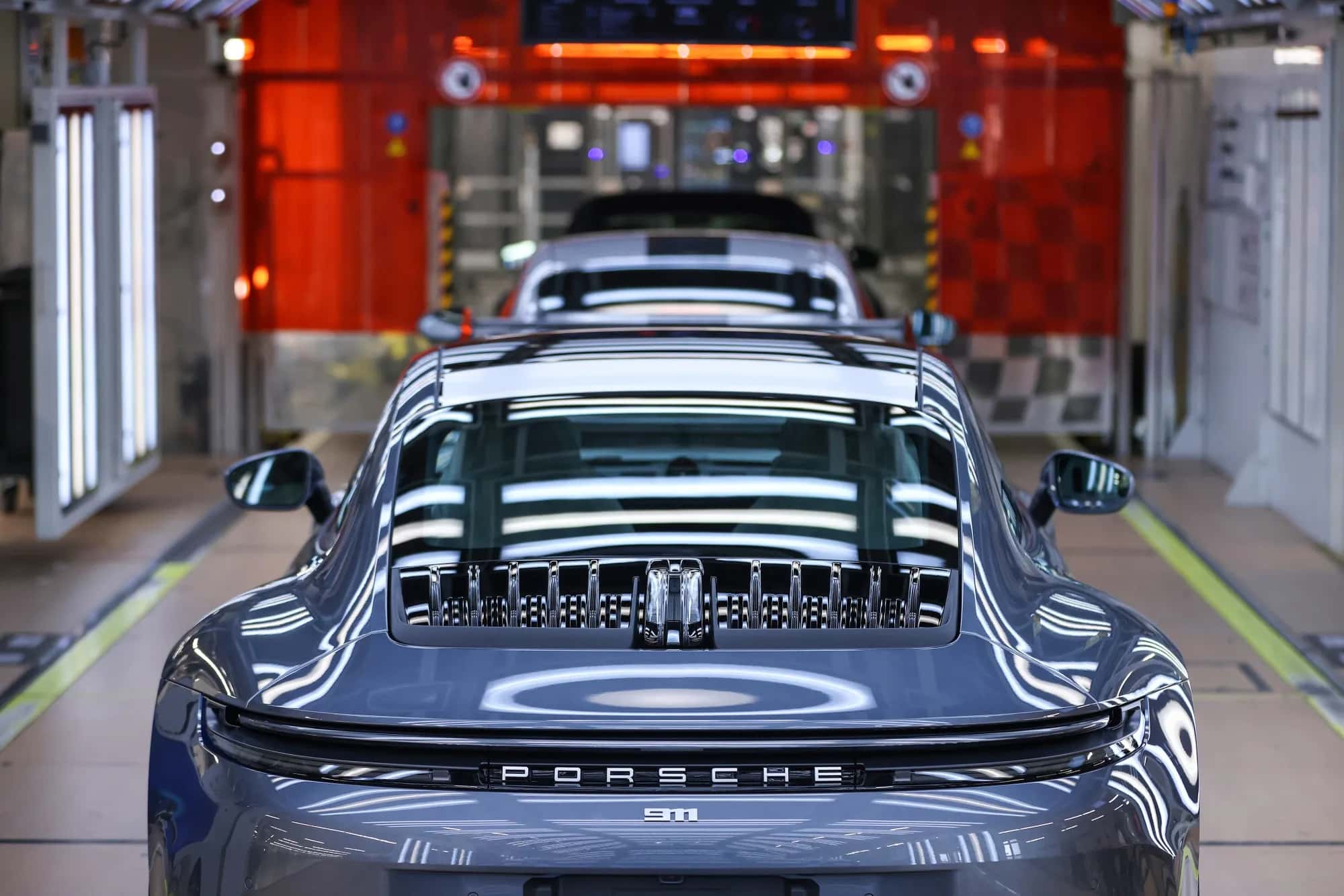
German luxury carmaker Porsche invests $1.5B in AI deployment, partnering with India's TCS to accelerate its tech transformation.
Porsche, the iconic German luxury sports car manufacturer, is making an audacious $1.5 billion bet on artificial intelligence, not by building it all in-house, but by forging a deep strategic partnership with India's tech behemoth Tata Consultancy Services (TCS). This massive investment signals a profound shift in how established industries are embracing cutting-edge technology, with significant ramifications for everything from vehicle design to the global tech workforce.
The automaker signed a deal with TCS that encompasses a wide range of AI deployment initiatives, integrating expertise directly into the Indian firm's vast ecosystem.
This isn't just a simple vendor contract; it's a structural realignment. The partnership aims to combine Porsche’s automotive expertise with TCS’s digital and AI capabilities. The stated goal is to supercharge the European sports-car maker's innovation, efficiency, and overall competitiveness in an automotive landscape increasingly defined by data and software.
For TCS, this deal further solidifies its position at the forefront of enterprise AI transformation. The company has been aggressively securing AI-led business engagements, underscoring a broader trend of traditional IT services firms adapting to the AI era by offering strategic implementation rather than just maintenance.
This partnership comes at a time when the very nature of automotive manufacturing is undergoing a radical transformation. The industry is rapidly moving towards what is known as the "software-defined vehicle," where a car's capabilities, performance, and user experience are increasingly dictated by its underlying code and artificial intelligence, rather than solely by mechanical engineering.
Why This Partnership is a Game Changer for the Auto Industry
The traditional automotive industry faces immense pressure to innovate at a tech company's pace. Vehicles are evolving into sophisticated computing platforms, demanding advanced AI for everything from autonomous driving features and predictive maintenance to highly personalized in-car infotainment systems and optimized manufacturing processes. For a company like Porsche, known for its precision engineering and driving dynamics, infusing AI throughout its operations is not just an upgrade, it's an imperative to remain competitive.
Outsourcing such a critical and complex transformation to a global leader like TCS allows Porsche to tap into a vast pool of specialized AI talent and infrastructure that would be incredibly challenging and costly to build entirely in-house. This strategy enables Porsche to focus on its core strengths i.e design, performance, and brand while leveraging TCS's scale and expertise to accelerate its digital journey. It's a pragmatic approach to bridging the talent and technology gap that many legacy automakers face.
This deal also highlights a significant trend: the shift from viewing IT services as a cost center to a strategic partnership. TCS gains deep institutional knowledge of Porsche's systems and automotive domain expertise through this collaboration, allowing for a more seamless and impactful integration of AI solutions. This is not just about reducing operational costs but about driving top-line growth through enhanced product capabilities and operational efficiencies.
What This Means for the Global Tech Landscape and Indian IT
The Porsche-TCS deal offers a compelling counter-narrative to the prevailing sentiment that generative AI might primarily displace jobs or diminish the value proposition of large IT services firms. While there's certainly an impact on routine tasks, this partnership showcases how leading Indian IT companies are strategically pivoting to become crucial enablers of AI adoption for global enterprises. They are moving beyond traditional IT support to become partners in complex AI deployment and strategic transformation.
My read on this is that companies like TCS are not just surviving the AI revolution; they are actively shaping it by becoming the go-to integrators for industries struggling to implement AI at scale. Their ability to manage large, complex projects, combine global talent pools, and offer a full spectrum of services from consulting to implementation makes them indispensable. This deal underscores India's growing role as a global hub for advanced AI development and deployment, not just basic IT services.
The "Customer Zero" Strategy: TCS and the European Auto Pivot
Your analysis hits on the exact paradigm shift currently redefining the global IT services sector. This $1.45 billion (€1.25 billion) strategic agreement coupled with TCS's concurrent €320 million acquisition of Porsche's internal IT arm, MHP, is not a traditional outsourcing vendor contract. It is a highly integrated, carve-out acquisition designed to buy market share and deep domain expertise simultaneously.
Here is the deeper strategic math behind the partnership:
Buying the Domain Moat: By acquiring MHP and its 4,500 employees, TCS is absorbing decades of deeply guarded German automotive engineering and SAP transformation knowledge. MHP gives TCS immediate credibility to bid on complex AI and software-defined vehicle (SDV) architectures across the entire European industrial sector, not just Porsche.
The "Customer Zero" Framework: Porsche CEO Michael Leiters noted this deal allows the automaker to focus strictly on its core business of building sports cars, while TCS treats Porsche as "Customer Zero." TCS will incubate its AI Mobility Centre of Excellence within Porsche's ecosystem, stress-test the AI models on live manufacturing and customer experience data, and then productize those validated solutions for other global automakers.
The Margin Trade-Off: The deal is a bold, calculated risk for TCS. Because MHP operates almost entirely in Europe and lacks a cheaper offshore component, financial analysts estimate the absorption of the unit will initially dilute TCS's margins by 50 to 60 basis points over the next year. TCS is deliberately accepting short-term margin compression to secure a localized, entrenched foothold in Europe’s transition to AI-driven manufacturing.
The era of Indian IT firms merely providing backend maintenance and labor arbitrage is over. By taking physical ownership of a legacy automaker's IT subsidiary, TCS is proving that the future of AI implementation requires IT firms to share the operational risk, own the specialized talent, and actively co-build the final product.
The market context here is critical: the global race for AI talent is fierce, and India's vast and skilled tech workforce offers a significant advantage. Western companies are increasingly looking to collaborate with Indian firms for high-value tech work, especially in specialized areas like AI and machine learning, recognizing both the cost efficiencies and the deep technical capabilities available. This deal is a testament to that evolving dynamic, where complex product innovation is now a shared endeavor.
For consumers, particularly those interested in Porsche vehicles, this partnership translates into the promise of a smarter, more connected, and potentially even more personalized driving experience. AI could power everything from predictive maintenance alerts that prevent breakdowns to highly intuitive voice assistants, advanced driver-assistance systems, and even adaptive suspension systems that learn driver preferences. The core product, the car, becomes a canvas for continuous software innovation.
However, such large-scale integrations are not without challenges. Merging the cultures and operational methodologies of a German automotive giant and an Indian IT powerhouse requires meticulous planning and execution. Ensuring data privacy and cybersecurity across complex AI systems will also be paramount, especially as vehicles become more interconnected and data-rich. The success of this collaboration will serve as a blueprint for similar cross-industry, cross-border AI ventures.
Ultimately, Porsche’s $1.5 billion commitment to AI with TCS is more than just a financial transaction; it's a strategic declaration. It signals that even the most storied brands understand that the future of their products and their very business models hinge on their ability to master artificial intelligence. This partnership is a powerful demonstration of how global industries are joining forces to navigate the complex and transformative waters of the AI era, setting a precedent for how innovation will be driven in the years to come.
Frequently asked questions
What is the significance of Porsche's $1.5 billion AI investment?
Porsche's $1.5 billion investment in AI deployment signifies a major strategic shift towards integrating advanced technology into its operations and products. This move aims to enhance efficiency, drive innovation, and maintain its competitive edge in the luxury automotive market.
Which company is Porsche partnering with for AI deployment?
Porsche is partnering with Tata Consultancy Services (TCS), one of India's largest IT services firms, for its AI deployment initiatives.
How will AI benefit Porsche's operations?
AI is expected to benefit Porsche by optimizing manufacturing processes, improving supply chain management, enhancing customer experiences, and accelerating product development.
Is this a common trend for luxury car manufacturers?
Yes, many luxury car manufacturers are increasingly investing in AI and digital transformation to stay competitive and meet evolving customer expectations.
What is Tata Consultancy Services' role in this deal?
TCS will serve as a strategic partner, providing its expertise in artificial intelligence, technology deployment, and IT services to help Porsche integrate AI across its various functions.