Memory component prices are soaring, driving up Nvidia's AI server costs by over 15% and boosting market power for leading suppliers Samsung and SK Hynix.
Nvidia's AI server systems are facing significant price hikes, with manufacturers notifying major data center customers like Microsoft, Google, and Oracle of increases exceeding 15% for shipments commencing in early 2027. This surge is primarily driven by escalating memory component costs, a dynamic that profoundly bolsters the market leverage of leading suppliers, Samsung Electronics and SK Hynix. This isn't merely a transactional price adjustment; it signals a profound reordering within the AI infrastructure supply chain. The insatiable demand for high-bandwidth memory (HBM) and conventional server DRAM is reshaping profit dynamics, granting memory manufacturers a pivotal, newfound power in a market long dominated by GPU architects.
Nvidia, while still central to AI compute, now navigates a critical bottleneck controlled by a powerful duopoly. Supporting this shift, the price increases are specifically impacting systems built on Nvidia's next-generation Vera Rubin and the current Grace Blackwell platforms. The exact scale of these hikes varies based on the specific chip generation and memory configuration, underscoring the direct correlation between advanced memory and system cost. While Nvidia's accelerators remain indispensable, these spiraling component costs introduce a tangible tension, potentially compressing margins for server builders and ultimately for the hyperscalers deploying these vast AI clusters.
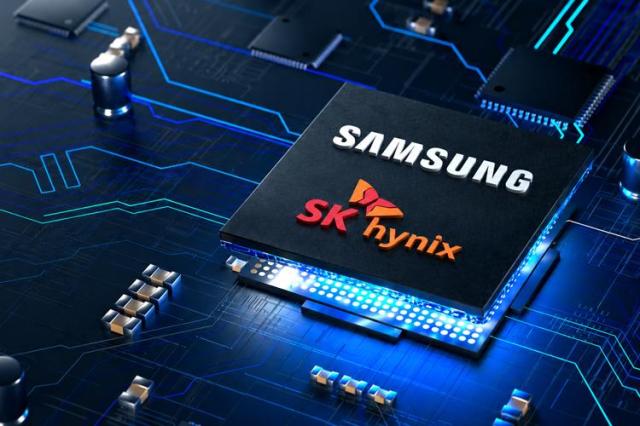
This situation inevitably raises questions about the long-term sustainability and economic viability of current AI infrastructure scaling models. The AI gold rush has ignited an unprecedented arms race among global tech giants to build out formidable compute capacity, transforming high-performance memory into a strategic choke point. This aggressive expansion has elevated memory makers from their traditional role as commodity producers into kingmakers within the complex, interdependent AI supply chain. The persistent tightness in supply firmly entrenches the negotiating power of a select group of manufacturers. The market share figures underscore this concentration of power: SK Hynix and Samsung are leading suppliers of critical memory components. This duopoly in a critical component is not just an advantage; it’s a structural feature of the current AI economy.
The HBM Chokepoint: Memory's Ascendancy in the AI Stack
The analysis accurately identifies a fundamental structural shift in the AI hardware economy: the transition of memory from a high-volume commodity into the ultimate strategic bottleneck. As Nvidia pushes price hikes exceeding 15% onto hyperscalers for its Grace Blackwell and Vera Rubin systems starting in early 2027, the narrative that AI compute is solely a GPU story is effectively dead.
Nvidia’s Margin Defense
The pricing adjustments reveal a critical detail about Nvidia's corporate strategy. Despite maintaining gross margins near 75% which are giving the company immense room to absorb supply chain shocks, Nvidia has chosen to pass the surging cost of High-Bandwidth Memory (HBM) directly to its largest customers, including Microsoft, Google, and Oracle.
The Cost Density: Systems like the NVL72 rack-scale configurations carry enormous memory loadouts, potentially packing over 20TB of HBM in a single rack before accounting for standard server DRAM.
TCO Recalibration: Because HBM production consumes roughly four times the wafer area of equivalent conventional DRAM, it has become one of the largest single line items in the AI server bill of materials. Cloud operators and integrators building capital expenditure models around next-generation clusters must now revise their Total Cost of Ownership (TCO) assumptions upward.
The "Arms Dealer's Arms Dealer"
The duopoly of SK Hynix and Samsung Electronics has successfully leveraged the AI supercycle into unprecedented pricing power. They are no longer just suppliers; they are the gatekeepers.
The HBM Paradox: Even as hyperscalers aggressively develop proprietary custom silicon (like Google's TPUs or Microsoft's Maia) to bypass the "Nvidia tax," these custom accelerators still require massive amounts of advanced memory to function efficiently. Consequently, whether a server uses an Nvidia GPU or an in-house ASIC, the capital still flows back to South Korea.
Capacity Starvation: By reallocating advanced foundry nodes and manufacturing capacity toward HBM to satisfy AI demand, these manufacturers have starved the conventional server and consumer DRAM markets of supply. This has caused contract prices across the broader memory spectrum to soar, reinforcing their leverage.
The Downstream Squeeze on Startups
For the broader ecosystem, this is a highly exclusionary trend. As cloud providers absorb millions of dollars in unexpected rack-scale costs, those expenses will inevitably be passed down as higher hourly instance rates for GPU access.This threatens to further bifurcate the AI startup landscape: well-capitalized foundational model builders will continue to secure the necessary compute, while smaller, agile startups may be priced out of training large models entirely. This escalating barrier to entry will likely force the long tail of the AI market to pivot aggressively toward smaller, open-source models, parameter-efficient fine-tuning (PEFT), or edge inference.
This shift in bargaining power is a durable trend, reflecting the specialized manufacturing processes and immense R&D required for advanced memory. HBM, with its stacked architecture and critical bandwidth capabilities, is far from a commoditized product; its production capacity and technological sophistication are tightly controlled by these few players, creating a significant barrier to entry for potential competitors. My read is that this isn't just a cyclical market adjustment but a fundamental re-pricing of foundational AI infrastructure components. The implications extend far beyond the immediate balance sheets of server manufacturers and cloud providers.
For AI startups and smaller enterprises, these rising costs will inevitably translate into higher expenses for accessing advanced compute via cloud services. This could create a bifurcation in AI development, favoring well-capitalized entities that can absorb the premium hardware costs, or those nimble enough to innovate on more cost-efficient architectures. Hyperscalers like Amazon, Google, and Microsoft have already diversified their strategies by developing proprietary AI processors. While these initiatives aim to reduce reliance on external suppliers like Nvidia, they too depend heavily on a robust supply of high-performance memory, often HBM, thus still funneling demand and leverage back to the memory giants. This trend of vertical integration is a direct response to both the cost pressures and the strategic imperative to control more of the AI stack.
The geopolitical ramifications also warrant attention. South Korea's dominance in advanced memory production, particularly HBM, places it at a crucial nexus of the global technology supply chain. Amid ongoing trade tensions and the global race for AI leadership, the concentration of such critical manufacturing capabilities in a single region introduces both strategic stability and potential vulnerabilities for nations reliant on these components. This escalating cost structure for AI infrastructure may also accelerate investments into alternative chip architectures or even open-source hardware initiatives. If the "Nvidia premium," coupled with surging memory costs, becomes too stifling, the incentive for significant R&D into more open and cost-effective AI hardware solutions will only intensify.
The long-term play for these tech behemoths isn't just about building; it’s about strategically controlling more of their own AI value chain from silicon up. The current trajectory suggests that the memory sector, specifically manufacturers like Samsung and SK Hynix, will continue to wield outsized influence in the unfolding AI revolution. Their strategic position at the bottleneck of high-performance computing components ensures they will remain prime beneficiaries as the global AI infrastructure investment cycle continues to accelerate through 2027 and beyond.
Frequently asked questions
Why are Nvidia AI server costs increasing?
Nvidia AI server costs are surging primarily due to significant price hikes in memory components. Manufacturers are notifying major data center customers like Microsoft, Google, and Oracle of increases exceeding 15% for shipments starting in early 2027.
Which companies benefit from the rise in AI server costs?
Leading memory component suppliers, specifically Samsung Electronics and SK Hynix, stand to benefit significantly from the increase in AI server costs.
What is driving the price increase in AI server systems?
The primary driver for the price increase in AI server systems is the escalating cost of essential memory components.
When are these price increases expected to take effect?
The price increases for Nvidia AI server systems are expected to take effect for shipments commencing in early 2027.
How do memory component costs impact AI server manufacturers?
Rising memory component costs directly translate into higher production expenses for AI server manufacturers, leading to increased final prices for customers.
What role do Samsung and SK Hynix play in the AI server market?
Samsung and SK Hynix are leading suppliers of memory components, which are crucial for AI server systems, giving them significant market leverage as component prices rise