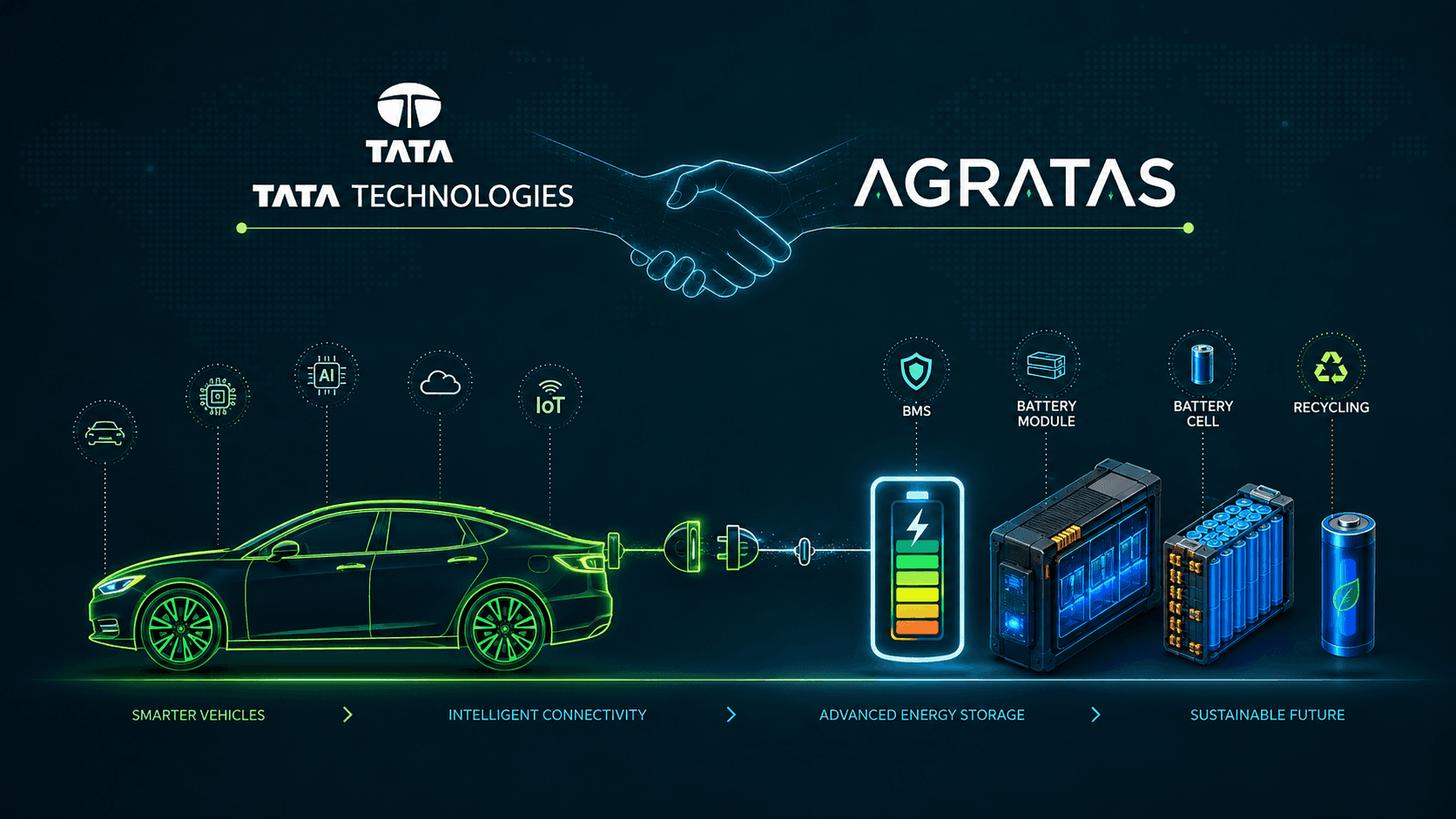
Tata Group's Agratas shifts strategy to develop in-house lithium-ion cell technology, fueling India's electric vehicle revolution with local innovation.
Agratas, Tata Group’s ambitious battery manufacturing arm, has sharply pivoted its strategic direction, opting to develop lithium-ion cell technology entirely in-house rather than relying on external partnerships. This crucial decision marks a significant commitment to homegrown innovation, fundamentally altering the trajectory of India's EV future.
This isn't merely a corporate decision; it's a high-stakes play in India's quest for energy independence and a direct response to a fractured global supply chain. Agratas is central to Tata's significant push into electric vehicles, a vertical that demands robust, localized battery production to ensure cost competitiveness and supply security.
The strategic shift was necessitated after Agratas executives concluded that technology transfer agreements with Chinese battery manufacturers were effectively off the table. Beijing's stringent restrictions on exporting critical manufacturing know-how, particularly for advanced cell chemistry and process technology, made any viable long-term partnership impossible.
While the move aligns perfectly with India's 'Make in India' aspirations, it introduces considerable challenges. Developing cutting-edge battery technology from the ground up demands immense capital investment, significant research and development cycles, and a deep pool of specialized talent that India is only just beginning to cultivate.
Globally, the race for battery dominance is a geopolitical chess match, with nations scrambling to reduce reliance on China, a dominant player in global battery manufacturing capacity. Agratas’s decision mirrors broader trends seen in the US with the Inflation Reduction Act and Europe's Critical Raw Materials Act, all aimed at fostering domestic ecosystems for critical technologies.
This pivot by Agratas throws down a gauntlet to the entire Indian deep tech ecosystem. Building a proprietary battery architecture from scratch means investing heavily in materials science, electrochemistry, and advanced manufacturing processes. It requires a sustained commitment to R&D that few Indian conglomerates have traditionally shown at this scale, outside of defense or space.
The Indian government’s Production Linked Incentive (PLI) scheme for Advanced Chemistry Cell (ACC) manufacturing is certainly designed to support such ventures. Agratas is a beneficiary, with plans for gigafactories in both India and the UK. However, the PLI primarily incentivizes production volume and localization of value addition, not necessarily the ground-up development of core IP. This distinction is critical.
My read is that Agratas is now essentially becoming a deep tech startup within the Tata behemoth, tasked with an incredibly complex mission. They will need to attract world-class battery scientists and engineers, likely from global hubs, and foster an innovation culture typically found in venture-backed labs, not traditional manufacturing giants. That's a huge cultural and operational lift.
The timeline for bringing advanced, cost-competitive, and safe lithium-ion cells to market using entirely homegrown tech is ambitious. Established players like CATL, LG Energy Solution, and Panasonic have a considerable head start and have made significant investments in R&D. Catching up, especially in a rapidly evolving field like battery chemistry, requires an exponential acceleration of effort.
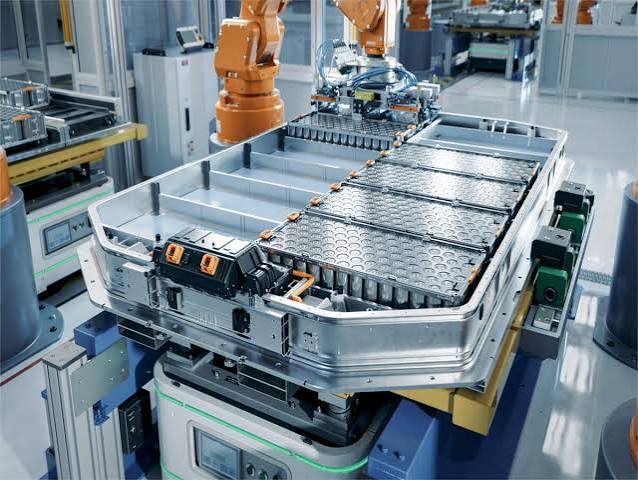
Agratas’s In-House Battery Bet Is Bold but Not Fully Independent. Agratas’s decision to develop proprietary LFP battery cells is strategically important for India’s clean-energy ambitions. The reported pivot follows tightening Chinese controls on battery-technology exports and will involve a pilot production line in Sanand, Gujarat. However, the company is not abandoning external technology entirely: its NMC cell programme continues through a licensing partnership with Japan’s AESC. In our view, building domestic battery intellectual property could strengthen supply security and create valuable engineering capabilities beyond basic cell assembly. Yet it will also increase development costs, extend timelines and expose Agratas to execution risks in a sector dominated by experienced global manufacturers. Government incentives can support manufacturing scale, but lasting competitiveness will depend on research quality, raw-material security, production yields and whether homegrown cells can match global prices and performance.
Furthermore, the challenge extends beyond cell chemistry to the entire battery value chain. Where will Agratas source its raw materials – lithium, nickel, cobalt – if not from Chinese refiners? This move will inevitably push them to explore diversified global mining and refining partnerships, potentially with countries like Australia, Canada, or those in Latin America, adding another layer of geopolitical and logistical complexity.
This development could also be a catalyst for India’s nascent battery startup scene. If Agratas successfully demonstrates the viability of homegrown cell tech, it could spur significant venture capital interest in smaller, agile Indian firms focused on specific aspects of battery innovation, from novel materials to recycling technologies. This is a critical opportunity to build an actual ecosystem, not just isolated manufacturing plants.
However, the risk of delays and cost overruns is substantial. Any significant setback could impact Tata Motors’ aggressive EV rollout plans and, by extension, the broader adoption of electric vehicles in India. The initial cost of these homegrown cells might also be higher than imported alternatives, at least in the short to medium term, which could pressure EV pricing.
Ultimately, Agratas's pivot is a bold, necessary move in a world increasingly wary of concentrated supply chain risks. It’s a testament to the belief that India can, and must, build its own foundational technologies. The success of this gambit will not only define Tata’s EV future but will also serve as a critical barometer for India's long-term aspirations in global deep tech manufacturing and self-reliance.
Frequently asked questions
What is Tata Agratas' new strategy for battery manufacturing?
Tata Group's Agratas is pivoting to developing lithium-ion cell technology entirely in-house. This strategic decision aims to reduce reliance on external partnerships and foster homegrown innovation for India's electric vehicle market. It marks a significant commitment to self-sufficiency in battery production.
How will Agratas' pivot impact India's EV future?
It's expected to significantly boost India's self-reliance in EV battery technology and accelerate the country's transition to electric mobility.
What type of technology is Agratas focusing on?
Agratas is focusing on developing advanced lithium-ion cell technology.
Is Tata Group investing heavily in this new direction?
Yes, this decision represents a substantial commitment and investment in in-house research and development.
What does "homegrown tech" mean in this context?
It refers to technology developed and innovated entirely within India by Agratas, without external technological reliance.
Where is Tata Agratas based?
Agratas is Tata Group's battery manufacturing arm, indicating its base of operations is within India, with global ambitions.