New Grimes County, Texas, facility signals extreme vertical integration, poised to reshape supply chains and impact capital expenditure.
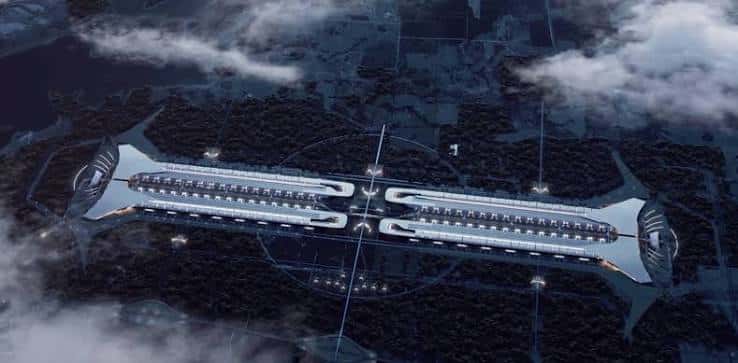
Tesla and SpaceX have confirmed Grimes County, Texas, as the site for their ambitious Terafab semiconductor manufacturing facility, signaling a profound push towards extreme vertical integration that could reshape their supply chains and significantly impact capital expenditure projections. The initial phase is pegged at approximately $16.8 billion, a figure that underscores the scale of this undertaking and its potential financial implications for both companies. The proposed Terafab site, located about an hour northwest of Houston, aims to become the largest chip manufacturing facility globally, sprawling over 100 million square feet. This colossal factory is intended to consolidate logic, memory, packaging, and testing functions under one roof, producing specialized chips for Tesla’s Optimus robots and Cybercabs, alongside components for SpaceX’s nascent "space-based data centers." SpaceX detailed the plans in a recent site update, with Tesla echoing the announcement on X, emphasizing the necessity for proprietary compute capacity to meet future demand exceeding current global production capabilities. The companies are targeting an annual output of "over 1 terawatt of compute," a metric articulated by Elon Musk that stands apart from standard semiconductor industry benchmarks like FLOPS or transistor density. This ambition for self-sufficiency in high-performance computing components for both terrestrial AI applications and orbital data infrastructure represents a significant strategic pivot, suggesting a deep-seated belief that existing foundry capacity will be insufficient for their long-term visions. The initial $16.8 billion investment is presented as the first tranche, with future expansion phases projected to drive total investment substantially higher.
What Are the Strategic Stakes of Terafab?
The confirmation of a physical location for Terafab, even if only for an initial phase, moves this project from speculative concept to tangible development. My read is that this venture, if fully realized, represents a monumental bet on a vertically integrated model that goes far beyond what most major technology companies are attempting with custom silicon. While Apple and Google design their own chips, they rely on established foundries like TSMC for manufacturing. Tesla and SpaceX are proposing to become their own foundry at an unprecedented scale, a move fraught with immense capital requirements, operational complexities, and execution risks. This strategic shift away from external foundry reliance highlights a tension between supply chain resilience and the inherent challenges of mastering cutting-edge chip manufacturing. For a company like Tesla, already navigating the complexities of automotive production and advanced AI development, adding high-volume, advanced semiconductor fabrication to its core competencies represents a significant diversion of resources and management focus. Similarly, for SpaceX, whose primary domain is rocket science and orbital deployment, the pivot into terrestrial chip manufacturing is an unusual expansion of its operational footprint.
$16.8 Billion
Initial investment for the Terafab facility, a figure that could escalate significantly in subsequent phases.
The Shifting Narrative and Financial Realities
Figures regarding Terafab's projected investment have fluctuated since it was first teased in March. The initial phase is now stated at $16.8 billion, leaving the full scope and total investment ambiguous. Further compounding the uncertainty, some prior descriptions of Terafab have presented it as a general framework without binding commitments or explicit obligations for either Tesla or SpaceX to continue participation. This contrasts with recent confident pronouncements of a confirmed site and substantial initial investment. The question of operational control and expertise also remains to be fully clarified.
The Skepticism Around Terafab's Scale and Strategy
While the designation of a site in Grimes County adds a layer of concreteness, the gap between ambitious rhetoric and documented financial commitments remains wide. Tesla and SpaceX are branding this as the "largest chip manufacturing facility ever" before any significant construction has begun, while concurrently, some descriptions have painted a more tentative picture. This dichotomy demands close scrutiny from investors. The scale claims are particularly challenging to reconcile with existing industry benchmarks. A facility spanning 100 million square feet would be considerably larger than existing large-scale chip manufacturing facilities. The "1 terawatt of compute per year" target is equally unprecedented within the semiconductor industry, stemming more from Musk's expansive vision for AI and space infrastructure than from conventional chip output metrics. My analysis suggests that such a divergent metric complicates direct comparisons and underscores the unique, potentially unproven, nature of this endeavor. Tesla's near-term chip supply, meanwhile, remains secured through existing foundry relationships. This established ecosystem positions Terafab as a much longer-term strategic play, intrinsically linked to the assertion that the companies will eventually require more compute power than the entire global semiconductor industry can supply. This makes Terafab a high-risk, high-reward proposition that investors must weigh against Tesla’s current, proven supply chain strategy.
Elon Musk is officially moving his grandest semiconductor ambition from a conceptual whiteboard to the physical dirt of Grimes County, Texas. Tesla and SpaceX have formally announced a staggering $16.8 billion initial investment to build Terafab, a 100-million-square-foot mega-factory designed to be the largest chip manufacturing facility on the planet. This project is a massive, high stakes wager on absolute vertical integration. Rather than relying on established giants like TSMC, Musk is pushing to consolidate logic, memory, packaging, and testing entirely under one roof. The goal is to churn out enough proprietary silicon to power Tesla’s Optimus robots, Cybercabs, and a new frontier of space-based AI data centers for SpaceX. Targeting an unprecedented output of one terawatt of compute per year, Terafab highlights Musk's belief that current global foundry capacity is simply too small to sustain his long-term automation and orbital infrastructure visions. For the broader tech industry, this is a radical departure from the standard fabless model. If successful, it will rewrite the playbook on supply chain sovereignty. However, for investors, the sheer capital expenditure and operational complexity of running a cutting-edge foundry introduce an entirely new dimension of financial risk.
The most critical financial question for Tesla shareholders remains how much of the $16.8 billion initial investment, and the subsequent "much higher" expansion costs, will ultimately fall onto Tesla’s balance sheet. Investors will be keenly watching for further clarity on the financial split between Tesla and SpaceX, the precise nature of operational partnerships, and concrete timelines for groundbreaking and production commencement. Any future regulatory filings will be crucial in providing a more transparent view of this audacious project's true scope and funding structure.
Frequently asked questions
Where will the Terafab chip manufacturing facility be located?
The Terafab semiconductor manufacturing facility, a joint project by Tesla and SpaceX, will be located in Grimes County, Texas. This strategic site was recently confirmed by both companies.
What is the initial investment for the Terafab facility?
The first phase of the Terafab chip manufacturing facility is projected to cost approximately $16.8 billion, marking a significant capital expenditure for Tesla and SpaceX.
What is the significance of the Terafab project for Tesla and SpaceX?
The Terafab project signifies a major push towards extreme vertical integration for both Tesla and SpaceX. It aims to secure their semiconductor supply chains and reduce reliance on external chip manufacturers.
How will Terafab impact supply chains?
Terafab is expected to profoundly reshape the supply chains for Tesla and SpaceX by bringing critical semiconductor production in-house, enhancing control and potentially reducing vulnerabilities.
What kind of chips will Terafab produce?
While specific chip types aren't detailed in the preview, Terafab will produce semiconductors crucial for Tesla's advanced vehicles and SpaceX's aerospace technologies, supporting their high-tech needs.
Who is involved in the Terafab project?
The Terafab project is a collaborative effort between Tesla and SpaceX, two companies led by Elon Musk, aiming to secure their future technological advancements through in-house chip production.