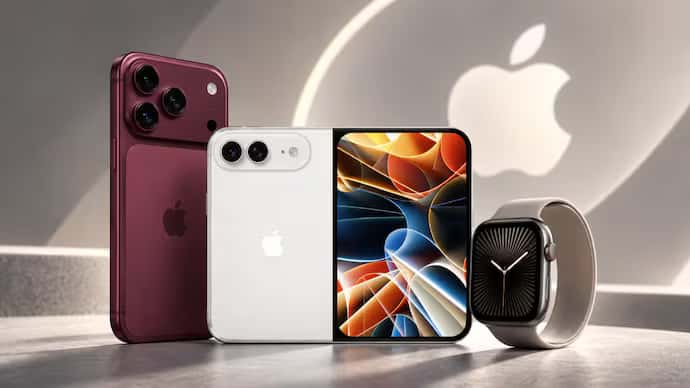
Apple’s September 9 event could debut a foldable iPhone and deepen its AI-driven device ecosystem
Apple’s September 9 event is expected to be defined by its first foldable iPhone, a premium device that could reshape the high end of the smartphone market.
For India and Southeast Asia, the bigger signal is not just new hardware, but Apple’s push to tie phones, earbuds, home devices, and AI more tightly into one product stack.
Apple’s upcoming September 9 launch is expected to put its first foldable iPhone at the center of the stage, a product long rumored and now seemingly close to debut. The event also matters because it comes as Tim Cook hands off the CEO role to former Vice President of Hardware Engineering John Ternus, which gives this launch extra weight beyond the usual annual iPhone cycle. In practical terms, what we expect from the upcoming presentation is a mix of new form factor, a reset in Apple’s product narrative, and a clearer view of how the company wants to package AI into consumer hardware. For Apple, this is not just another September refresh.
The immediate focus will likely be the foldable device, widely expected to be called the “iPhone Ultra,” and reports indicate it could cost more than $2,000. That price alone positions it far above the mainstream smartphone buyer, but Apple is not really chasing volume on day one. My read is that the company is trying to do what it often does in maturing categories: arrive late, frame the category around refinement rather than novelty, and then use software and ecosystem integration to justify the premium. That approach has usually worked better for Apple than racing to be first.
What started as a category Samsung pushed more than five years ago is now at a point where Apple seems ready to enter on its own terms. Leaks suggest the foldable iPhone will carry a 5.5-inch cover display and expand to 7.8 inches when unfolded, effectively moving between phone and small tablet modes. Early impressions reported by those said to have tested the device describe a premium feel and a form that still fits easily in a pocket. The promise here is familiar: one device, two use cases, with fewer compromises than the first generation of foldables delivered.
Still, Apple appears to be making trade-offs to get there. The foldable iPhone is expected to skip the telephoto camera and instead use a dual-lens rear setup with a main and an ultra-wide lens, closer to what Apple offers on its more basic iPhones. It may also drop Face ID in favor of a Touch ID fingerprint button on the side, reportedly to save space. MagSafe is expected to remain in place, which matters because Apple rarely launches a premium hardware category without making sure the accessory and charging ecosystem comes along for the ride.
There is also the software question, and this is where the launch could become more interesting than the hardware spec sheet. The foldable device is expected to support side-by-side multitasking, with one app on each half of the display, but it will reportedly still run iOS instead of iPadOS. That sounds like a small detail, but it says a lot about how Apple sees the product. Rather than creating a separate product family, it appears to be extending the iPhone upward. For developers, and especially for product teams across India and Southeast Asia building mobile-first services, that lowers the adaptation burden if the device becomes meaningful at the premium end.
A key issue for foldables so far has been the crease. Competing devices have improved over time, but the crease remains the visual reminder that the hardware is still making a compromise. Apple is said to have reduced that visibility. If that holds true, it will matter not because average users obsess over hinge engineering, but because Apple sells polish. In a category where the broad feature list is already familiar, small improvements in feel, thickness, display finish, and long-term usability can become the product story.
The Ternus Era and the Margin Reset
The introduction of the foldable iPhone Ultra is not merely a late entry into a matured category; it is a deliberate reset of the smartphone margin ceiling. By anchoring the event around a $2,000-plus device with explicit hardware compromises—such as trading Face ID for Touch ID to achieve an estimated 4.5mm unfolded chassis—Apple is shifting the definition of ultra-premium from raw specs to form-factor utility. For incoming CEO John Ternus, a hardware engineer by trade, this launch establishes his leadership narrative: prioritizing physical execution and ecosystem continuity over spec-sheet parity.
The Pivot to Ambient AI
The most strategically significant signals from this event lie beyond the foldable display. The integration of Gemini-powered Siri into refreshed HomePods and the introduction of camera-equipped AirPods for "Visual Intelligence" point to a massive paradigm shift. Apple is moving away from app-siloed, screen-bound interactions toward ambient, multimodal AI. The hardware is evolving into a continuous sensory web that processes visual and acoustic context seamlessly. For developers in India and Southeast Asia, this dictates that the next frontier is not just optimizing for a dual-screen iOS interface, but building for zero-UI, context-aware hardware endpoints.
The Bifurcation of the Upgrade Cycle
The unprecedented decision to decouple the base iPhone 18 from the Pro and Ultra rollout is a highly calculated segmentation strategy. By forcing the early upgrade cycle entirely into the high-margin tiers, Apple maximizes its Average Selling Price (ASP) early in the fiscal year. In price-sensitive but highly aspirational markets like India, this staggered release effectively establishes a two-tier ecosystem. It forces competing Android OEMs to battle Apple's most aggressive premium narrative for six full months before the mainstream iPhone 18 even hits the market.
The non-foldable iPhone 18 lineup is expected to remain part of the announcement as well, though the roadmap appears slightly unusual this time. Leaks point to the iPhone 18 Pro and Pro Max arriving first, while the standard iPhone 18 may come six months after the September event. If that happens, it would be a first for Apple. It would also fit a pattern visible across consumer tech: brands increasingly use premium tiers to carry new components, AI features, and margin expansion before they trickle down. In India, where financing has widened access to expensive phones but value sensitivity still shapes buying behavior, that staggered release could sharpen the divide between aspirational buyers and mainstream upgraders.
The larger product stack around the iPhone also looks set for updates. Apple is expected to refresh HomePod, helped by its now-moving Siri AI overhaul, which has been described as Gemini-powered. Unreleased product references, including new HomePods, were reportedly spotted in a macOS preview build. This matters because smart home hardware has been one of Apple’s less convincing categories so far, especially in markets where Amazon and Google devices have had stronger utility-led adoption. A smarter Siri tied to home hardware could give Apple a better shot, though success will depend on whether the experience becomes meaningfully more useful and not just more branded.
The more surprising product possibility is AirPods with built-in cameras. In the same macOS preview, researcher Aaron Perris found a video that appears to show the earbuds being used to identify and save information from the surrounding environment. The voiceover in that video says, “With Visual Intelligence, your world becomes savable. See something you like? Just ask me to save it for later.” Separate reporting has said the cameras are not designed to take photos or video, but instead to capture low-resolution visual information that can act as eyes for Siri.
This is where Apple’s hardware strategy starts to look more coherent. Over the last few years, consumer AI has moved from being largely text-based to being multimodal, context aware, and increasingly ambient. The next phase is less about opening an app and more about devices sensing, remembering, and responding across contexts. A phone that unfolds into a productivity screen, earbuds that can understand the environment, and home devices tied to a more capable assistant all point in the same direction. Apple may be late to generative AI marketing, but it appears to be building toward a more integrated hardware expression of AI than many rivals have managed so far.
There is, of course, a privacy risk in any product that can see what the user sees, even at low resolution. Apple’s brand gives it more room than most companies to make that case, but not unlimited room. Comparisons with other camera-enabled wearables are inevitable, and Apple will have to explain not just what the product can do, but what it cannot do. That distinction will matter in markets like India, Indonesia, and Vietnam, where consumers have become more aware of surveillance concerns even as they adopt connected devices rapidly.
For South and Southeast Asia, what we expect from the upcoming launch is therefore bigger than a new iPhone shape. Apple has spent years strengthening its presence in the region through manufacturing shifts, retail expansion, developer relationships, and deeper focus on premium buyers. A foldable iPhone priced at more than $2,000 is not a mass-market product in these geographies, but it can still influence the wider market. Premium Android brands in India and Southeast Asia will have to respond on design, multitasking, and AI positioning, even if they remain more aggressive on price. App developers may also need to think harder about dual-screen interfaces and continuity between mobile and larger-screen use cases.
There is another angle that I think matters and is easy to miss. Apple’s event comes at a time when the smartphone industry has needed a new reason for users to care. Camera improvements have become incremental, chip upgrades are hard to explain to mainstream buyers, and AI features often feel bolted on. Foldables, if done well, offer a visible difference. But Apple seems to be trying to package that visible difference with a less visible one: making all its personal devices better input surfaces for AI. That combination is likely to shape how competitors frame their own roadmaps in 2027.
John Ternus stepping into the CEO role also gives the event symbolic importance. He comes from hardware engineering, and this launch is expected to showcase a hardware bet that is both expensive and technically demanding. If the foldable iPhone lands well, it could quickly become associated with the start of the Ternus era, even if much of the work predates his leadership. That is one reason expectations are so high. Apple is not just launching devices, it is introducing a leadership chapter through products.
For India’s startup and product ecosystem, this is a reminder that platform shifts often begin at the premium edge before they affect everyone else. Consumer behavior, app design, accessory businesses, and AI interfaces can all change because one major company decides to combine hardware categories differently. Apple’s September 9 event may not deliver every rumored product, but it already signals where the next competition will be: not specs alone, but the system around them. For founders building for mobile, wearables, or the connected home, that is the part worth watching most closely.
Frequently asked questions
What is expected at Apple’s upcoming September 9 launch?
Apple is widely expected to unveil its first foldable iPhone, along with software and ecosystem updates tied to AI. The event may also highlight how Apple wants its phones, earbuds, home devices, and apps to work more closely together.
Is Apple really launching a foldable iPhone this year?
Reports suggest Apple’s September event could feature its first foldable iPhone, likely positioned as a premium flagship device. While Apple has not confirmed the product publicly, it is one of the biggest expectations surrounding the launch.
Why does Apple’s upcoming launch matter beyond just new iPhones?
The bigger story is Apple’s push to strengthen its ecosystem by linking hardware, software, and AI more tightly. That matters because it can make AirPods, home devices, and apps more useful together, which increases customer lock-in and long-term value.
How could Apple’s launch affect the premium smartphone market?
A foldable iPhone could reshape the high end of the smartphone market by bringing Apple into a category largely defined by rivals so far. If Apple gets the design, durability, and software right, it could accelerate mainstream interest in premium foldables.
What AI upgrades might Apple show at the event?
Apple is expected to emphasize AI features that improve how devices interact across its product stack rather than focus only on standalone tools. That could include smarter on-device assistance, tighter app integration, and more seamless handoffs between Apple products.
Why is Apple’s September launch important for India and Southeast Asia?
For India and Southeast Asia, the event signals more than a hardware refresh because it reflects Apple’s broader strategy to deepen ecosystem adoption in fast-growing markets. New premium devices and stronger cross-device features could help Apple expand its presence with aspirational and high-spending users.